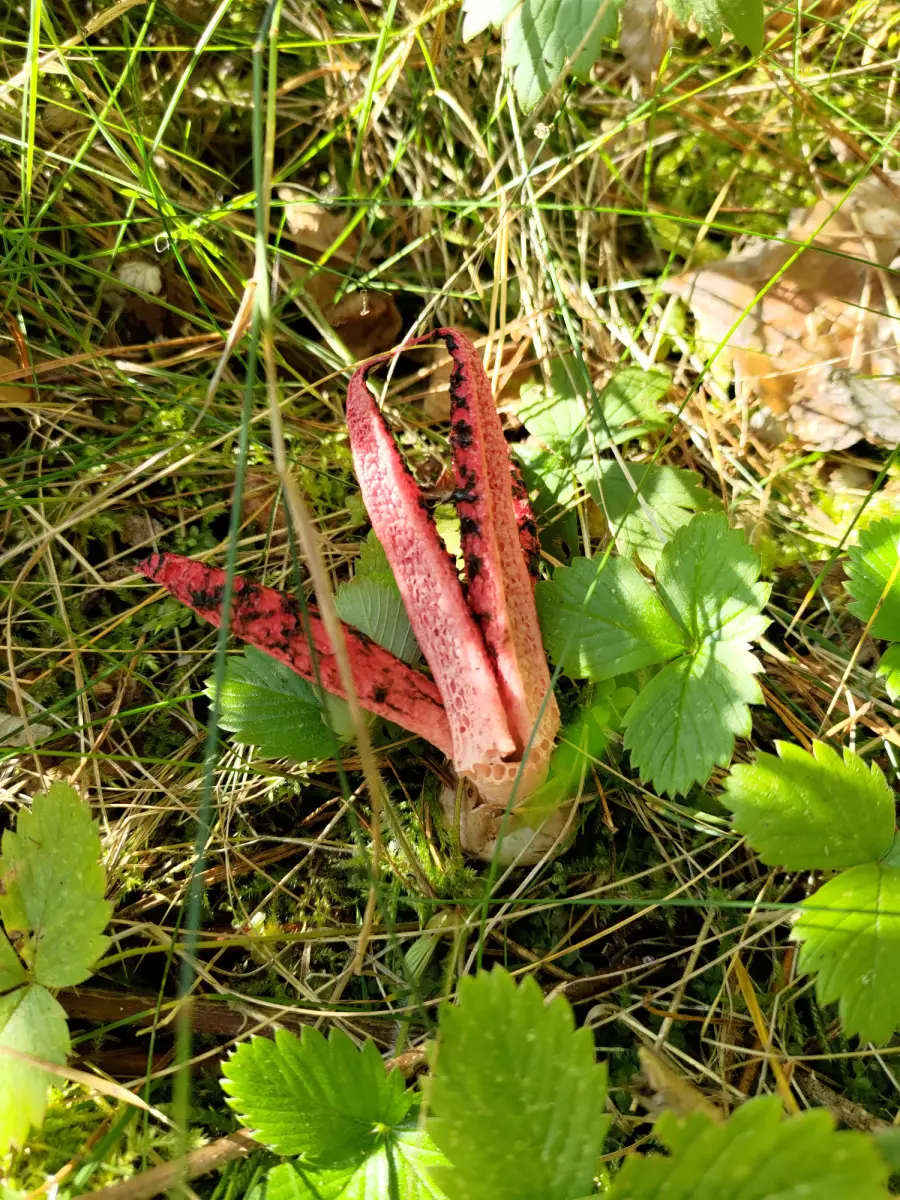
At first glance, it is hard to believe that this is nature’s work. The mature fruiting body resembles a red octopus trying to emerge from underground. Its characteristic arms may bring to mind the fingers of a mysterious creature. That is where the ominous name—devil’s fingers—comes from.
A mushroom that looks like something from a horror film
The Australian stinkhorn (Clathrus archeri) belongs to the stinkhorn family. It is also called the Australian flower fungus and, because of its appearance and disgusting smell, is sometimes referred to as the stinking octopus.
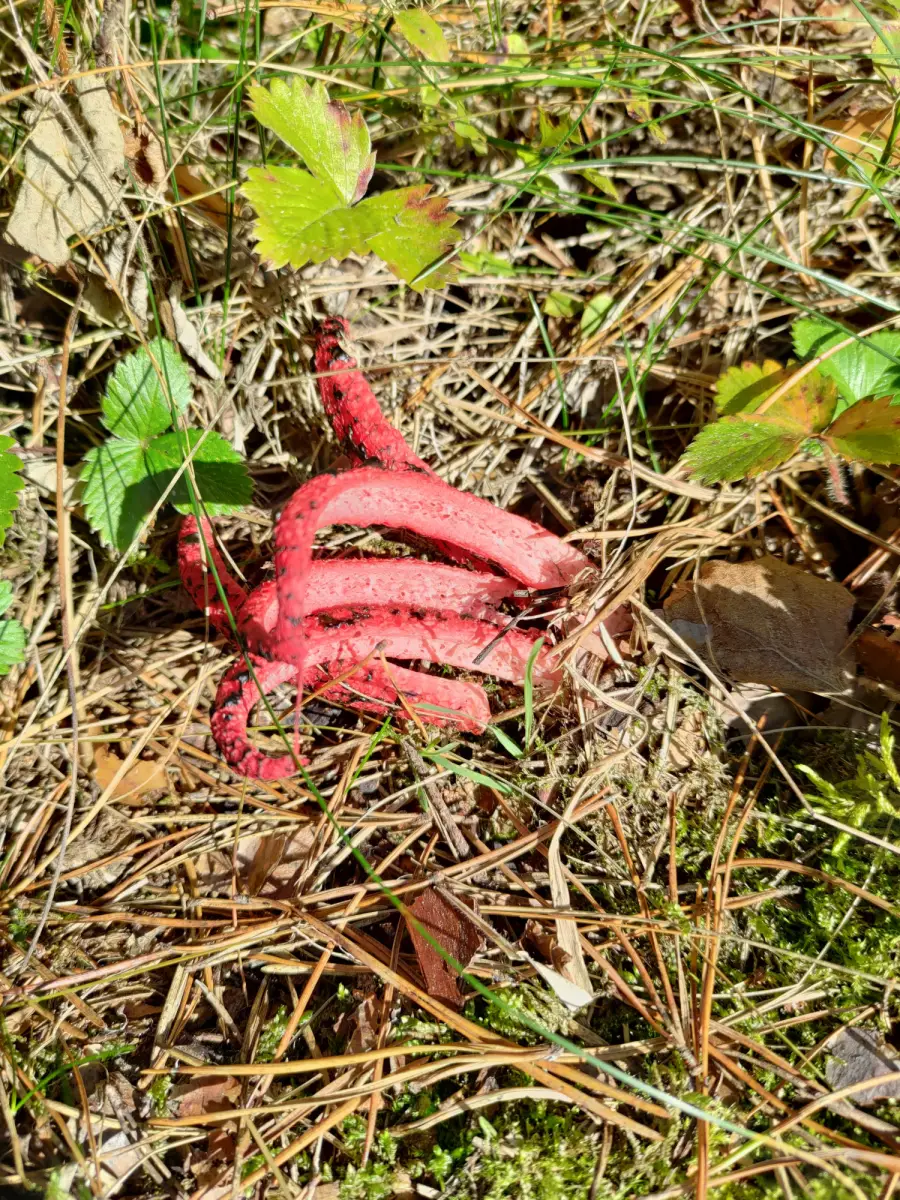
Its development is as unusual as its appearance. At first, the mushroom resembles a whitish or grayish egg, partially hidden in the leaf litter. Over time, the covering splits and characteristic arms grow out from inside. There are usually four to six of them, though there may be more. They are intensely red or pinkish-red and can reach several dozen centimeters in length.
Only then can one fully see where the associations with devil’s fingers or octopus tentacles come from.
The biggest problem? The smell of carrion
Is there anything to fear if we encounter such a specimen while out walking? It looks threatening, but its presence does not mean that danger is lurking in the forest.
The stinkhorn’s most troublesome feature is its smell. The mature mushroom gives off a very strong odor reminiscent of rotting meat or carrion. Near the fruiting body, it may be detectable from several meters away, even before its characteristic red arms can be seen.
The unpleasant odor is not accidental, however. It is a clever mechanism that enables the mushroom to spread. The smell attracts flies and other insects, which carry the spores to new locations. What is disgusting to humans turns out to be an effective way for the mushroom to colonize new areas.
A newcomer from Australia that has become established in Europe
As its name suggests, the Australian stinkhorn comes from the southern part of the world, primarily Australia, Tasmania and New Zealand. It appeared in Europe at the beginning of the 20th century. Its presence in Poland was first recorded in 1975.
It may have reached Europe accidentally, among other things, with transported plants, soil or other materials. Over time, it began appearing in additional countries, including Poland.
This mushroom can be found primarily in deciduous and mixed forests, in areas rich in decomposing organic matter. It is not a typical edible mushroom collected during autumn trips to the forest.
Are devil’s fingers poisonous?
The stinkhorn’s appearance may cause concern, but the mushroom itself is not considered poisonous. That does not mean it is worth collecting and trying. Mature fruiting bodies are covered with a slimy, spore-bearing substance responsible for their characteristic odor.
The stinkhorn also plays its part in nature. As a saprotrophic fungus, it participates in the decomposition of dead organic matter, supporting the circulation of nutrients in the environment.
So if, while walking near Bolesławiec, we come across red, tentacle-like arms sticking out of the forest floor, there is no reason to panic. It is still worth exercising caution, not picking unknown mushrooms and not putting them in your mouth.
Devil’s fingers may look like something from another world. However, the greatest threat to walkers’ comfort is not their appearance but their smell, which can effectively discourage anyone from continuing a mushroom-picking trip.