
The police provide information about general safety during trips to and stays in the forest. This season, we have already published Important information for those heading into the forest to pick mushrooms. This time, we will focus on picking and recognizing mushrooms themselves.
The ironclad rule is: Pick only those mushrooms that you are completely certain are edible. If you are unsure about a particular mushroom, it is better to leave it or ask an experienced mushroom picker for help.
Remember that weather conditions affect the appearance of mushrooms. Mushrooms look different in the rain and when the sun is shining and it is dry. Their color and appearance change depending on the weather.
The main cause of mushroom poisoning is the incorrect identification of edible and poisonous mushrooms. The most common symptoms of mushroom poisoning include nausea, vomiting, diarrhea, stomach and headaches, and an elevated body temperature.
The most common and most dangerous poisonings are caused by eating death cap mushrooms, which are confused with mushrooms such as the parasol mushroom and the green russula.
WARNING! In the photographs below the highly poisonous death cap mushroom (Amanita phalloides) at various stages of growth:
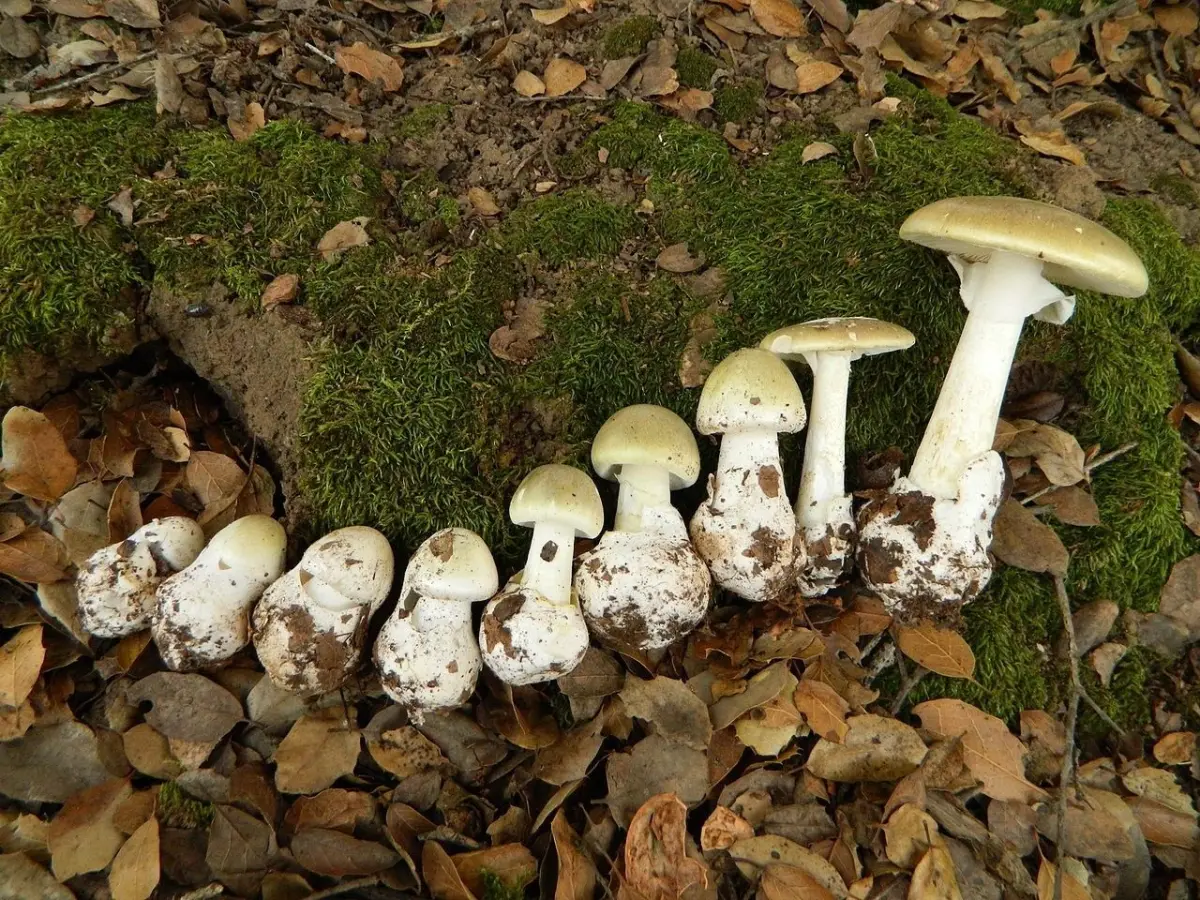
Death cap mushroom
Only fully grown and well-developed mushrooms should be picked, because young fruiting bodies without the developed characteristics of a given species are most often the cause of tragic mistakes.
Beginning mushroom pickers should collect only pore-bearing mushrooms, because this group contains no deadly poisonous mushrooms and the risk of poisoning is much lower.
Incorrect methods of identifying poisonous species should be avoided, such as onion discoloration during cooking, darkening of a silver spoon, or a bitter taste—deadly poisonous species, such as Amanita phalloides and Amanita verna, have a pleasant, slightly sweet taste).
Mushrooms should be collected in airy baskets, never in plastic bags, as this causes them to steam and accelerates spoilage. Fresh mushrooms and mushroom dishes should not be stored for too long.
Mushrooms should not be picked in areas where waste accumulates, such as near production plants, or those growing in ditches or at the edge of the forest alongside heavily trafficked roads—mushrooms absorb heavy metals and other pollutants from their surroundings.
Do not pick or destroy inedible and poisonous mushrooms, as many of these species are protected and form part of the ecosystem.
If you are unsure whether the mushrooms you have collected are poisonous or edible, you can obtain free advice at sanitary and epidemiological stations.
If nausea, stomach pain, diarrhea, muscle cramps, or an elevated temperature occurs after eating mushrooms, induce vomiting and see a doctor as soon as possible. Remember that poisoning by death cap mushrooms is followed by a phase of apparent improvement, after which the patient's condition rapidly deteriorates. A doctor called in time can save a life.