
Antoś Kasperek is not yet four years old. At 23 months, he developed a rare disease—metachromatic leukodystrophy (a halt in, followed by regression of, psychomotor development). His first two years were very happy. He was an exceptionally active child. He swam. He rode a bicycle. He climbed over every fence. Suddenly—in the space of a month—he stopped speaking.
At first, the symptoms were difficult to notice. Doctors downplayed them. When the first diagnosis was made, it later turned out to be wrong. Antoś was treated with steroids for 10 months. Completely unnecessarily. Only after the child’s parents, Kamila and Remigiusz Kasperkowie, asked for it were more detailed tests carried out, showing that the three-year-old had metachromatic leukodystrophy—a disease that is practically incurable in Poland.
Antoś’s parents searched through medical literature. “Children with this disease are waiting for inevitable death,” says Mrs Kamila. However, the Kasperkowie decided not to give up. They contacted a doctor in France. During the initial appointment, the specialist told them about an experimental treatment trial. Antoś’s parents faced a difficult choice. It was known that the experiment might fail. “We chose the unknown,” Kamila Kasperek admits.
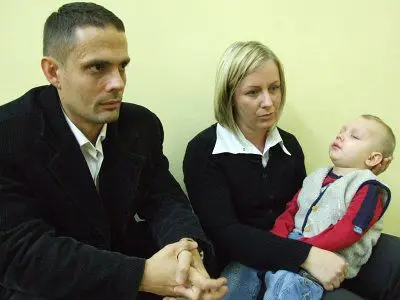
Antoś cannot travel by plane. For a year—regularly, every two weeks—his parents have been taking him to Copenhagen. He is given an experimental drug there. Thanks to it, Antoś’s condition has improved. Perhaps not very visibly, but the improvement has been confirmed, among other things, by a brain MRI.
The treatment is very expensive. All the more so because the drug’s developers will soon apply to introduce it onto the market. Moreover, the Danish doctors caring for Antoś have stated that both the dose and the frequency of administration will need to be increased. For the Kasperkowie, this means higher costs. Antoś will have to take the drug for the rest of his life. The boy’s parents cannot count on help from the National Health Fund. In the past, in other cases, they asked the Fund for reimbursement. Without success.
“Perhaps one day the treatment will be available in Poland. That is what we count on and dream about,” says Mr Remigiusz. “I still hope that, like his older brother Franek, who practices taekwondo, Antoś will someday be able to run and practice this sport too,” he adds.
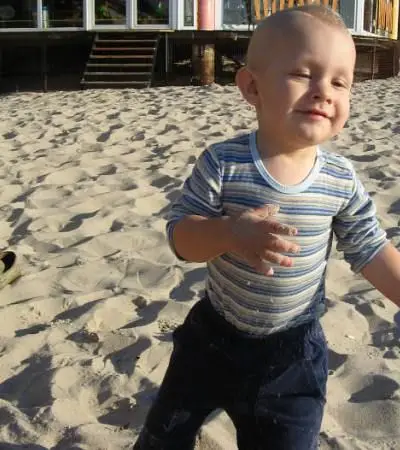
Antoś’s parents are asking people to donate 1% of their income tax for the benefit of their sick son. This could be voluntarily allocated in the tax return for 2007 to a public-benefit organization.
Antoś has a sub-account with the “Na Ratunek Dzieciom z Chorobą Nowotworową” Foundation, which is a public-benefit organization. Its details are as follows: Foundation: “Na Ratunek Dzieciom z Chorobą Nowotworową,” 53 Świdnicka Street, 50-030 Wrocław, KRS number: 0000086210.
IMPORTANT: To ensure that your funds reach the correct sub-account, the parents ask you to include the following note in the submitted PIT return, in the box titled “Other information, including information facilitating contact with the taxpayer”: “For: Antoni Kasperek”.
(GA information)