
For many gardeners and allotment holders, this is one of the most troublesome weeds. It spreads quickly, is difficult to remove and can dominate flower beds. Few people know, however, that ground elder is not only an edible plant but also a medicinal herb valued for centuries, particularly associated with relieving ailments related to gout.
Its Latin name alone (Aegopodium podagraria) refers to podagra, an old term for gout. In folk medicine, fresh leaves and infusions made from ground elder were used to support the removal of excess uric acid from the body and to relieve inflammation and joint swelling. It is worth remembering, however, that it does not replace treatment prescribed by a doctor—it can only complement it.
How can you identify ground elder?
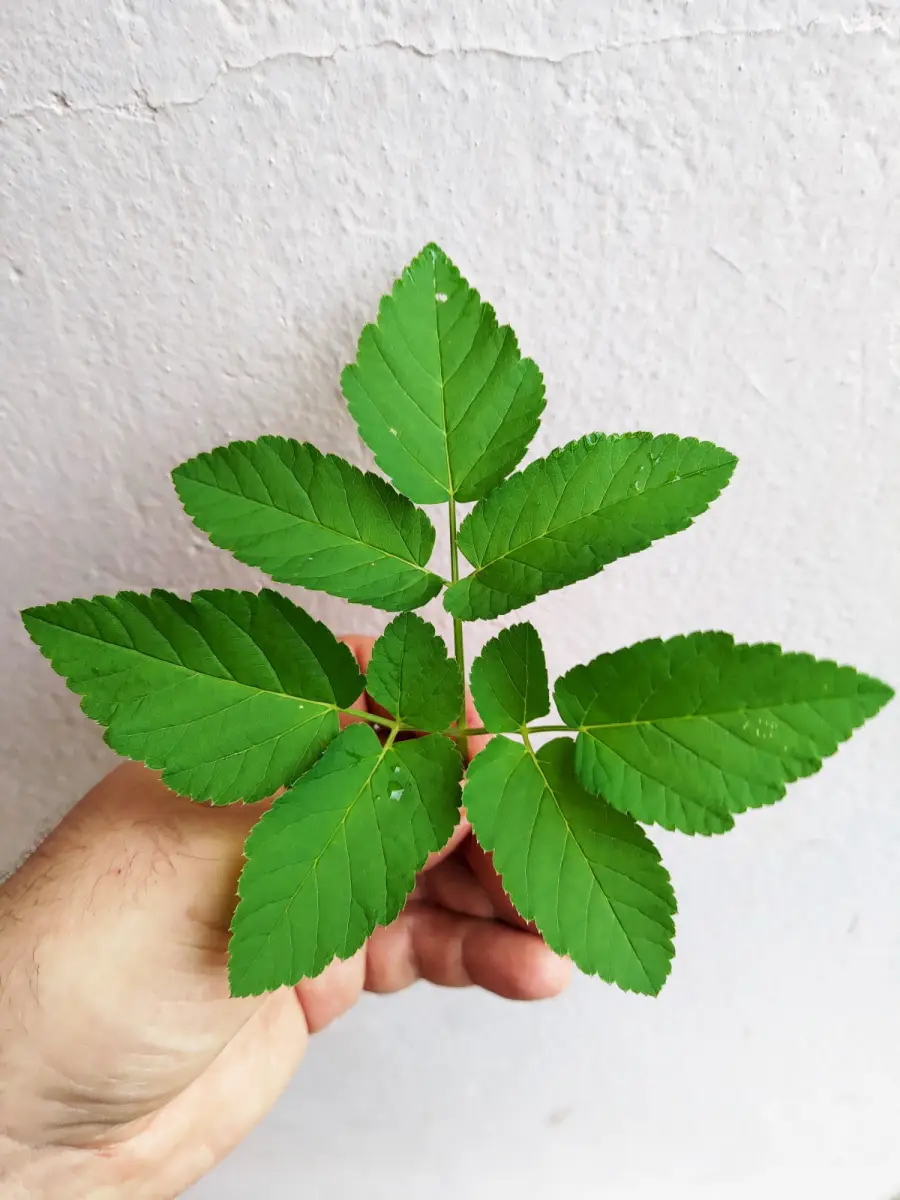
The plant usually grows from 30 to 100 cm tall. It has distinctive, three-part leaves with serrated edges (see the photo below). The stem is smooth and hollow, and from May to July it produces small white flowers gathered in umbels.
One of the most distinctive features of ground elder is its distinctive, fresh scent, reminiscent of a combination of parsley, celery and carrot. After rubbing a leaf between your fingers, the aroma becomes even more intense.
Where does it grow?
Ground elder can be found almost throughout Poland. It grows in deciduous forests, parks, thickets, along roads, beside rivers and in home gardens. It thrives in damp, partly shaded places, which is why it often appears where other plants have more difficult growing conditions. We found it easily in Bolesławiec. It even grows on the lawns of Bolesławiec housing estates.
How can it be used?
The tastiest are the young, light-green leaves collected in spring. They can be:
- added to salads,
- made into pesto,
- added to soups and sauces,
- prepared in the same way as spinach,
- dried and used to make infusions.
Fresh leaves were also sometimes used to make compresses for painful and swollen joints.
Ground elder is rich in vitamin C, carotenoids, flavonoids, mineral salts and essential oils. Although modern research confirms the presence of many valuable biologically active compounds, the effectiveness of this plant in treating gout has not been unequivocally confirmed in large clinical studies.
For this reason, it should be treated as part of a healthy diet and traditional herbal medicine, not as a substitute for therapy conducted by a doctor.
The next time you are about to pull ground elder out of your garden, it is worth taking a closer look. Perhaps it is not a persistent weed growing there, but a plant that our ancestors valued both in the kitchen and in their home medicine cabinet.
Warning! It is easy to make a mistake
Although ground elder is an edible plant, only people who can identify it without error should collect it. Particular caution is necessary because it belongs to the celery family, which also includes highly poisonous species.
The greatest danger is the possibility of confusing it with poison hemlock or hemlock water-dropwort—plants containing highly toxic substances whose consumption can lead to severe poisoning or even death.
Ground elder can be identified, among other things, by its characteristic, three-part leaves and fresh scent resembling parsley or celery. If we cannot detect this aroma after rubbing the leaves, or if we have any doubts about identifying the plant, it is better not to collect it.
Experts emphasize a simple rule: if you are not one hundred percent certain that it is ground elder, do not collect or eat it. With wild plants, caution is always more important than curiosity.