
Zdzisław Abramowicz, Stanisław Andrusieczko, Adam Biesiadecki, Leszek Chudzik, Andrzej Czeczutka, Dariusz Filistyński, Renata Fredyk, Piotr Hetel, Eugeniusz Jabłoński, Wojciech Kasprzyk, Jarosław Kowalski, Arkadiusz Krzemiński, Bolesław Nowak, Mirosław Sakowski, Alojzy Skóra, Paweł Śliwko, Stanisław Wiącek, Stanisław Zmaczyński, that is, the councillors of the Bolesławiec City Council’s sixth term, met for the last time on Wednesday, 12 November.
The agenda of the 56th session of the Bolesławiec City Council included the adoption of the minutes of the 55th session; a report on the implementation of resolutions adopted at the 55th session. The councillors heard information from the city mayor, Piotr Roman, and the chair of the City Council, Józef Pokładek, on major actions taken between sessions. They also adopted resolutions on the Environmental Protection Programme for Bolesławiec for 2014–2017, taking into account the years 2018–2021; the adoption of the Study of Conditions and Directions of Spatial Development of Bolesławiec; the Municipal Programme for the Prevention and Resolution of Alcohol-Related Problems in Bolesławiec for 2015; the Annual Programme of Cooperation between the Municipality of Bolesławiec and non-governmental organisations and entities conducting public-benefit activities for 2015; and amendments to the city budget for 2014.
Jak oceniasz pracę Rady Miasta Bolesławiec 6 kadencji?


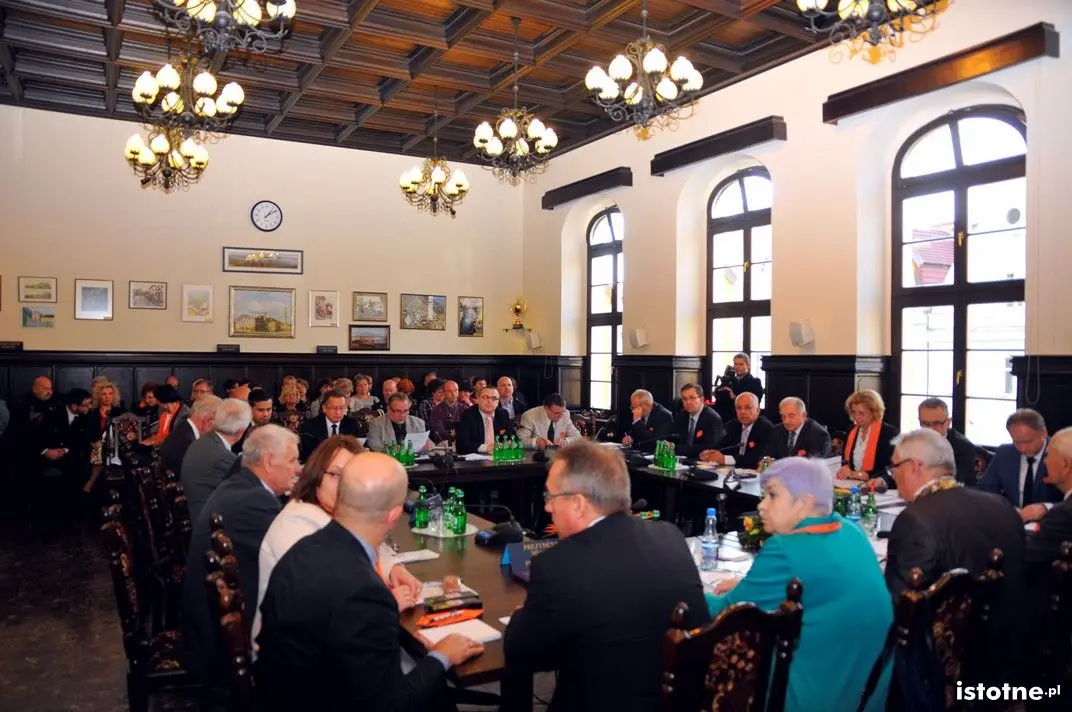


The Council adopted reports on the activities of the City Council’s standing committees during the 2010–2014 term:
- the Infrastructure, Spatial Planning and Construction Committee: attendance by individual committee members at 65 meetings was as follows: Jarosław Kowalski – 58, Stanisław Andrusieczko – 59, Adam Biesiadecki – 53, Andrzej Czeczutka – 54, Janina Piestrak-Babijczuk – 61, Mirosław Sakowski – 60, Stanisław Wiącek – 59. The committee issued 488 opinions and submitted 27 motions. Its most important activities included reviewing draft resolutions and matters included in the committee’s work plans for 2011–2014. During the reporting period, the committee conducted site inspections of investments under construction, including the modernisation of Zabobrze Street, facilities in the historic town-centre area, and the expansion of the Municipal Cemetery on Śluzowa Street in Bolesławiec; it familiarised itself with operations at the Municipal Waste Treatment Plant in Trzebień, the Water and Sewage Company in Bolesławiec, the wastewater treatment plant at 48 Graniczna Street, the Social Welfare Home at 17 Piastów Street, the Municipal Police, Bolesławiec Water Park “Orka”, and the “Tulipan” allotment gardens. The committee met with representatives of the Polish Allotment Garden Association and learned about the operation of allotment gardens in Bolesławiec. It assessed the condition of roads in Bolesławiec and submitted requests to road managers to improve their condition and carry out necessary repairs and modernisations, particularly urgent repairs on Mickiewicza Street, Kubika Street and Sądowa Street, including the pavement. It also gave opinions on names for new streets in Bolesławiec. The committee familiarised itself with the municipal housing policy of the Municipality of Bolesławiec and reviewed housing lists prepared quarterly by the Municipal Housing Management Company in Bolesławiec. In addition, permanent teams operated within the committee.
- the Audit Committee: attendance by individual members at 23 meetings was as follows: Leszek Chudzik – 21, Bolesław Nowak – 20, Piotr Hetel – 21, Eugeniusz Jabłoński – 19, Wojciech Kasprzyk – 21. The committee issued 22 opinions and submitted 4 motions. Its members attended training organised by the City Secretary, Jerzy Zieliński, on the rights, duties and tasks assigned to the Audit Committee under the Act on Municipal Self-Government. The changes introduced by the new Public Finance Act were presented by the City Treasurer, Mirosława Mitek, and internal auditor Renta Szewczyk. The committee’s main areas of work were a thorough analysis of reports on the implementation of the Bolesławiec budget; analysis of the report on the implementation of City Council resolutions; the financial situation of the Municipal Transport Company; analysis of tenders for the sale of building plots and residential premises with discounts in 2010–2012; examination of the collection of rent arrears by the Municipal Housing Management Company in 2012–2013; and analysis and assessment of the implementation of the asbestos removal programme in Bolesławiec in 2010–2012.
- the Health, Family and Social Affairs Committee: attendance by individual members at 64 meetings was as follows: Renata Fredyk – 61, Stanisław Wiącek – 60, Zdzisław Abramowicz – 54, Stanisław Andrusieczko – 56, Andrzej Czeczutka – 56, Dariusz Filistyński – 55, Eugeniusz Jabłoński – 62. The committee issued 447 opinions and submitted 4 motions. The main topics included in its work plans were the strategy for resolving social problems in Bolesławiec; support for people with disabilities provided by institutions and non-governmental organisations; organisation of summer recreation for children and young people; social assistance for pupils during the school year; implementation of the municipality’s own tasks under the Act on Sobriety and Counteracting Alcoholism and Drug Addiction; prevention and health programmes; meeting residents’ needs during winter; and safety at educational institutions. The committee conducted site inspections of the community centre on Kościuszki Street in Bolesławiec, including the provision of teaching aids for children; the Municipal Therapeutic Rehabilitation Centre in Bolesławiec; the Day Care Home on Staroszkolna Street; the Social Welfare Home on Piastów Street; the Infectious Diseases Ward of the Independent Public Healthcare Centre in Bolesławiec; KPS-R “Orka”; community centres in Bolesławiec; and Civil Defence warehouses.
- the Education, Culture and Sport Committee: attendance by individual members at 67 meetings was as follows: Alojzy Skóra – 58, Zdzisław Abramowicz – 57, Adam Biesiadecki – 56, Renata Fredyk – 62, Mirosław Sakowski – 63, Paweł Śliwko – 65, Stanisław Zmaczyński – 62. The committee issued 464 opinions and submitted 9 motions. During the reporting period, it conducted site inspections of the progress of swimming-pool construction; the use of gymnasiums and school sports fields; primary schools and lower-secondary schools; the condition and use of schools’ teaching facilities; community centres; outdoor swimming pools and the ice rink; Municipal Lower-Secondary School No. 2, including the practical model of patriotic education for schoolchildren; and Primary School No. 4. The committee’s most important areas of work included education, culture and sport in the city; renovations, modernisations and numerous investments in these areas, including teaching and technical equipment; reviewing applications for scholarships for the best pupils; reviewing applications for awards in science, culture, sport, social activity and other fields; cultural and educational as well as sports and recreational events at institutions and throughout the city; cooperation with partner cities; summer recreation for children and young people; the operation and activities of community centres; health and prevention programmes for children and young people; and analysis of social problems. Committee members noted considerable progress in education, culture and sport in Bolesławiec as a result of renovations and modernisations of educational and cultural institutions and school sports fields, including Orlik facilities. The committee highly rated the work of schools, kindergartens, BOK-MCC, the Museum of Ceramics, the Municipal Public Library and the Municipal Sports and Recreation Centre in education, upbringing and engaging residents in various cultural, educational and sporting ways of spending their free time.
- the Economic Development and Finance Committee: attendance by individual members at 64 meetings was as follows: Dariusz Filistyński – 58, Stanisław Zmaczyński – 62, Leszek Chudzik – 52, Piotr Hetel – 59, Jan Jasiukiewicz – 64, Arkadiusz Krzemiński – 51, Alojzy Skóra – 55. The committee issued 453 opinions and submitted one motion. In accordance with its area of interest and scope of work, during the current term the committee dealt with reviewing, examining and monitoring comprehensive methods and prospects for the Municipality of Bolesławiec’s influence on the pace of changes in the city’s sustainable development. Acting within the remit defined by Resolution No. III/8/10 of the Bolesławiec City Council of 8 December 2010 on establishing the City Council’s standing committees, the committee welcomed the fact that the Municipality of Bolesławiec possessed instruments used to shape local economic policy, including the Municipal Development Strategy, containing a programme of local economic, spatial and social policy; the Long-Term Financial Forecast; and the Local Urban Revitalisation Plan. During working meetings, the committee reviewed amendments to planning documents updating the current needs of the local economic market, as well as the allocation of resources in the spatial, economic and social spheres. The strategic objectives focus on promoting investment, including in the Special Economic Zone; establishing new companies; promoting staff education and training; and, importantly, shaping municipal space. The committee welcomed draft resolutions introducing positive changes to the Municipal Spatial Development Plan, organising
and creating opportunities for companies to develop their business activities. The committee positively assessed the Municipality of Bolesławiec’s pro-business activities in the Wałbrzych Special Economic Zone, which is currently a workplace for many city residents and offers the possibility of increasing employment in the future. With regard to instruments for shaping local economic policy, such as local taxes and charges, financial policy, and management of municipal property and commercial premises, the Municipality sets taxes at realistic levels comparable to those of municipalities in the region, and in some cases lower. Several years of stagnation in the sale and purchase of real estate have led to a downward trend in auction prices. This situation results from current conditions in the real-estate market. When reviewing certain draft resolutions, for example those concerning the Municipality’s own educational tasks, a worrying trend emerged: the government of the Republic of Poland was reducing the education subsidy. This is particularly significant for the Municipality of Bolesławiec, as education-related tasks account for 24% of total city budget expenditure. In 2012, in accordance with its adopted work plan, the committee analysed the city’s strategy in relation to the assumptions of the Regional Operational Programme. Members paid particular attention to a report on municipal waste management, methods of selective waste collection in the municipality and the development prospects of MZGK in light of the new “waste” law. The city’s water and sewage management, carried out by PWiK, and the level of charges for water use and wastewater discharge were assessed positively. The committee welcomed the company’s modernisation policy and the higher standards of services provided in this area. Important information for Bolesławiec residents came from the ZEC president, who reported on the company’s impact on the local market and the prospects for an energy reserve capable of securing the city’s supply for 10–15 years. The committee also considered the prospects for local housing construction carried out by TBS as an alternative way for young people to obtain housing. In 2013, the committee’s most important areas of work, in accordance with its adopted plan, included the use of EU funds in the Municipality of Bolesławiec for developing the city’s economic infrastructure; the condition of municipal waste management in Bolesławiec in light of the new “waste” law and its impact on MZGK, including a SWOT analysis; the use of city-budget funds by the Municipal Police in 2010–2012; and the Municipality’s pro-business policy towards small and medium-sized enterprises, including methods and means of support. The committee devoted most attention to its annual review of the draft budget, its implementation and the report on budget implementation. Members carefully considered periodic reports on the activities of municipal units represented by directors and company presidents, contributing substantive opinions and comments at the committee’s working meetings.
During the ceremonial part of the session, thanks were expressed for the cooperation. The councillors also received commemorative reliefs depicting the town hall.
UM Bolesławiec/ii