
Patients are receiving SMS messages informing them about a data security breach in the MyDr system. One such message, received by our Reader, begins with the words: “We hereby inform you that the system of our data processor, i.e. MyDr Sp. z o.o., has fallen victim to a cyberattack.” The message goes on to warn that the data breach in the RGMedica system may include, among other things, PESEL numbers and health data.
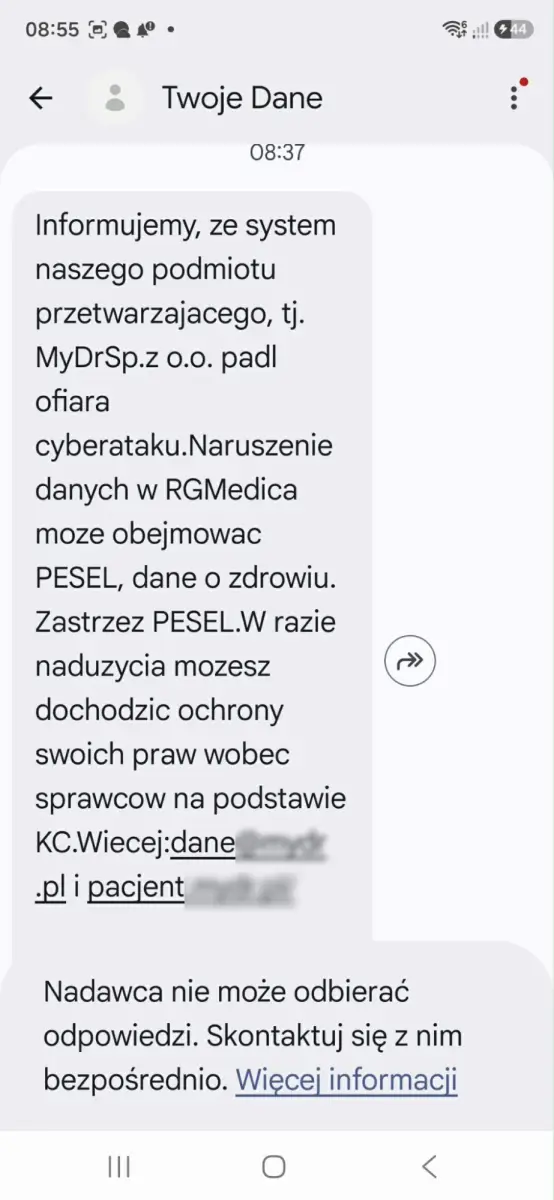
To the recipient, such an SMS may look like an attempted scam. In this case, however, the situation is different. The message’s content corresponds to information published by medical facilities in connection with a real security incident involving MyDr. Patients of other facilities using this system are receiving similar notices.
The Warsaw District Prosecutor’s Office also officially announced the matter. Investigators confirmed that, no later than August 6, 2026, an unidentified person unlawfully gained access to all or part of the IT system administered by MyDr. According to the prosecutor’s office, patients’ personal data may have been obtained, including first names, surnames, PESEL numbers, telephone numbers, email addresses, and health data, such as information from medical appointments and details of issued prescriptions. The investigation is being conducted by the Central Bureau for Combating Cybercrime.
It is important to stress, however, that receiving such a message does not mean that anyone has used a particular patient’s data. Current notices from medical facilities state that a breach of confidentiality is not equivalent to the data being read, used, or made publicly available. MyDr and external experts are analyzing the incident and monitoring the situation.
The latest information also indicates that the incident primarily involved a limited range of historical data, mainly from before April 12, 2024. In some cases, data contained in canceled referrals issued later may also have been affected.
What should the recipient of the message do?
Above all, do not reply to the SMS or provide any additional data, passwords, or authorization codes through it. If the message contains a link, it is safer not to open it before verifying the information with your clinic or directly through MyDr’s official channels.
For people whose data may have been affected by the incident, it is also particularly important to consider reserving their PESEL number. Medical facilities reporting the incident identify this as one of the preventive measures that can be taken in connection with the risk of personal data misuse.
The message visible in the submitted photograph therefore does not appear to be a classic phishing SMS. Its content corresponds to genuine notices being sent in connection with the cyberattack on MyDr. Caution is still advisable, especially when clicking any links contained in the message.