
The 2006 cohort will be required to start first grade at the age of six. Children born in 2005 may start school early this year, but they do not have to. The Ministry of Education is encouraging all parents of six-year-olds to send their children to school as early as 2011. Municipal authorities are doing so as well. Piotr Roman sent parents a letter asking them to consider enrolling their child in first grade in the coming school year. Directors of Bolesławiec primary schools sent parents invitations to special open days so they could see the facilities, meet the teachers and find out what the classrooms for first-graders would look like. The response, however, was minimal. Of the seventy invitations sent by one of the primary schools, only a few interested people attended. The issue of lowering the school age sparked heated discussion on city portal forums. The arguments vary. Opponents approach the imposed new method of raising their children with tremendous distrust. Supporters believe it will benefit the development of a child who, at the age of six, is eager and ready to learn.
Childhood Taken Away
This is the most common argument made by opponents. Parents do not want their children to start carrying schoolbags weighing several kilograms a year earlier, sit at desks for 45 minutes and cram for tests.
Parents write about their six-year-olds’ lack of school readiness. At school, the form of a child’s activity changes from play to learning. As educators confirm, not every six-year-old will reach school readiness at the age of six. Not every child of this age is ready to learn at school—to follow classroom discipline, remain still for longer and patiently listen to the teacher’s explanations. Children may also not yet have mastered teamwork.
A change of environment is another problem. By staying in preschool for another year, the child will avoid a major shock. The caregivers, friends and rooms there will be familiar. At school, everything would be new. Parents want to postpone as long as possible the stress the child would experience because of this change.
At school, the child will also have care provided for a shorter time. Although every school has attractive after-school clubs and provides supervision, and even meals, this does not convince all parents. The child will not be in a group of familiar friends because some of them will be picked up earlier. Parents associate the after-school club with a kind of holding facility rather than a child-friendly place like preschool, with activities and organized play.
The number of children in a class also worries parents. In preschool, two caregivers look after 25 children; at school there will be only one (and classes may have as many as 30 pupils). It will then be impossible to organize play or attend to every child. The teacher will have to require silence and discipline in order to explain anything to the children.
The picture of school that emerges from the opponents’ opinions is very bleak. The educational process is seen as in Alan Parker’s film “The Wall.” At school, children became successive bricks in the wall and lost their agency and freedom. Worse still, parents’ aversion to school was probably acquired permanently during their own education.
Children Want to Play School
That is what supporters—preschool teachers—argue. They know the little ones and say that a child’s time at school is not a penal colony, but an opportunity to gain knowledge and develop new skills. This is inevitably connected with overcoming difficulties. But struggling with them stimulates cognitive activity and the search for solutions, resulting in increasing school readiness and joy in achieved successes.
Supporters also know that starting school is a major source of stress for a child. But they call it a threshold—a barrier whose overcoming can bring satisfaction. “I have observed children for a long time, and they become wiser year by year,” says Mariola Bakalarz, an educator and director of MPP No. 1. “A child is able, very early—sometimes before the age of six—to absorb and use knowledge and skills in reading and mathematics.”
Educators believe that everything depends on the parent’s attitude. If mother and father set requirements for the child and teach self-care (putting away toys and helping with household duties), they can be confident that their child will cope with the challenges of school. Like an adult, a child gains a sense of self-worth by completing a task independently. If everything is done for the child, passivity, dependence and a tendency toward low self-esteem will emerge.
There are also arguments concerning the organization of education in the 2012/2013 school year. “If parents do not send their six-year-olds to school this year, they may face a two-shift system next year,” says SP No. 3 director Barbara Dąbrowska-Bugaj. “I invite you to visit the schools; we have excellent staff, attractive classrooms for young children and after-school clubs. The curriculum is adapted to the development of young children. And above all, there are no traditional grades.”
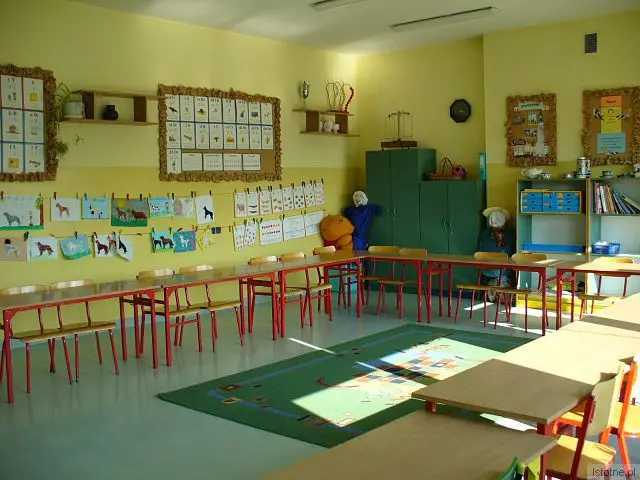
Six-year-olds will learn through play, teachers assure us. There will be music, singing, painting and trips. Every classroom has a carpeted space for play, and children will not be forced to sit at desks for the entire lesson. They will be assessed through descriptions of their skills and rewarded for their progress. In addition, primary schools have reception classes, so moving from the “zerówka” to first grade will not be a major source of stress for the child.
To Send or Not to Send?
The lowering of the school age has been decided from above. This is the last year in which parents can decide for themselves whether their child will start school early. It is best to learn as much as possible and be aware that one can always influence any situation. “I would advise parents of six-year-olds to ensure that the facilities are prepared in a way that alternates play with learning,” says Teresa Rudzińka, deputy director of PCEiKK for psychological and educational affairs. “Parents can influence schools, and schools should prepare for the changes.”
Parents can talk to primary-school directors and ask them to organize first-grade classes exclusively for six-year-olds, with learning like that in preschool groups (group activities, breaks when children need them and going outside). They can view the classrooms; teachers will be happy to show them around. They can learn about the curriculum. Or they can ask their own child whether they want to start first grade. “If the core curriculum is like the one in preschool, there would be no problem,” Teresa Rudzińska comments on parents’ concerns. “But if the six-year-old’s peers play in preschool while the child sits at a desk for 45 minutes in first grade, that means taking childhood away.”
Parents have the power, and if they believe that school can be their partner rather than their enemy, together they can do a great deal for the children’s benefit.
Detailed information about the educational offer and the organization of classes for six-year-old children can be obtained from:
- Social Department of Bolesławiec City Hall – pl. Marszałka J. Piłsudskiego, room 301, tel. 756456550
- Primary School No. 1 (Municipal School Complex No. 2) – ul. Jana Pawła II 38c, tel. 756444420
- Primary School No. 2 – ul. Bankowa 8, tel. 757323500
- Primary School No. 3 – ul. Ceramiczna 5, tel. 75734 84 72
- Primary School No. 4 – u. Mikołaja Brody 12, tel. 757322458
- Primary School No. 5 (Municipal School Complex No. 1) – ul. Dolne Młyny 60, tel. 757345301


Below we publish the letter from the president of Bolesławiec to the parents of six-year-old children.
Dear Residents of Bolesławiec, Parents of six-year-old children,
I would like to inform you that the upcoming 2011/2012 school year is another year in which the school starting age for first-graders is being lowered. Six-year-old children may begin first grade at any municipal primary school in Bolesławiec. Colorful classrooms, interesting toys and teaching aids, modern equipment and friendly teaching staff await the pupils there.
In our schools, first-graders do not sit at their desks all the time; they learn and play in their own rooms, use the gymnasiums and well-equipped play areas, and after lessons they receive attentive care in the school after-school club.
I invite you and your children to visit Bolesławiec primary schools and personally learn about the environment in which pupils spend their time at school. Each school director will be happy to meet you and show you around the school. On site, you will learn about the educational offer and the organization of classes for six-year-old children, as well as the forms of care available after lessons.
Please consider enrolling your six-year-old in first grade in the coming school year, as starting education earlier means, among other things, discovering talents and abilities sooner. At the same time, I would like to draw your attention to several important facts related to children born in 2006 starting school earlier.
In Bolesławiec, 313 children should begin compulsory education in the 2011/2012 school year, and 664 children in the 2012/2013 school year (six- and seven-year-olds will be required to start school—the two cohorts). This fact shows that in the near future, getting into a good middle school and a good secondary school, as well as obtaining a place at an interesting university course, may be more difficult for children who do not start school earlier.
By sending your six-year-old child to first grade from September 1, 2011, you can give them a chance to avoid overcrowded classes in secondary schools, overcrowded lecture halls at universities and doubled competition in the labor market. Ladies and Gentlemen, by deciding about your six-year-old’s development and future, you can already today help ensure your children make a good start in adult life.
Yours sincerely
President of Bolesławiec
Piotr Roman
(information: Grażyna Hanaf)