
This year’s Report on the State of the Lower Silesian Voivodeship 2020 is already the third edition of this document. The obligation to prepare it results from an amendment to the Act on Voivodeship Self-Government. Previously, the vote held during the voivodeship assembly’s discharge session concerned only the Executive Board’s report on the implementation of the budget for the previous year. Now, the vote of confidence will also be decided by a debate and vote on the Report on the State of the Voivodeship 2020.
The discussion will involve voivodeship councillors as well as residents who submit the appropriate application and at least 1,000 supporting signatures by June 23 this year. The documents should be addressed to the Chair of the Assembly and delivered, together with the signatures, to the Office of the Lower Silesian Voivodeship Assembly.
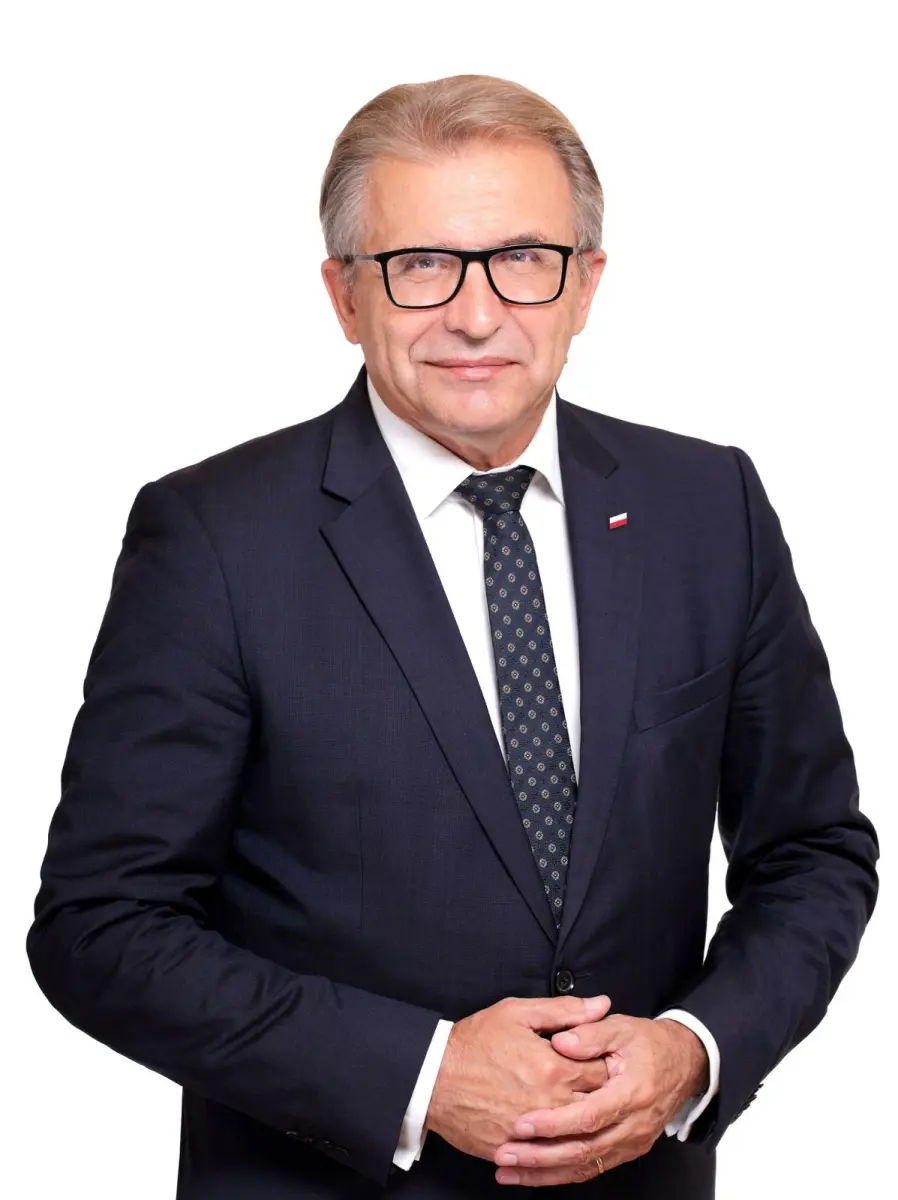
– Each Report on the State of the Lower Silesian Voivodeship contains a summary of the activities of the Voivodeship Executive Board, particularly the implementation of policies, programmes and strategies, resolutions of the Voivodeship Assembly and the civic budget. It describes the region’s current level of development and presents the local government’s most important investments and their implementation status. At the same time, it sets out plans and directions for action in the coming years. I invite all interested residents of the region to take part in the debate – says Andrzej Jaroch, Chair of the Lower Silesian Voivodeship Assembly.
The Act on Voivodeship Self-Government specifies, among other things, the scope of development policy conducted by the local government, the range of tasks of a voivodeship nature, and those assigned to the Voivodeship Executive Board. This year’s Report includes both activities arising directly from the statutory duties assigned to the Executive Board, for which it is primarily assessed, and descriptions of other activities having a significant impact on the region’s development.
The latest report is available for everyone to consult. It can be found and downloaded at www.umwd.dolnyslask.pl, in the Assembly section. The text containing all details about this year’s edition of the Report, together with a link to its recording, can be found in the News section. The voivodeship assembly’s June discharge session will be available to watch online. After visiting www.umwd.dolnyslask.pl, the link to the broadcast can be found in the menu on the left.
One of the most important challenges brought by 2020 was combating the coronavirus pandemic. The Lower Silesian Voivodeship self-government took swift and decisive action in the first days after restrictions were introduced. The assistance offered was very broad. It was directed primarily to medical facilities throughout the region as well as micro, small and medium-sized businesses.
In the first week after the pandemic outbreak in the voivodeship, the Lower Silesian Health Protection Package, financed with EU funds, was launched. Thanks to this support, hospitals and emergency medical services in the region received essential medical equipment, including defibrillators, ventilators, personal protective equipment and equipment for the genetic diagnosis of coronavirus. Additional assistance was provided to district hospitals and Lower Silesian social care homes. Thanks to cooperation between the voivodeship self-government, local authorities and the management of the hospital in Bolesławiec, a new modular hospital was built and equipped, where many patients with COVID-19 from throughout the region were treated. At the same time, the Voivodeship Executive Board worked on the scope and form of a package for Lower Silesian companies.
– It was entrepreneurs who were identified as the group that would feel the crisis caused by the coronavirus pandemic most strongly. To ensure that the assistance was adapted to their needs, its development required extensive consultations organized at the regional and international levels—primarily with the European Commission—regarding the need to reallocate funds that would later be offered as support for the business sector. The result of this work was the Lower Silesian Economic Package. The value of the various measures offered under it exceeds one billion złoty – says Cezary Przybylski, Marshal of the Lower Silesian Voivodeship.
Measures taken to counter the coronavirus pandemic did not halt the implementation of other extremely important tasks and projects under the responsibility of the voivodeship self-government. These included:
- modernization and equipping of the Pathology of Pregnancy Subunit at the Regional Specialist Hospital on Kamieńskiego Street,
- redevelopment of the Intensive Care Unit at the Gromkowski Regional Specialist Hospital in Wrocław,
- commencement of construction of the New Oncology Hospital,
- takeover from PKP of 16 of the 22 planned railway lines that will be revitalized and restored to passenger service,
- the regional carrier Koleje Dolnośląskie is consistently expanding its fleet with modern and environmentally friendly trains,
- modernization of voivodeship roads and construction of bypasses,
- construction of the Lower Silesian Sports Centre in Jakuszyce—the investment will be ready later this year.
Most of the tasks listed above are being carried out with EU support, including under the Regional Operational Programme. For several months, the voivodeship self-government has been actively negotiating with the European Commission to increase the amount of the EU grant for Lower Silesia in the financial perspective that is now beginning. At the same time, the voivodeship self-government is also holding talks aimed at qualifying as much of the region as possible for funding under the Just Transition Fund.