
Cezariusz Rudyk caught the musical bug as early as primary school. He learned to play the guitar with his neighbour and classmate Wojtek Szajwaj (now the guitarist of the band Sumptuastic). After several years of making music together, they decided to try their hand on stage. Szajwaj became the guitarist, and Rudyk the bassist. “We wanted to create a cool band and play in Bolesławiec, but there was no atmosphere for it here,” recalls the PO councillor. They planned to perform at the Bolesławiec Cultural Centre. “The director at the time told us: you can play if you provide the music at the Soviet Song Review,” says Rudyk. They gave up.
Obstawa Prezydenta (the name the band adopted) performed for the first time at a review organised by the president of Legnica. They won. “As is often the case, we were least appreciated in our own city,” Rudyk recounts. “But those were wonderful times. We played on very old equipment, but there was magic in it. There was no fakery in this music; blues is a style in which there can be no deception or arithmetic—everything has to flow from within,” he adds.

At the end of the 1980s, Cezariusz Rudyk was called up for military service. He never returned to Obstawa. At the beginning of the 1990s, he and Wojtek Szajwaj co-founded a blues-rock band, and in 1997 the pop-rock group Desire was formed. The band played standards and their own compositions. They performed in Poland, Germany and the Netherlands. “It was a beautiful adventure; I will never forget it and I will never regret it,” the councillor says with emotion. – “But it was not a path I could have chosen permanently.” While recording an album, Rudyk realised that he would never become a first-rate musician.
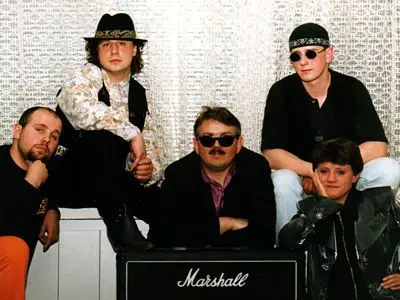
The band Desire soon broke up. “There was no demand in Poland for this kind of music,” the councillor explains. For some time he played at home, until eventually he sold his bass guitar. But he did not give up making music completely. “Once a person has caught this bug, they cannot stop,” says Cezariusz Rudyk. Recently, together with friends, he has been playing—this time on an electro-acoustic guitar—in the parish of the Most Sacred Heart of Jesus. “We meet, compose and play at music,” the PO activist says. “Thanks to it, you can completely switch off and distance yourself from everyday problems.”
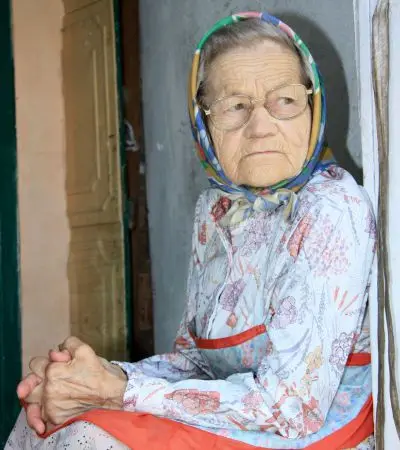
The passion of Ewa Ołenicz-Bernacka is photography. What fascinates the councillor is its ability to capture a moment. “I have been involved with photography since childhood,” says the PO activist. – “I had a wonderful grandfather. I always boast about him; he was a great man. In fact, I cannot remember him without a camera.”
The future councillor’s grandfather liked photographing people. “Portraits interest me most as well,” Ołenicz-Bernacka admits. “Photographs preserve life to some extent. Especially when they show people who have passed away and whom we loved. That is their great value,” she adds.
The PO activist’s husband, Piotr, shares her passion for photography. The couple’s work could be seen at Galeria Concordia last year. “I could not live without photography,” the councillor emphasises. Many of the Bernackis’ acquaintances take photographs. “You could say it is contagious,” Ewa Ołenicz-Bernacka says with a smile. – “But that is a good thing. Reality should be preserved. The more we leave behind, the better picture our descendants will have of what we were like.”
The councillor works as a teacher at Gimnazjum Samorządowe No. 2. She has a display case there where she exhibits her photographs. What is more, thanks to her work at the school, she can pursue another great passion—theatre. She writes scripts for school performances and takes her pupils to various shows.

She caught the theatre bug in high school. The school theatre staged, among other works, Molière’s “The Imaginary Invalid”... in the original. “The performance was so well received that we performed it for the French attaché,” says the PO activist. From then on, she regularly attended the theatre. She had the opportunity to see such excellent productions as “Apocalypsis cum figuris,” directed by Jerzy Grotowski; “November Night” by Andrzej Wajda; and “Dziady,” staged by Konrad Swinarski. “Theatre is a mystery,” she emphasises.
Bogusław Nowak had been passionate about art since childhood. “I drew, painted, and then sculpture fascinated me. For a while I wanted to be a sculptor,” the PO councillor recounts. In Warsaw, he happened to learn that the “Studio Kineo” theatre was holding auditions for a mime troupe. “I went to the audition out of curiosity and passed,” he says. – “I was fascinated. I fell into it completely.”
Then he had to flee the country. He ended up in Paris, at the school of Marcel Marceau, regarded as the greatest mime artist in history. “Mime became my passion. I love the stage; I feel like a fish in water on the theatre boards. There I can open up certain dimensions that I do not open up in everyday life; there I become whole,” the councillor recalls.


When he left the profession, he promised himself that he would not become a frustrated artist. “I decided to give myself some time to wait it out, to wait for a better constellation. The time will come when I can return to mime,” he says. – “I still carry this passion in my heart. It is difficult to cut oneself off from the things we love. Someone who has tasted a creative way of life will find it difficult to give it up.”

Today he tries to be a cultural animator. “I do not consider myself a politician,” he emphasises. – “I am rather an artist who fights for certain values, while politics is dirty and full of hypocrisy. It is not a language that can be used on stage.” He adds that he is primarily interested in cultural policy.
Why does art play such a major role in his life? “God gave me a certain restlessness that constantly pushes me towards new challenges,” he explains. “I cannot bury myself in television, sitting on the sofa in warm slippers. I have all that, but it does not serve me. My passions give my life meaning,” he adds.
(GA information)