
Three of them concerned granting consent for the indefinite lease of municipal commercial premises through a non-tender procedure. This decision supports the existing tenants in continuing to run their businesses steadily. The councillors also made changes to the membership of the Budget and Finance, Economy, Civic Affairs and Family Committee, as well as the Education, Culture and Sports Committee.
Most attention was devoted to the draft resolution setting out the recruitment criteria for public kindergartens, preschool departments in primary schools, educational and youth institutions (the Youth Culture Centre), and institutions providing care and education to students while they attend school away from their permanent place of residence—that is, boarding facilities. The issue concerned additional recruitment criteria, which will apply when places remain available at these institutions after the basic recruitment process and can still be taken up.
Among the kindergarten criteria, the highest number of points is awarded when the candidate’s sibling already attends the institution. The main criterion for admission to available places in MCK activity groups is that the candidate has participated in such activities for at least one year. Applicants seeking a place in a boarding facility receive preference, among other circumstances, if they come from large families, if they, their parents or siblings have disabilities, if they are being raised by a single parent, or if they are in foster care. There are, of course, more criteria.
The City Council adopted the resolution by a substantial majority, together with a motion submitted by councillor Jacek Baczyński. At the same time, it rejected an amendment proposed by councillor Maciej Kupaj.
It is worth recalling that, in the current school year, preschool education in Legnica is provided by a network of fifty institutions: 15 municipal kindergartens, 17 non-public kindergartens, 6 non-public preschool centres, and departments organised in 12 primary schools (including one private school).
Legnica has ensured that the community’s needs for preschool education are fully met. This is not a common occurrence at the regional or national level. In the 2014/15 school year, 3,331 children aged 2.5–6 were enrolled in preschool education. Municipal kindergartens were attended by 1,656 children, non-public kindergartens by 1,186, and preschool departments in primary schools by 489.
The preschool education rate has been steadily increasing year by year and currently stands at 95.25% (approximately 72% nationwide). The city fully provides preschool care for five- and six-year-old children.
Last year, the funds allocated by our city in its budget to provide universal preschool education amounted to approximately PLN 30.5 million. The costs incurred by parents amounted to approximately PLN 2 million. Of the city’s expenditure, approximately PLN 10.5 million consisted of subsidies for non-public institutions. Each child attending a private kindergarten receives a subsidy equal to 75% of the cost of the child’s stay in a public institution, while children attending preschool centres receive a subsidy equal to 40%.
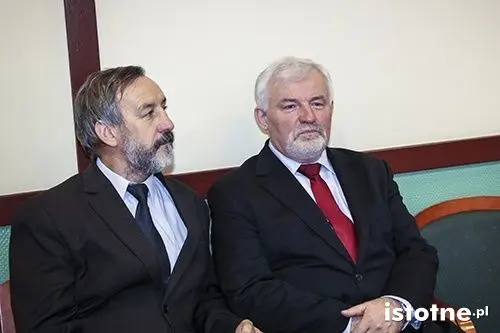


The City Council delegated three representatives from among its members to work on the committee responsible for naming streets and squares: Ryszard Kępa, Ewa Szymańska and Ignacy Bochenek.
UM Legnica/ii