
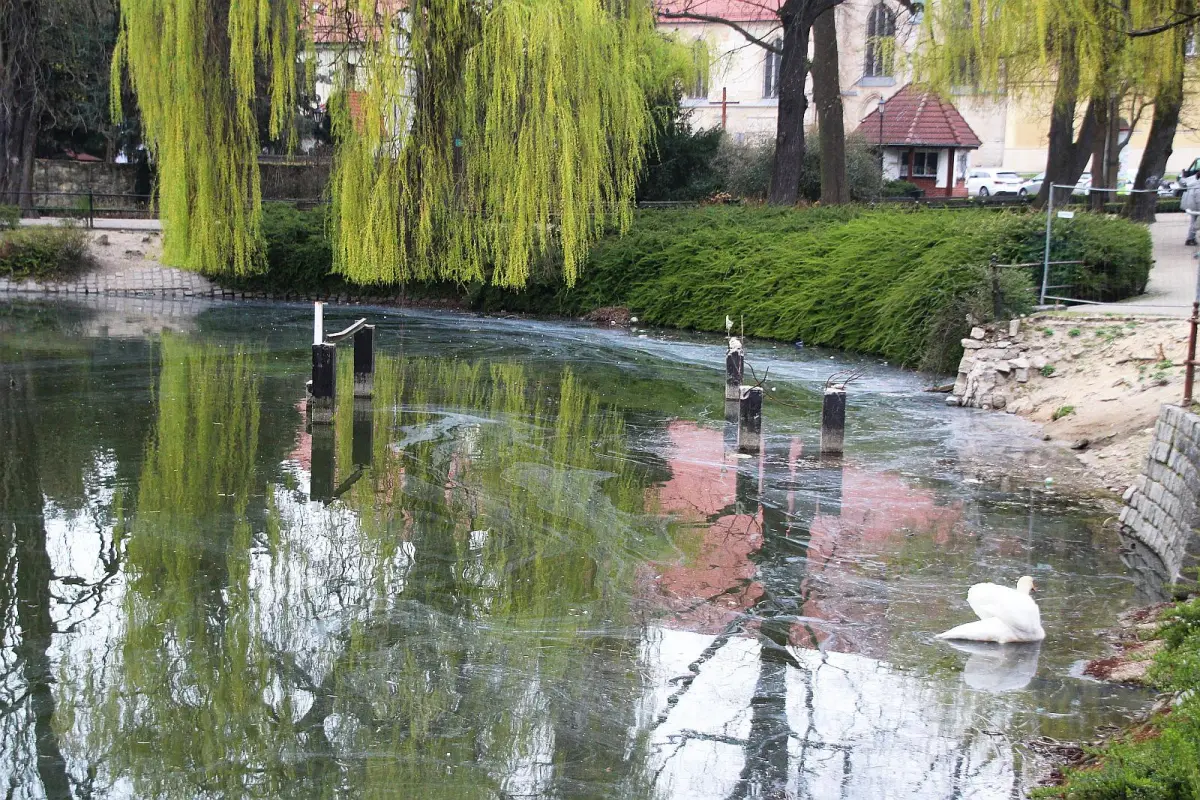
As observations show, the layer visible on the water is most likely a so-called biofilm—a natural sediment formed by the accumulation of organic matter such as fallen leaves, plant remains, and animal excrement. In conditions of limited water flow and elevated temperatures, microorganisms develop more intensively, creating a thin, rippling coating on the surface. In addition, this is the period when trees, including willows, begin releasing large amounts of pollen, which settles on the surface of the water, creating whitish or yellow-white, “marbled” streaks and swirls.
As for the so-called biofilm, specialists stress that this phenomenon is nothing unusual in urban water bodies and, in itself, does not necessarily pose a direct threat to waterfowl. However, its presence indicates an increased amount of organic substances in the water, which in the longer term may lead to a deterioration in its quality and, in extreme cases, to oxygen deficiencies.
For ducks and swans, the overall condition of the aquatic environment is crucial. Excessive pollution may affect food availability and living conditions, which is why monitoring the condition of the pond is so important.
The phenomenon is also significant for the fish living in the pond. The decomposition of organic matter and the development of microorganisms lead to the consumption of oxygen dissolved in the water. If oxygen levels become insufficient, fish may experience stress, become more susceptible to disease, and in extreme cases die.
Young individuals and species requiring well-oxygenated water are particularly vulnerable. In addition, deteriorating environmental quality may limit the availability of natural food.
Residents can help improve the situation by avoiding throwing waste into the water and limiting the feeding of birds with products unsuitable for their diet, such as bread.
The presence of biofilm is therefore a signal that the pond requires observation and, if necessary, maintenance measures, such as cleaning the pond.
Taking this opportunity, we remind you that a major investment will soon begin at the pond. Among other things, it is intended to improve water quality, increase hydrological safety, and strengthen the pro-environmental character of Bolesławiec’s green areas.