
That some provisions of Polish law may seem absurd requires no convincing. Can someone employed by a company remain on unpaid leave for 20 years? It turns out they can. As reported by “Gazeta Wyborcza”, Jacek Karnowski, the mayor of Sopot, has been an employee of the Railway Design Office in Gdańsk for more than two decades.
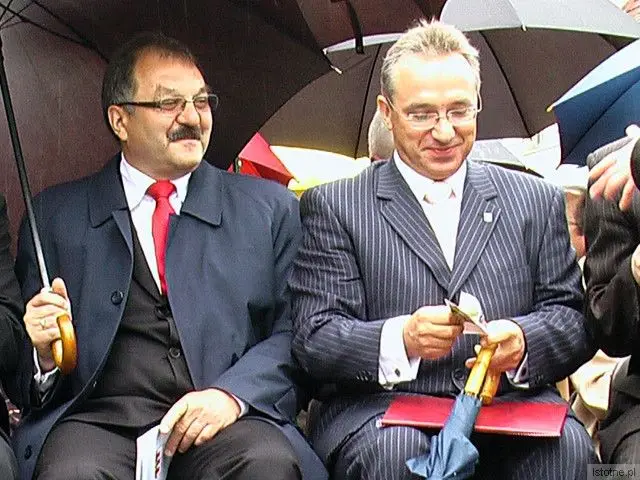
Our local government officials also take advantage of this privilege. Mayor Piotr Roman is still an employee of a county educational institution (I LO in Bolesławiec), while county head Cezary Przybylski is employed by the Primary School in Raciborowice (before becoming deputy county head, he was its principal). They have been on unpaid leave for more than a dozen years.
“This type of leave is simply due to people elected to public office, such as members of parliament or senators,” explains Agata Kostyk-Lewandowska, spokesperson for the National Labour Inspectorate in Wrocław. “It cannot be the case that someone elected as a member of parliament is punished with the loss of their job for that reason. Most parliamentarians, if not all of them, are on unpaid leave. They need somewhere to return to.”
“The county head is on unpaid leave, my deputy Kornel Filipowicz is too, and I suspect that Dariusz Kwaśniewski is as well,” Piotr Roman lists. “This is a mass phenomenon, involving tens of thousands of people in Poland—people serving in public office. The legislature ensured that after their local government terms ended, they could return to work. It costs taxpayers nothing. The situation could look bizarre if I were still employed at the school and receiving money for it.”
The local government careers of both officials are progressing fairly well. However, neither rules out returning to their former jobs. “I was elected for four years, and I do not know what I will do after this term ends. I remember my time working at the school very well; I worked there for seven years,” says Roman. “I could return to the school in Raciborowice as a teacher, not as principal. There are formal and legal barriers preventing me from doing so,” Przybylski claims. “Different things can happen in life. I come from a particular professional environment, and the law guarantees me a return to my former job. It threatens no one in any way.”
The case of Jacek Karnowski shows that a sensible legal solution can sometimes be taken to absurd lengths. “The law permits this type of action. Whether it should be that way is not for me to judge,” adds Agata Kostyk-Lewandowska.
Dariusz Kwaśniewski did not find time for us.
(information: GA)