
In October last year, we reported that the City Council had rejected a draft resolution on adopting a program to prevent animal homelessness. Only two female councillors voted in favor. Members of the Animal Assistance Association wanted City Hall to implement a program that would include, among other things, sterilization and neutering procedures as well as comprehensive vaccinations for free-roaming dogs and cats. The Council did not approve it. “There are so many human needs. PLN 280,000 for dogs and cats. Such an amount, even though I personally like animals, should not be considered at all,” Eugeniusz Kowalski, a Law and Justice councillor, said at the time. “Before the vote, the councillors read the estimated costs of implementing the program, which indicated that the total would amount to PLN 280,000. This is an excessively inflated figure that misled the councillors,” commented Anna Ryżewska, head of SPZ.

In March this year, we reported that the Animal Assistance Association had submitted a letter to the City Council requesting that the draft resolution on adopting a program to prevent animal homelessness be placed on the agenda again. Janina Piestrak-Babijczuk, the Council chair, did not include this item in the agenda for the session. The document was sent to the Infrastructure, Spatial Planning and Construction Committee, headed by Hubert Prabucki of Ziemia Bolesławiecka. “Why this committee in particular?” Anna Ryżewska wondered at the time. “We wanted every councillor to read the letter.”
The letter says: “We believe that the Bolesławiec City Councillors should once again examine as soon as possible the Resolution on adopting the Program to Prevent Animal Homelessness, but this time on the basis of a reliably balanced estimate of the cost of its implementation. Annually, it amounts to PLN 80,000 for:
- sterilization of homeless cats and dogs (PLN 50,000)
- treatment of homeless animals (PLN 30,000).”
“We carefully analyzed the draft resolution. Bolesławiec veterinarians made amendments, among others. But if the program still contains any errors, they can surely be corrected,” the SPZ chairwoman told IstotneInformacje.pl. “The city authorities disregard the provisions of the Animal Protection Act. Regarding care for homeless animals, the municipality has done nothing this year. I have the impression that we are doing everything for them. This is the city authorities’ attitude toward volunteer work.”
What next?
Three councillors (Ewa Ołenicz-Bernacka, Irena Dul and Bogusław Nowak) want the matter to return to the City Council’s agenda. “Everyone approaches this issue quite emotionally. We will never reach an agreement this way,” says Ewa Ołenicz-Bernacka. “We have both moral and social obligations toward animals. Their homelessness affects us. The fact that we care about homeless animals does not mean that homeless people do not matter to us. Putting these two issues together is absurd, abusive and an attempt to postpone the matter. People live in an ecosystem, and animals are an important part of it.”
Hubert Zimmermann, a student at Municipal Gymnasium No. 2 in Bolesławiec, holds a similar view. “In my opinion, these two matters can be reconciled,” he says. “The problem is that some people do not care at all. Children should grow up with animals. Someone who takes care of animals from an early age learns to love them and will not hurt them.”
There is an animal assistance club at GS No. 2. Last autumn, the school’s students organized a fundraiser for the shelter in Dłużyna Górna (Zgorzelec County). “We managed to raise PLN 300,” Hubert says. “Such initiatives are needed. A harsh winter was approaching, and about 200 dogs were staying at that shelter. It breaks your heart to see all those animals. The initiative will continue every year,” he promises.

Regarding the draft resolution, we contacted Mieczysław Kula, head of the Society for the Protection of Animals in Dłużyna Górna and manager of the local shelter, as well as author of the draft program to prevent animal homelessness on the basis of which a similar program is being developed for the Zgorzelec Municipality. In an email to us, the TOZ head wrote (abbreviations and emphasis are from the editorial staff):
The resolution [tej, która ma ponownie trafić pod obrady Rady Miasta – przyp. red.]indicated that the issues of animal homelessness, their capture and care were addressed by another resolution. I would first like to address this point.
A municipality’s fundamental task, arising from the Animal Protection Act, is to provide care for homeless animals and to capture them [...]. This provision is ineffective wherever a municipality cannot benefit from an animal shelter. In such cases, every action taken is merely superficial and, to put it mildly, on the borderline of legality. This applies to the city of Bolesławiec.
Unfortunately, no legal provision obliges municipalities to create intermunicipal shelters or to have a signed agreement with an existing shelter for capturing and collecting stray animals in emergencies. That is why many municipalities take the easy way out, violating the law in the process, and sign agreements with an entity authorized to capture stray animals, which often has no agreement with a shelter to accept the animals it captures. Thus, they [samorządy]limit their actions to simply using a dog catcher, who captures the animals and does something with them that does not burden municipal budgets. I know of cases in which a company captured dogs in Bolesławiec and “placed” them in a refuge/shelter in Białogard. The shelter had a bad reputation. No one checked whether the animals really arrived there. The city assumed that it was no longer its concern. The problem and the dog had been “disposed of”. This is mistaken thinking: simply capturing an animal and placing it in a shelter does not change the fact that it is still a homeless animal under the municipality’s care. And in such a situation, how can an owner whose pet has gone missing retrieve the dog when the place where it is being kept is hundreds of kilometers away? [...]
Municipalities that believe they can afford to capture animals but can no longer afford to provide them with effective care must come into conflict with the law. If a municipality has no “own” shelter or signed agreement with a shelter capable of providing comprehensive care for animals, it can turn to various forms of cooperation with residents. For example, it can commission individual people to provide care, subsidize and support small shelters run by animal lovers, or organize distributed care in another way. If settlements are based not on the start of care—as in the case of capturing animals—but on its completion, for example by arranging an animal’s adoption, the total cost of caring for homeless animals may prove lower, and resolving the problem of animal homelessness more effective. This nevertheless requires some initiative from municipalities. [...]
In the long term, the most appropriate solution to the problem of homelessness is to create intermunicipal shelters. [...] An intermunicipal shelter even enables small municipalities to address the problem legally and humanely, at costs proportionate to their needs. I have been managing precisely such a shelter for eleven years. [...]
I wholeheartedly support widespread sterilization of domestic animals that are not intended for breeding. [...] As for free-roaming cats, yes—specific funds should be allocated for this every year. I can advise how others and our organization do it (using our own funds, we have sterilized approximately 250 female cats and 18 female dogs). Dogs, however, are the individual responsibility of their owners. Mechanisms should simply be introduced to encourage owners to have their pets sterilized. For example, by using an instrument such as a dog tax.
Another way to prevent homelessness is so-called microchipping, but the draft did not mention it. That is a shame. This campaign should be permanent, not occasional. I do not know how it is in Bolesławiec, but in many municipalities microchipping is not accompanied by enforcement of this obligation, so it has no effect on reducing homelessness. [...]


“This is the opinion of someone who runs a shelter and sees the problem only from that perspective. In my view, it is quite narrow. Not all actions can be subordinated to the idea that an animal must end up in a shelter,” Anna Ryżewska comments. “In many municipalities, sterilization operates independently and proves effective.”
According to Ryżewska, Bolesławiec should primarily focus on sterilizing homeless animals. “There is a specific population of cats living in our allotment gardens. They are fed, treated and dewormed with private funds, although in reality this is the city’s responsibility,” the organization’s head emphasizes. SPZ has established contacts with the boards of three Bolesławiec Family Allotment Gardens. “We covered part of the sterilization costs, while the allotment holders contributed the rest. Cooperation was established, and there are already results,” Anna Ryżewska adds.
“Mr. Kula writes that the municipality could ‘commission individual people to provide care, subsidize and support small shelters run by animal lovers, or organize distributed care in another way.’ How? Our municipality has had no idea how to do this for years. And worst of all, it does not want to confront the problem,” says the SPZ chairwoman. “I repeat once again: it is not that we want something for ourselves. We are simply demanding that the law be implemented in practice.”
More months are passing, and Bolesławiec still has neither a shelter nor a program to prevent animal homelessness. It is not yet known when this situation will change. We will return to the matter.
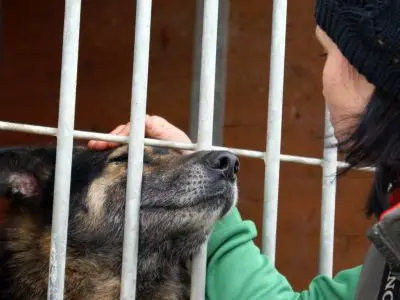
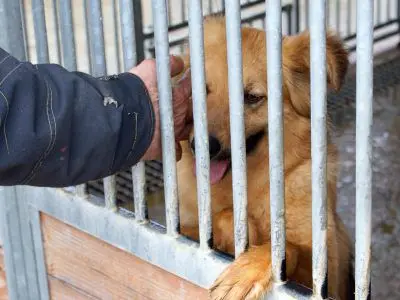
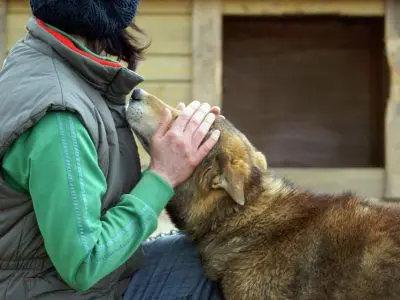
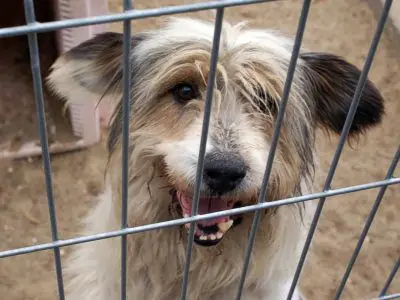
(information ii; the photographs were taken at the shelter in Dłużyna Górna)