
Dust mites, or parasites living in our homes, are too small to be seen without a microscope. They do not transmit any diseases and pose no threat to humans. However, dust mites are a serious problem for allergy sufferers. They produce allergenic feces that enter the body through contact with the mucous membranes of the nose, eyes and lower respiratory tract. Dust mite feces are so small that they become airborne, for example when we sit on a bed, armchair or sofa, and remain suspended for at least 30 minutes before settling again.
What are dust mites?
House dust mites are microscopic arachnids that like dark, warm and humid places – they reproduce best under these conditions. They are found in every nook and cranny of the home, and their remains and feces are allergens. These tiny creatures feed on human skin, so most of them are found in beds.
In autumn and winter they launch an assault because they have excellent conditions for development during this period – the temperature in homes is often too high.
Symptoms of dust mite allergy
Symptoms associated with dust mite allergy occur primarily in the morning, when getting out of bed. This is because our sleeping area is full of tiny arachnids and their allergenic feces. Symptoms of dust mite allergy include: watery eyes, an itchy nose, a runny nose, rhinitis and bouts of sneezing.
Unfortunately, this allergy is chronic, so fatigue, drowsiness, impaired concentration and headaches may also occur. House dust mites are the most common cause of bronchial asthma. Inhaling airborne house dust mites by people with atopy can also lead to the development of atopic asthma. Prof. Jerzy Kozielski, MD, PhD – an allergist and pulmonologist from the Department of Lung Diseases and Tuberculosis at SUM in Zabrze – explains the nature of this disease in the film “Atopic asthma – who can develop it”.
Remember!
- In winter, people spend an average of 90% of their time indoors, including an average of 8 hours in bed – the place where there are the most dust mites.
- Regularly vacuuming the bed helps eliminate not only dust mites but also their remains (feces), which are a powerful allergen.
- Indoor air is usually 2 to 5 times more polluted than outdoor air.
- Dust circulating in the home, containing dust mites among other things, penetrates the lungs and mucous membranes, weakening the respiratory and immune systems.

Fighting dust mites
Dust mites are ubiquitous and can stick to various objects along with dust. Even very thorough cleaning does not guarantee that they will be completely removed from the home. However, it is worth trying to limit their presence.
Bed and bedding
The bed is one of the largest concentrations of dust mites. It is best to choose one that allows the floor beneath it to be washed easily. Another very important item is the mattress. According to some studies, a double mattress may contain up to two million dust mites. Some people try to vacuum them because they believe this will get rid of the dust mites. In reality, however, they attach themselves to the fabric with their legs, so only a small proportion of the tiny arachnids is removed. Therefore, it is best to use dust-mite-proof covers – this can protect not only the mattress but all the bedding. Covers should be wiped with a damp cloth every week and washed twice a year or according to the manufacturer’s instructions.
Within 12 months, a new pillow will become as much as 10% heavier because of the dust mites, their feces and shed skin inside it. It is therefore worth protecting it by putting on a dust-mite-proof cover.
All sheets, duvet covers, pillowcases and blankets should be washed weekly at a temperature of at least 56 degrees Celsius (at lower temperatures, dust mites survive, although the allergens and dead specimens will be washed out). Mite-killing products, such as benzyl benzoate, can be added to the wash. It is also a good idea to set the washing machine to an extra rinse.
On cold days, it is worth airing bedding outdoors. Bedding can also be frozen by putting it in a freezer – frost will kill the dust mites.
Radiators and windows
The radiator should be cleaned thoroughly once a week because the heat it produces attracts dust and, along with it, dust mites. Curtains should be washed frequently – at least every two weeks. It is best to give up curtains and replace them with vertical blinds, which do not retain dust. Windows should be cleaned thoroughly once a month.
Floors
Underfloor heating is a poor solution because it causes dust mites to circulate throughout the home even more than a radiator does. It is best to choose a hard-surface floor, such as linoleum or wood, which is inhospitable to dust mites. It is easier to keep clean than carpet. Floors should be cleaned every day.
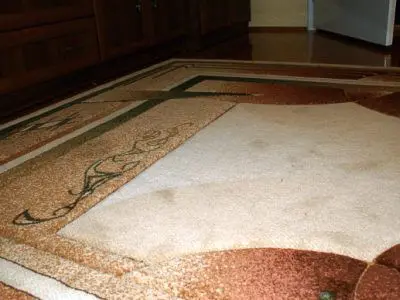
For a room, it is best to choose a short-pile carpet because it is easier to keep clean. An anti-allergy carpet is another option; it is made from fibers containing antibacterial and antifungal substances that inhibit the development of dust mites. Carpets should be cleaned daily using a special device with a water filter.
Cabinets, chests of drawers and wall units
An allergy sufferer’s home should not contain too much furniture because dust accumulates on every piece, creating more surfaces that require cleaning. Simple, smooth furniture with few decorations is best – dust can be wiped off more easily. Cabinet doors and drawers should be airtight; otherwise, dust and dust mites will get inside. Bookcases should always have glass doors. It is also advisable to limit the number of ornaments. Furniture should be easy to move because the floor beneath and behind it also needs to be washed. Dust should be wiped from furniture every day with a damp cloth.
Upholstered furniture
Materials that are inhospitable to dust mites include leather and vinyl, making them the best coverings for upholstered furniture for allergy sufferers. Wiping leather and vinyl with a damp cloth once a week is enough to remove dust and dust mites. Fabric upholstery is unfortunately an ideal environment for tiny arachnids. You can of course consider replacing fabric upholstery with leather, or replacing fully upholstered furniture with wooden or plastic furniture.
Bathroom
In this room, it is worth keeping decorations to a minimum to prevent dust from accumulating on them. It is best to place cotton rugs on the floor that can be machine-washed. Tiles are best around the bathtub and sink – they are easy to wash and dry quickly. Once a week, dust should be wiped from or vacuumed off baseboards and window sills.
Specialist methods used by professional cleaning companies
Acaricides – mite-killing products used primarily to remove tiny arachnids from upholstered furniture. They penetrate only the top layer of the material. Unfortunately, as a result, mites hidden deeper may survive, and the allergen still has to be removed later by another method (for example, with a vacuum cleaner). Studies show that an acaricide, such as benzyl benzoate, should be used several times a year. It may reduce symptoms of allergic rhinitis caused by dust mites. However, acaricides should generally not be used in children’s rooms.
Denaturing agents – tannin. It changes the structure of all allergens (denaturing them) – pollen, shed animal skin and dust mites – so that they can no longer cause an allergic reaction. Its disadvantage is that it can discolor light-colored materials and carpets.
Liquid nitrogen – eliminates dust mites by freezing them and loosens dirt containing allergens, which can then be removed with a vacuum cleaner. It is used once or twice a year. It is safe for health and leaves no chemical residue.
Steam – kills dust mites located just below the surface of upholstery. Unfortunately, those hidden deeper survive. After using this method, furniture must be vacuumed to remove dead dust mites and allergens. Steam cleaning must be repeated every three months.
Hot-liquid treatment – eliminates dust mites and denatures the allergens originating from them. This method is effective for mattresses, bedding, soft pillows and curtains. It involves, for example, gently moistening the item with a tannin solution and heating it under cover to a temperature of approximately 100 degrees Celsius.
House dust mite feces are considered a year-round allergen, which is why dealing with this type of allergy is extremely difficult. The problem is that the allergen is present in the home, where people spend most of their time. The home should therefore be arranged in a way that limits dust accumulation. Regular cleaning is also important – perhaps it is worth considering an appropriate cleaning schedule. Fewer dust mites in the home will help allergy sufferers feel better.
information Anna Włoszek
The series “Everything You Want to Know About Allergies” is published in cooperation with the video portal www.JaAlergik.pl.