The Chief Inspector for Environmental Protection issued permission to bring the waste into Poland. As reported by polsatnews.pl:
40,500 tonnes of waste from Germany will come to Lower Silesia. Flue-gas dust will be transported to a quarry in the Municipality of Mirsk. This type of residue cannot be stored in Germany. The recipient of the waste is PRI-BAZALT Rekultywacja Sp. z o.o., based in Rębiszów.
The waste will be transported in secured semi-trailers by heavy goods vehicles through three counties: Zgorzelec, Lubań and Lwówek. The waste coming to Poland is so-called flue-gas dust, which is generated when fuels are burned or during other technological processes. This dust pollutes the air. In Poland, it is to undergo a “recovery operation”.
In Germany, disposing of this type of waste is very costly, so companies look for markets where it can be done more cheaply...
Below we publish information from the Chief Inspectorate for Environmental Protection on the matter:
Transport of waste from Germany to Poland – comment on media reports. Published: 22 September 2020
With regard to media reports concerning the decision issued by the Chief Inspectorate for Environmental Protection on the transport of 40,000 tonnes of waste from Germany to Poland, we inform you that:
The permits issued by the Chief Inspector for Environmental Protection for bringing waste to Rębiszów in Lower Silesian Voivodeship do not concern the import of municipal waste (so-called “rubbish”) or hazardous waste, as suggested in media reports.
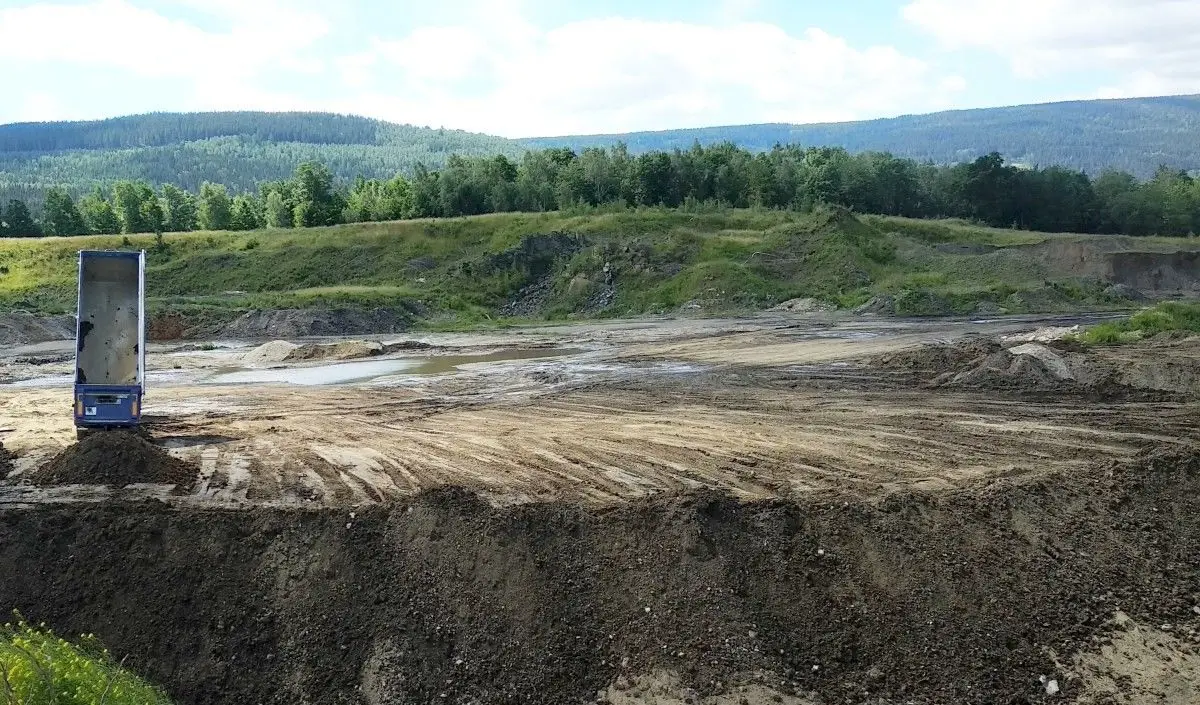
The imported waste is intended to fill a disused post-extraction quarry, which is classified as an R5 recovery process. This process is not equivalent to waste storage.
Mineral waste that does not exhibit hazardous properties is deposited in the quarry, including: used cores and moulds from iron foundries, soil and stones, mixtures of rubble, concrete and bricks, waste in the form of flue dust, and minerals.
The company reclaiming the quarry holds a permit from the Marshal of the Lower Silesian Voivodeship to fill the quarry with such types of waste, and GIOŚ may issue a decision to bring in waste only of these types, after obtaining a positive opinion from the Voivodeship Inspectorate for Environmental Protection and the Marshal of the Voivodeship.
Inspections by the Lower Silesian WIOŚ are conducted on an ongoing basis and have revealed no violations in the reclamation of the quarry or the transboundary movement of waste.
The latest WIOŚ inspection, completed in August this year, during which waste and water samples were taken from the bottom of the quarry for analysis, confirmed both that the types of imported waste complied with GIOŚ permits and that there were no exceedances of permissible limits.
Below is a photograph of the actual reclamation site.