
Police officers from the Wrocław branch of CBŚP, working with officers from the Nadodrzański Border Guard Unit and customs officers from Wrocław, tracked down illegal cigarette production in warehouse buildings in Tarnówek (Polkowice County). Moreover, they reached warehouses in Lubin and Prochowice, where finished products were stored. As they established, cigarettes from these locations were delivered to Psary, a town near Wrocław, where they were repackaged and transported to European markets. The officers also established where the tobacco used in production was supplied from. The goods reached Tarnówek from Jawor and Legnica.
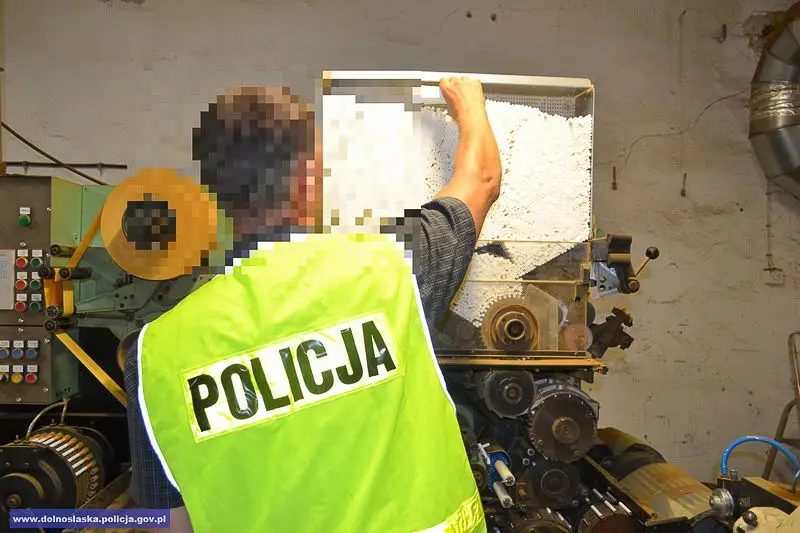
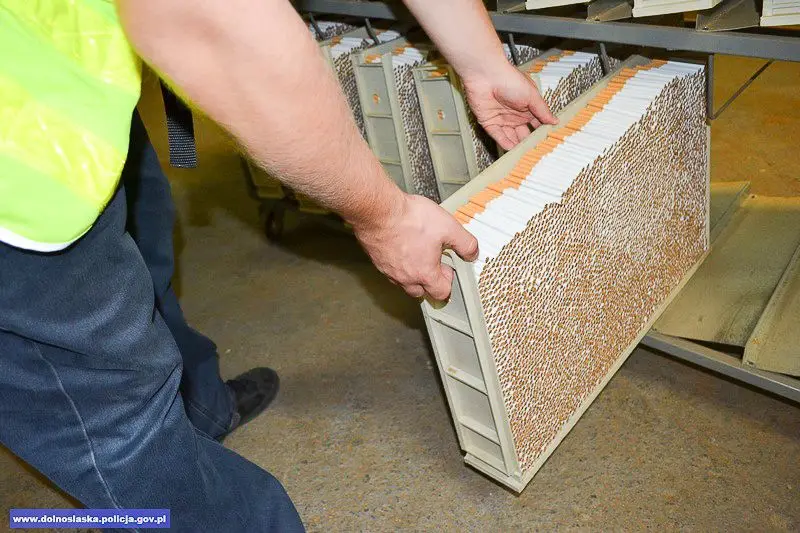
In the main production hall in Tarnówek, police officers arrested seven Ukrainian citizens who were producing cigarettes. They secured a complete production line and a line for packaging finished products, as well as components used for packaging. The machines secured in the hall are worth nearly PLN 1.5 million. The production line had a capacity of 3,000 cigarettes per minute, while the packaging machine could handle 150 packs per minute. The officers also seized 8 million finished cigarettes at the site.
The remaining individuals were arrested at other locations. They were primarily couriers transporting finished products for further distribution, as well as men involved in transloading products in warehouse buildings in Psary. The products were to be hidden in shipments of margarine and sent to Western European markets. In both the vehicles and the transloading hall, the officers seized another several million finished cigarettes.
At the District Prosecutor's Office in Lubin, nine people, including two Poles, were charged with participation in an organized criminal group, an offense punishable by up to five years in prison. The remaining suspects will be held responsible for fiscal and tax offenses. At the District Prosecutor's Office in Trzebnica, they were charged with storing excise goods, an offense punishable by up to three years in prison.
CBŚP/kom. Agnieszka Hamelusz/KWP Wrocław/ii