
Experts who analysed the causes of the collapse of the chimney at the Heat Energy Plant emphasise the strength of the hurricane-force storm that was blowing at the time. The rebuilt chimney is well protected against such a disaster.
In December 2013, the chimney of the Heat Energy Plant in Bolesławiec broke at a height of 9 metres—or was rather blown over—and the 36-metre structure fell towards the bypass. Fortunately, no one was injured.
– According to the experts’ knowledge, the cause of the chimney’s “fall” was Hurricane Ksawery, which caused considerable damage throughout Europe. Strong winds blew from 4 to 10 December 2013, affecting, among others, the United Kingdom, the Netherlands and Germany. In Poland, there were five fatalities and more than 500,000 people were left without electricity – says ZEC president Rafał Koronkiewicz.
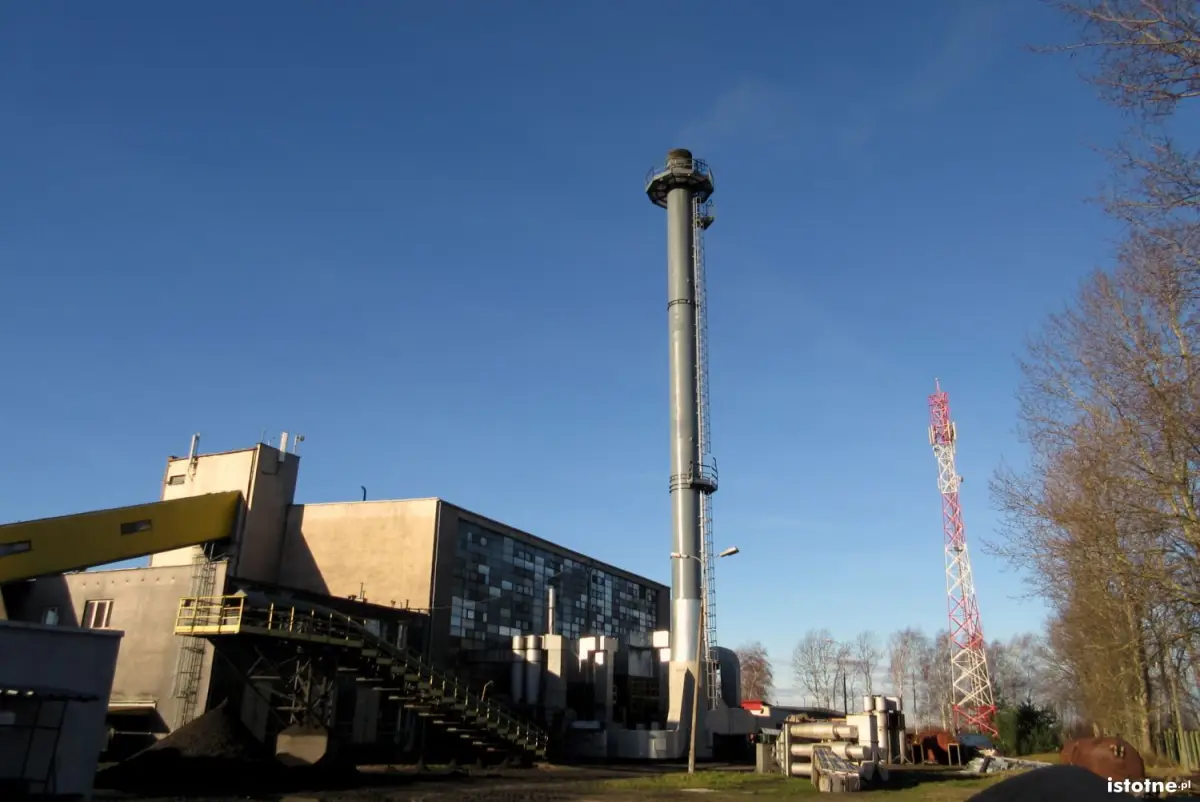
The then ZEC president, Wiesław Ogrodnik, said that the 45-metre chimney built in 2004 broke where the connecting collars were located, at a height of 9 metres. Despite the partial collapse of the chimney, the company maintained continuity of heat supplies to customers.
The rebuilt chimney
The chimney currently serving ZEC is “safer” than its predecessor. It was rebuilt using new technology, in accordance with regulations and standards that had become significantly stricter in the meantime.
It has a double-shell design and differs structurally from the old chimney. The safety system was changed to comply with the currently applicable wind standards. An important innovation currently recommended for structures of this type was used: a vibration damper.
– Steel chimneys tend to enter resonance, and the vibration damper is intended to prevent this. – explains Maciej Gancarz. – In practice, this means that three containers were installed at the top of the chimney. They contain pendulums mounted on bolts and appropriately tuned to the frequency. Put simply, when the chimney tends to sway, they counteract this – adds the head of the Heat Energy Production Department.
The rebuilt chimney is the same height—45 metres. Only the diameter of the flue outlet was slightly reduced. This serves to reduce the nuisance caused by dust emissions: a higher outlet velocity is achieved, and pollutants are expelled higher than from the previous chimney.
The chimney rebuilt after the construction disaster caused by hurricane-force winds was financed mainly from the insurance payment made by the Insurer and partly from the company’s funds.
The rebuilt chimney does not require lighting under the current regulations. ZEC has a written position on this issued by the Civil Aviation Authority and the Air Traffic Service Command of the Armed Forces of the Republic of Poland.
Expert assessment
We also present an excerpt from the expert assessment concerning the collapse of the chimney in 2013.
Based on measurements of the chimney shell’s thickness, static and strength calculations, and an inspection of the existing structure, the condition of the chimney was assessed as good, meaning that it ensured continued safe operation.
The calculations assumed a static model in the form of a cantilever anchored in the foundation. Fatigue stresses were determined for the chimney’s operating period of 9 years, with a further expected service life of 8 years. When determining the wind load, additional loads from the installed antennas and the increased surface area in the turbuliser section were taken into account.