
On Friday, 28 November, the Facebook profile of the Volunteer Fire Service in Nowogrodziec published a post saying that emergency entrances onto the A4 had been blocked. The Nowogrodziec firefighters wrote:
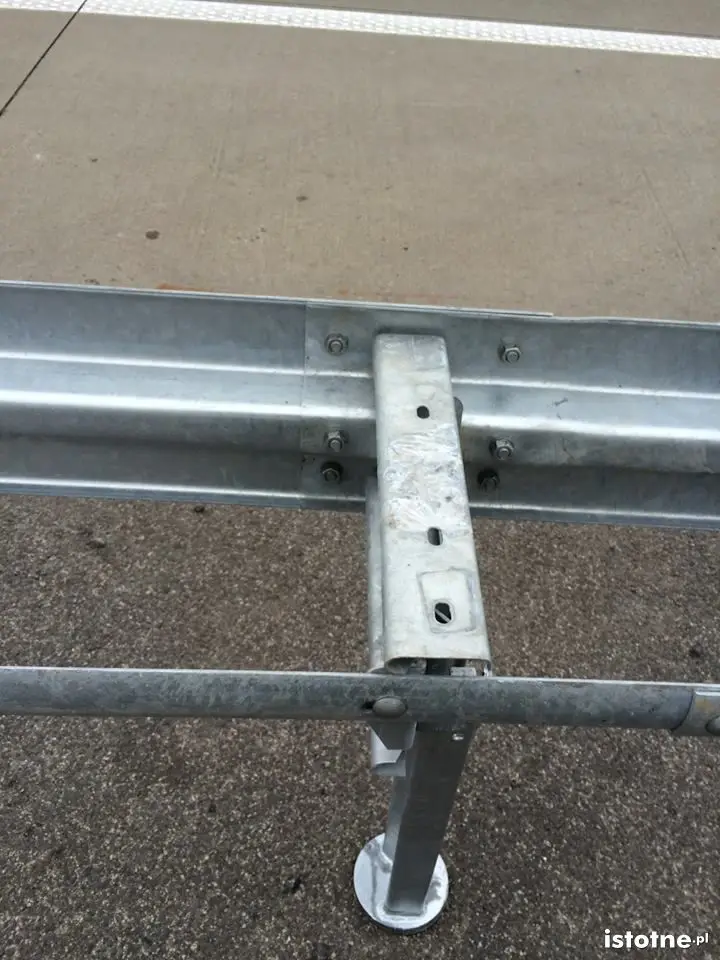
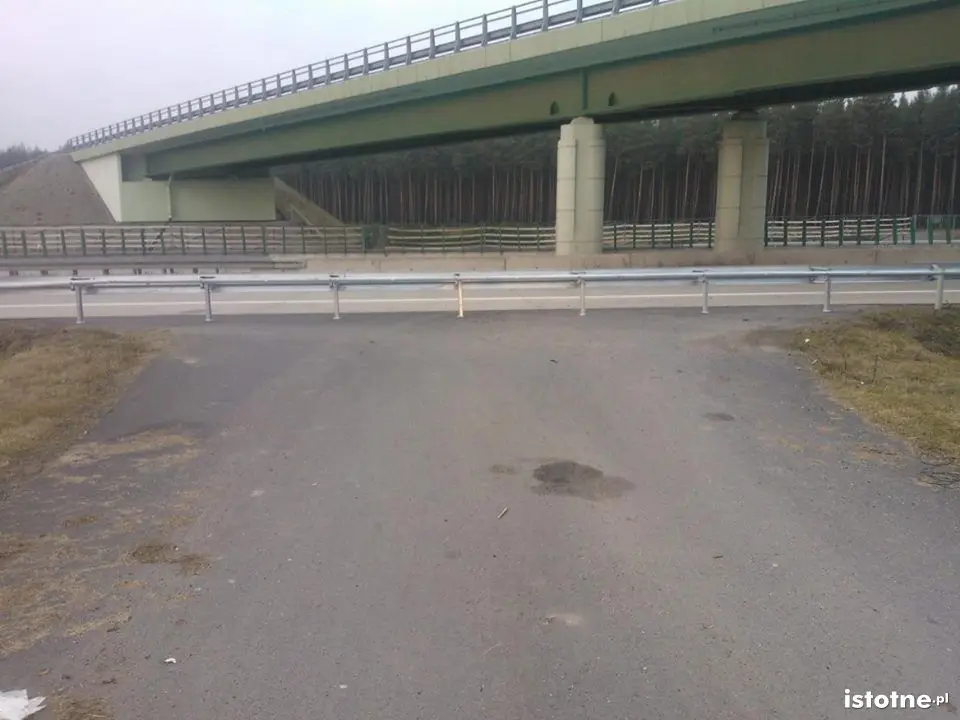
Today we noticed that on our A4 motorway, road workers blocked the emergency entrances with metal plates. They are used by the ambulance service, fire service and police to enter the motorway when accidents occur. From today, everyone travelling on the motorway through Bolesławiec County may feel more threatened. If an accident occurs, injured people will have to wait much longer for help. Because of the high speeds of vehicles, accidents on the motorway are considerably more serious, and people can become trapped in damaged cars. In such cases, every minute before first aid is provided matters. Until now, we had the option of making emergency entrances onto the A4 at several locations, and injured people could count on reasonably quick assistance. The situation has now changed considerably, and we fear that a tragedy may occur.
The firefighters wrote that previously they could reach an accident at kilometre 32 of the motorway in 10 minutes, covering 10 km; now the route is extended by 18 km. According to them, the current response time to an accident will increase by almost 18 minutes.
They added:
We tried to check how blocking the emergency entrances would affect the response time of services from Bolesławiec. Just a few days ago, emergency services often used the emergency entrance near Osieczów. It is located at kilometre 38 of the A4 motorway. At present, the distance from Bolesławiec to the entrance at kilometre 38 is approximately 6.5 km, which means the journey takes six minutes. Unfortunately, after the entrance was blocked with metal plates, reaching kilometre 38 of the motorway via the Łąka interchange will take longer: almost 14 km instead of 6.5 km. The response time of the emergency services will practically double and exceed 12 minutes (previously it was six) [podkreślenia pochodzą od redakcji].



On Friday, we contacted Michał Radoszko, spokesperson for the Wrocław branch of the General Directorate for National Roads and Motorways. He asked us to send our questions by email.
We contacted him again this morning. As it turned out, the installation of the barriers was not accidental. “We conducted an audit; the road was used not only by authorised emergency services [chodzi m.in. o lokalnych mieszkańców – przyp „ii”]. The barriers were necessary because of safety requirements. That was the opinion we received. The entrance has been driven over repeatedly, and when that happens, it loses its properties,” the spokesperson explained.
However, he stressed that the barriers installed on the A4 are “quickly dismantled.” “We use them in most solutions on the A4; this was consulted with the State Fire Service. They are easy to dismantle: you just drive up, knock out the spikes and lift the barrier upwards,” Michał Radoszko added. “These barriers do not cause major problems. This is not some kind of whim.
Robert Brzeziński, spokesperson for the Bolesławiec County Headquarters of the State Fire Service, sees it quite differently: “Nobody consulted us about this; we were just as surprised as the volunteer firefighters. If GDDKiA had approached us about this, we certainly would not have agreed to this solution. And this is not about us, the firefighters; it is about residents’ safety. You cannot block everyone’s access in this way.Robert Brzeziński, spokesperson for the Bolesławiec County Headquarters of the State Fire Service: “Nobody consulted us about this; we were just as surprised as the volunteer firefighters. If GDDKiA had approached us about this, we certainly would not have agreed to this solution. And this is not about us, the firefighters; it is about residents’ safety. You cannot block everyone’s access in this way.
The Bolesławiec fire service spokesperson also addressed how easy it is to dismantle the barriers. “Sixteen bolts have to be unscrewed. It is indeed not complicated, but it is certainly time-consuming,” he added.
And—as we know—when an accident occurs, every minute matters. What do our readers think about this? We invite you to join the discussion.
Update: 2014-12-02 9:50
We publish Michał Radoszko’s more extensive explanation:
The barriers in question were installed as part of the task “Execution of works related to the implementation of the updated Permanent (Target) Traffic Organisation Design for the Zgorzelec–Krzyżowa A4 motorway from km 0+000 to km 51+461,” carried out by GDDKiA Wrocław Branch. At the entrances, quickly dismantlable barriers were installed, and all services should be able to remove them very quickly in the event of an incident on the motorway. We suggested conducting exercises for the relevant services involving the dismantling of the barriers. I also informed them about instances of unauthorised vehicles using these entrances and exits, which created a traffic hazard[podkreślenia pochodzą od rzecznika – przyp. „ii”]. This was one of the main reasons for installing this type of solution, which will eliminate the related hazard and improve safety. Moreover, this year, during two meetings organised at GDDKiA’s initiative concerning improved safety and cooperation on the A4 motorway, services including the fire service, ambulance service and police took part. Both representatives of regional and county units attended. At these meetings, we informed participants about the quickly dismantlable barriers used along the A4 motorway. We also remain available for any joint exercises, which will certainly reduce the time needed for units to reach the scene. At present, we do not anticipate dismantling the barriers in question.