
Gierałtów is a sprawling village with somewhat dispersed buildings, located approximately 220 m above sea level. Until 1945, it was known by the German name Gersdorf am Queis. The first historical references to the village date back to the 14th century.
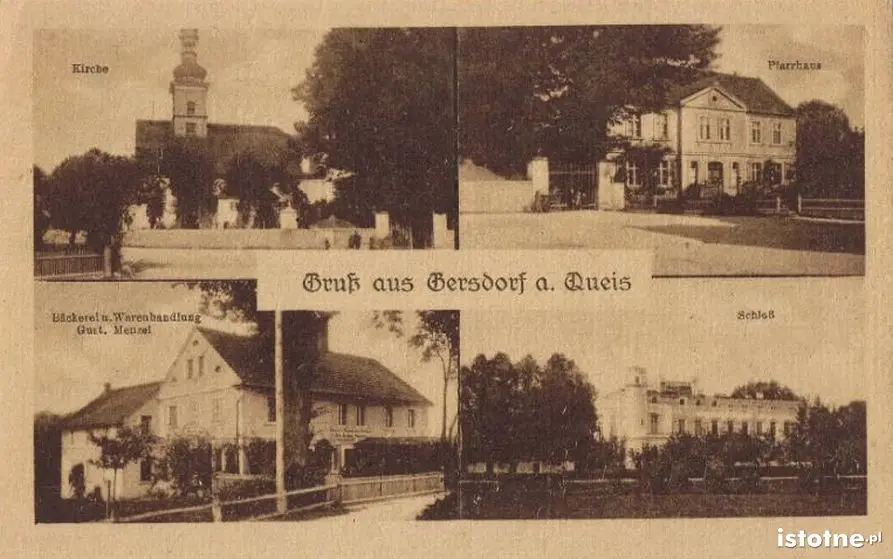
In the central part of the settlement stands the Church of St Anthony, which was built in the 15th century. A tower was added in 1701, and was subsequently dismantled at the end of the first half of the 20th century. In 1780–81, the church was thoroughly rebuilt and adapted for the needs of Protestants. Inside, we can admire a stone baptismal font, an organ and some of the furnishings brought after 1945 by people who arrived from Świrz (the former Eastern Borderlands), including a sculpture of the Resurrected Christ, a painting of the Madonna and Child, Stations of the Cross and a reliquary. Epitaphs commemorating former residents remain on the church’s exterior walls.
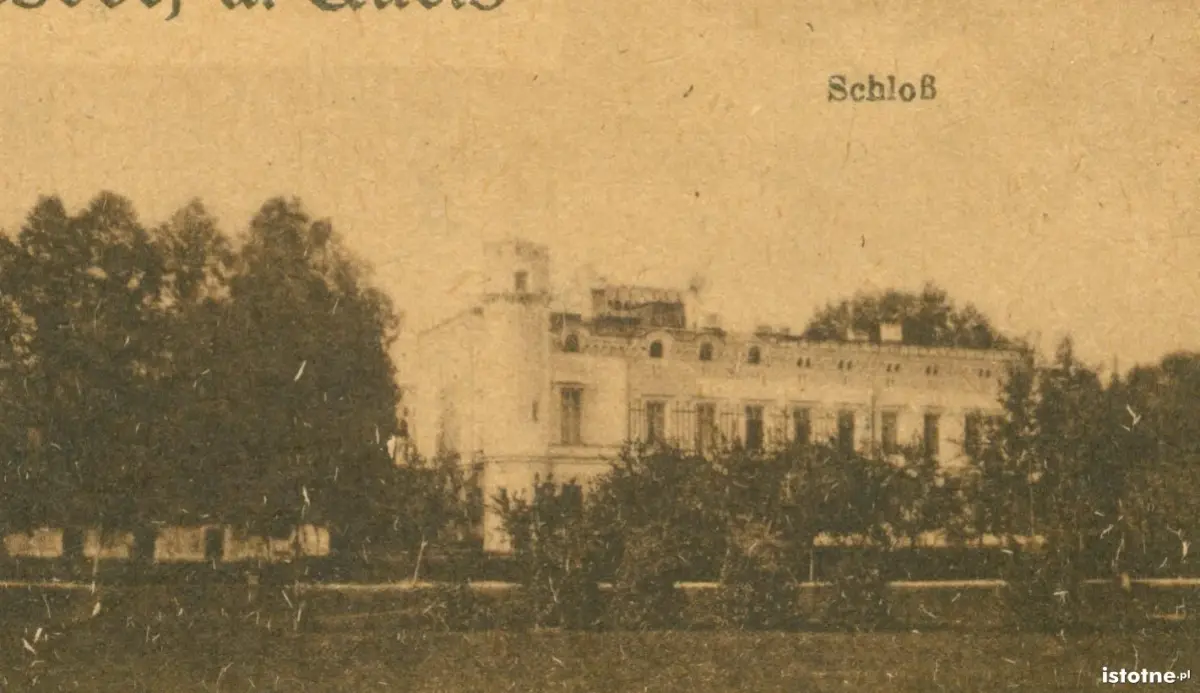
The settlement once had a beautiful palace, whose walls welcomed the most prominent figures of the time, including the German Romantic composer Richard Wagner and the Danish fairy-tale writer Hans Christian Andersen. Unfortunately, only a fragment of it and the palace park, with a silver maple more than 115 years old, have survived to the present day.
Throughout its history, Gierałtów belonged to many distinguished families, including the Penzings of Pieńsk, the Rechenbergs of Osiecznica and Kliczków. The surrounding area also had rich quartzite deposits, which was extracted and processed in a local factory, providing employment for nearby residents.
During the interwar period, the settlement was famous for its delicious beer, served at the local brewery. After the end of the Second World War, the population was exchanged from German to Polish. People from Świrz arrived in the former Gersdorf; during the Second Polish Republic, Świrz had been the seat of a municipality in Tarnopol Voivodeship.
In the first post-war years, Gierałtów was called Stara Zaruda or Przybórsk. Today, the village is home to approximately 1,200 residents, and we can admire the architecture of former Gierałtów on old postcards.




Sebastian Zielonka – historian and graduate of the University of Wrocław. Specialization: archival science and conservation documentation. He is interested in the history of the region and the social life of Europeans in the 20th century. In his free time, he travels.
Sources: W. Bena, A. Paczos, Following the Kwisa, Lubań 2009; Lower Silesia – A Historical Monograph, edited by W. Wrzesiński, Wrocław 2006.