
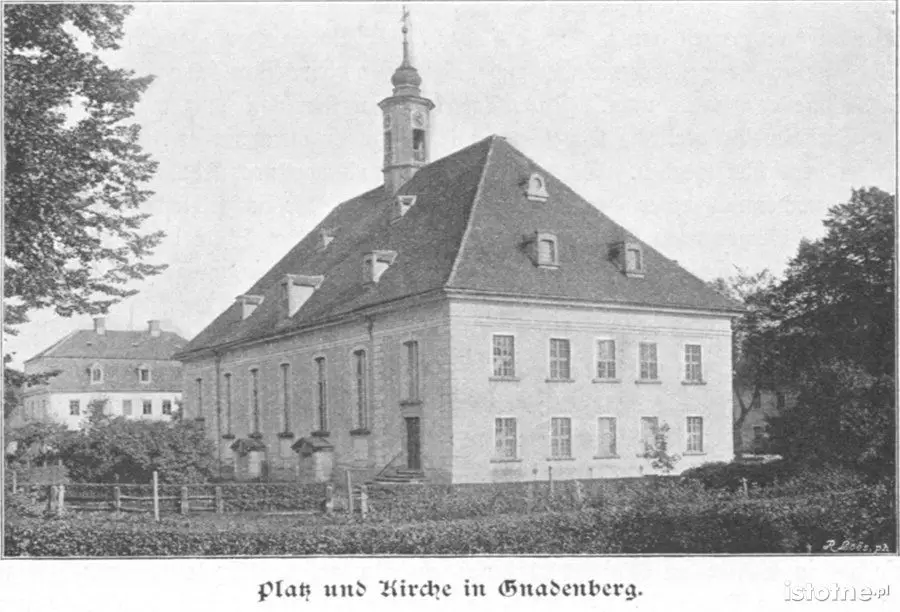
Moravian Brethren in pre-war Gnadenberg, now Godnów, constituted the majority of the inhabitants. They created from scratch the settlement that is now administratively part of Kruszyn.
After years of persecution and forced resettlement, the Moravians had to flee their native Catholic Moravia. In 1721, they found a place to settle in the Saxon estates of Prince Nicholas Ludwig von Zizendorf.
The Brethren advocated moral integrity and deep piety, developed through profound spiritual work. This principle was close to the outlook of Prince Zizendorf, who supported them spiritually as their leader until the end of his life. He donated land to the newly arrived settlers for the settlement of Herrnhut, near Zgorzelec, founded in 1722.
In the newly established town, the settlers formed a religious and economic community. Initially, the settlement was called the Brethren of Herrnhut. All its members, regardless of sex, age, nationality or social origin, were equal and obliged to contribute through their work to increasing the common wealth; they could also use it to meet their basic needs. The community guaranteed its members assistance and care in the event of illness or disability, and provided children with education.
Membership in the community was voluntary, and every member of the Brethren had the right to leave. Moreover, the community reserved the right to expel people who failed to follow its rules.
The settlements were governed by strict moral rules: divorce, extramarital sex and gambling, for example, were forbidden. The high number of inhabitants in the settlements contributed to emigration and the establishment of new settlements.
The Moravian Brethren were invited to Silesia by Ernest Julius von Seidlitz, Zinzendorf’s friend, who was deeply involved in the Pietist movement. In 1743, two new settlements were established on his estates, in Piława Górna and Godnów. In 1745, settlers from Herrnhut, mainly skilled weavers, settled in the town of Nowa Sól, creating a separate district in the southern part of the town.
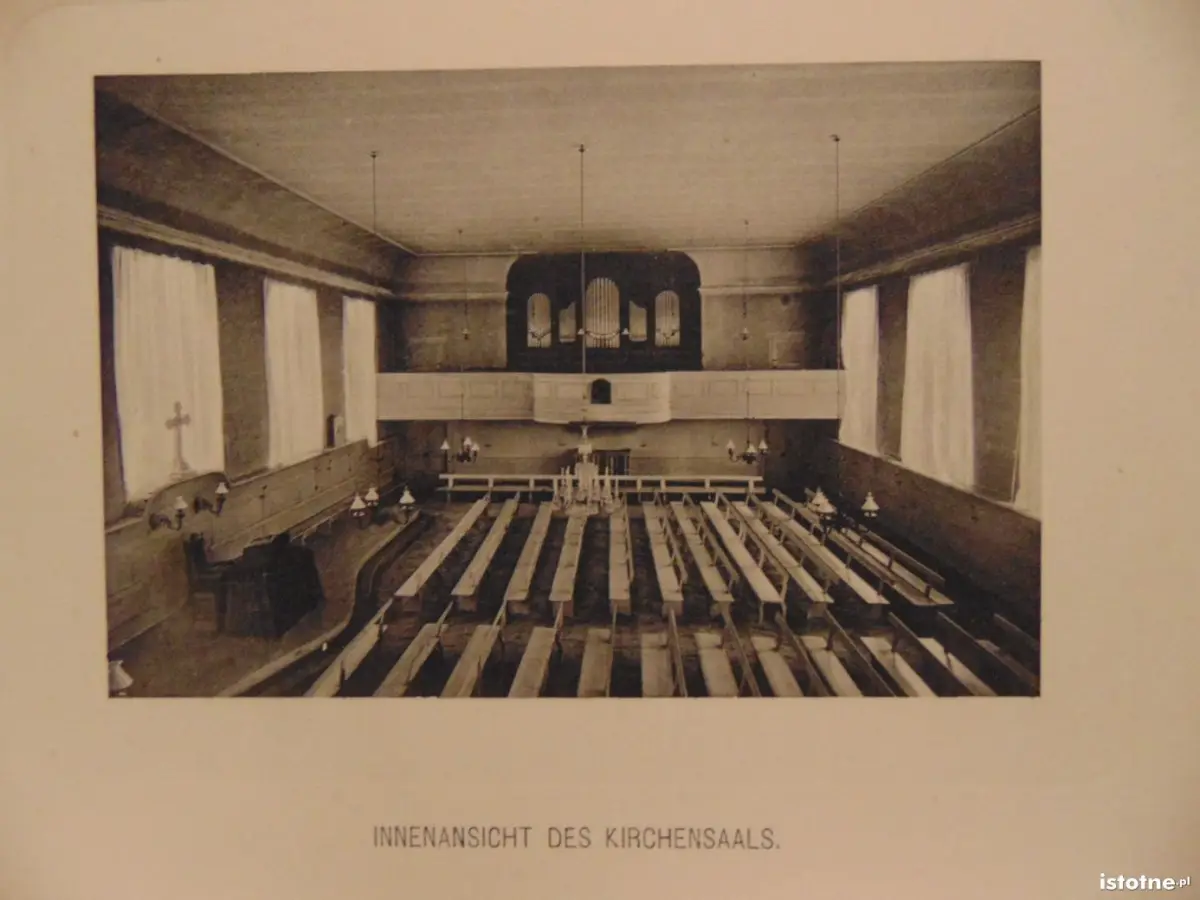
All Moravian Brethren settlements, both in Europe and overseas, were initially modelled on Herrnhut, not only organisationally but also morphologically. The settlements were laid out in the shape of a cross, Latin or Greek; at the intersection of the arms stood a church, also called the Great Hall, surrounded by residential buildings and buildings serving the entire community, such as schools, hospitals and care homes for people with disabilities and the elderly.
An important element of every settlement was the cemetery, called “Gottesacker”, literally “God’s Acre”, usually located near the Great Hall. The cemetery took the form of a green meadow symbolising eternal happiness. Men and women were buried in separate sections, in order of death, and all the tombstones were identical: simple slabs laid flat on the grass, bearing the deceased person’s name and other personal details, date and place of birth and death; often, a biblical verse or a quotation from a hymn was also engraved. This was intended to symbolise the complete equality of all community members, both in life and after death.
Most of the inhabitants were highly skilled craftsmen, which contributed to the settlement’s high standard of living and modern administrative and social solutions.




Sebastian Zielonka – historian and graduate of the University of Wrocław. Specialisation: archival science and conservation documentation. He is interested in the history of the region and Europeans’ social life in the 20th century. In his free time, he travels.