
Background to the dismissal and accusations
Sylwia was hired by Stokrotka in May last year. During her training to become an assistant manager, she says, she already felt pressure because of staff shortages. Instead of providing training and support, her supervisors assigned her to work on the sales floor. However, the main problems she describes began only after she was transferred to the store in Bolesławiec.
“Whatever I did, I was no good. I couldn’t get sick, I couldn’t do anything at all,” Sylwia says.
“If you’re going to be sick, it means you’re not suited for this job”—this is what her supervisor allegedly told her when she reported feeling unwell.
She claims that her requests to speak with regional management were ignored or postponed. The correspondence Sylwia provided to the editorial team shows that she asked several times for a meeting to clarify the situation. However, she received brief replies—or no reply at all.
The woman also describes the moment when she fainted at work. She maintains that she called for medical assistance herself, while other employees limited themselves to saying: “Since you’ve already done that, we don’t have to.”
Stokrotka’s position
The Stokrotka press office, represented by Daria Raganowicz, PR and external communications manager, says the company’s response was appropriate:
“After an employee reported concerns regarding a manager, a meeting was organized by a higher-level supervisor; according to the participants’ assessment, it clarified the situation that had arisen. At the same time, we received no additional reports in this matter through our internal channels.”
According to Stokrotka, the employee was alone in the changing room when she fainted, and store staff “made sure” she was in good health. The company also addressed the reasons for the dismissal, referring to “conclusive evidence” concerning irregularities attributed to Sylwia. This was allegedly the reason for terminating her employment due to the employee’s fault.
“Actions related to evaluating employees’ work are taken solely on the basis of substantive criteria,” the chain’s spokesperson emphasizes.
Disputed issue: the restroom
One of Sylwia’s accusations concerned the closure of, or restricted access to, the customer restroom. According to the employee, customers and parents with children could not use it, while management explained the decision as an attempt to avoid additional cleaning-related duties.

In an official statement, Stokrotka said that the customer restroom is located on the sales floor and is accessible. Meanwhile, our editorial team visited the store in Bolesławiec. Not only was the restroom not visible—there were no signs—but after asking the sales staff, we also learned that it was unavailable to customers. Only now, after our inquiry, has the route to the restroom been cleared, and the door marked with a “customer restroom” sign.
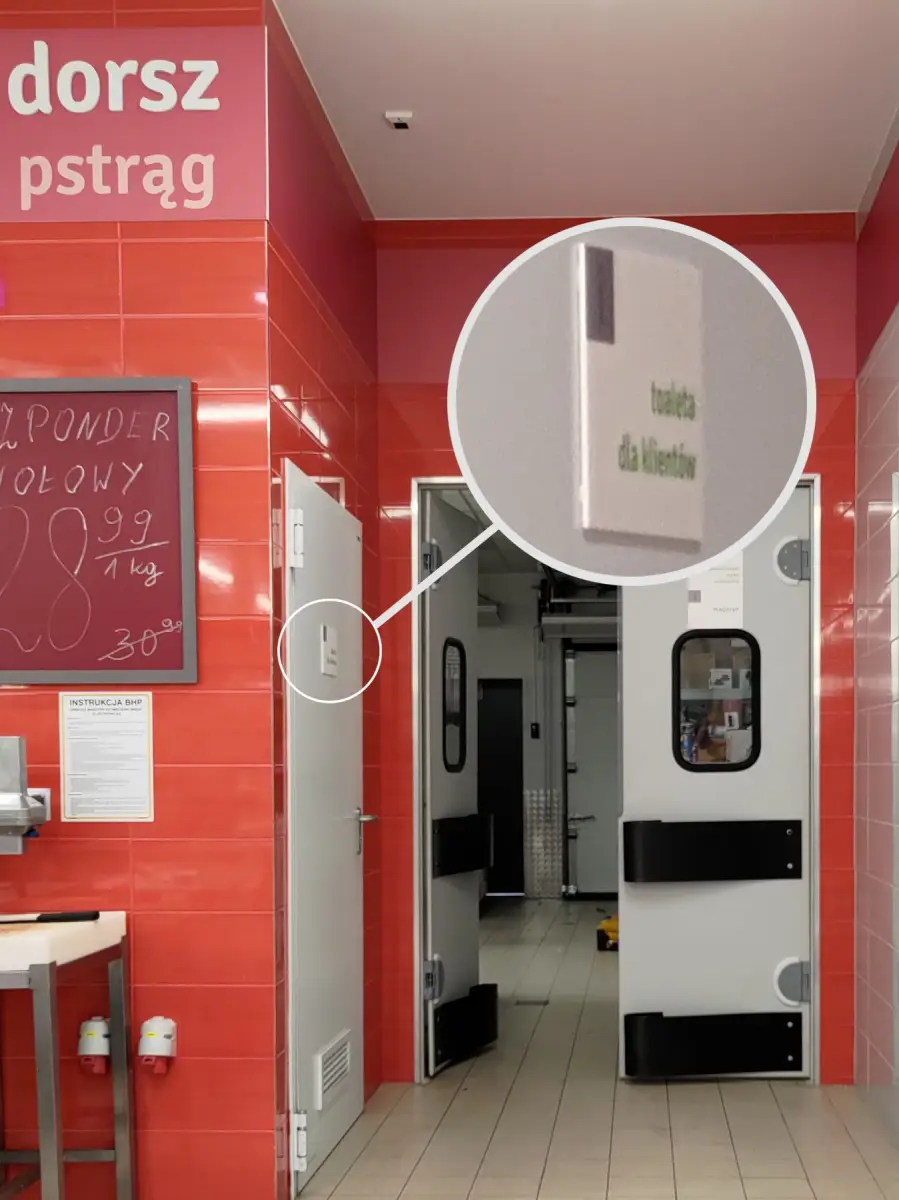
“No conversation with supervisors”—the correspondence we saw
Sylwia also gave us screenshots and printouts of messages to the regional manager. The documents show that she asked for help regarding her relationship with her direct supervisor, citing continuous stress and pressure to come to work even with a fever. Management proposed a meeting in response, but, as the dismissed employee claims, no actual intervention took place. Most of her requests for a conversation and an opportunity to explain the “toxic atmosphere” allegedly went unanswered.
What next?
The former employee announces that she will fight for her good name. According to Sylwia, the allegations concerning the alleged falsification of product returns stem from an everyday practice that, in her view, was recommended by the supervisors themselves. In response to questions about irregularities in sales or product handling, Stokrotka says it analyzes all employee complaints and makes dismissal decisions based on reliable findings.
As we have established, the case has not yet been brought before the labor court. However, Sylwia does not rule out taking this route, pointing to accumulated stress, health problems and, in her opinion, baseless accusations. She also intends to notify the relevant institutions about alleged sanitary and organizational irregularities.
This article is based on Sylwia’s account and Stokrotka’s written statement. The editorial team will monitor further developments in the case.