
A woman burned alive after being deemed a witch, patients of a psychiatric hospital buried in unmarked graves, former cemeteries turned into parks, a little girl burned to death, and prisoners tortured to death by the Nazis—all these are stories from our city that every paranormal investigator would want to investigate.
We have selected several such places in Bolesławiec, where ghosts of the past may still be making their presence known—but perhaps you know of more.
The embankment for the bypass near Staroszkolna Street is identified as part of the site of the German AL Bunzlau I concentration camp. It is a place whose history consists of human tragedies, horrifying deaths and the inhumane treatment of prisoners, especially those who ended their lives here. Bolesławiec residents identify the embankment as the most unusual place, but if someone wanted to learn the camp’s exact location, this can be done using American aerial photographs from December 1944, which reached Bolesławiec from the National Archives Records Administration thanks to Monika Rutyna, head of the Spatial Information System Division at the Municipal Office.

The rise in Bonin Park, is mentioned so often by Bolesławiec’s “ghost hunters” that it is worth considering the hypothesis that this may have been the exact location of a place of execution: a gallows. There were three gallows in Bolesławiec at various times. One stood in the market square. During the Thirty Years’ War, a second one was built there. The third, a massive brick structure, was located southeast of the centre, near Gallows Pond (in the vicinity of the primary school on Bielska Street). The gallows was a special, mysterious and cursed place, yet at the same time very important to the residents. It is possible that Catharina Effnert was burned alive at this gallows in 1571 after confessing under torture that she was a witch.

The woodland by Piastów Street (near the Psychiatric Hospital) is considered the most paranormal place in Bolesławiec. This is all because of the necropolis it conceals. If ghost-detecting devices ever squeaked somewhere, it would certainly be in the woodland by Piastów Street. Before the war, it was a well-maintained park; later, from around 1860, deceased patients from the nearby mental hospital began to be buried on this site. The necropolis was therefore beautifully situated among young trees and shrubs. Even today, one can come across grave plaques in the woodland by Piastów Street bearing preserved grave numbers. During the First World War, a military hospital was organised on the hospital grounds—wounded soldiers were treated there, and those who did not survive were also buried in the nearby hospital cemetery.
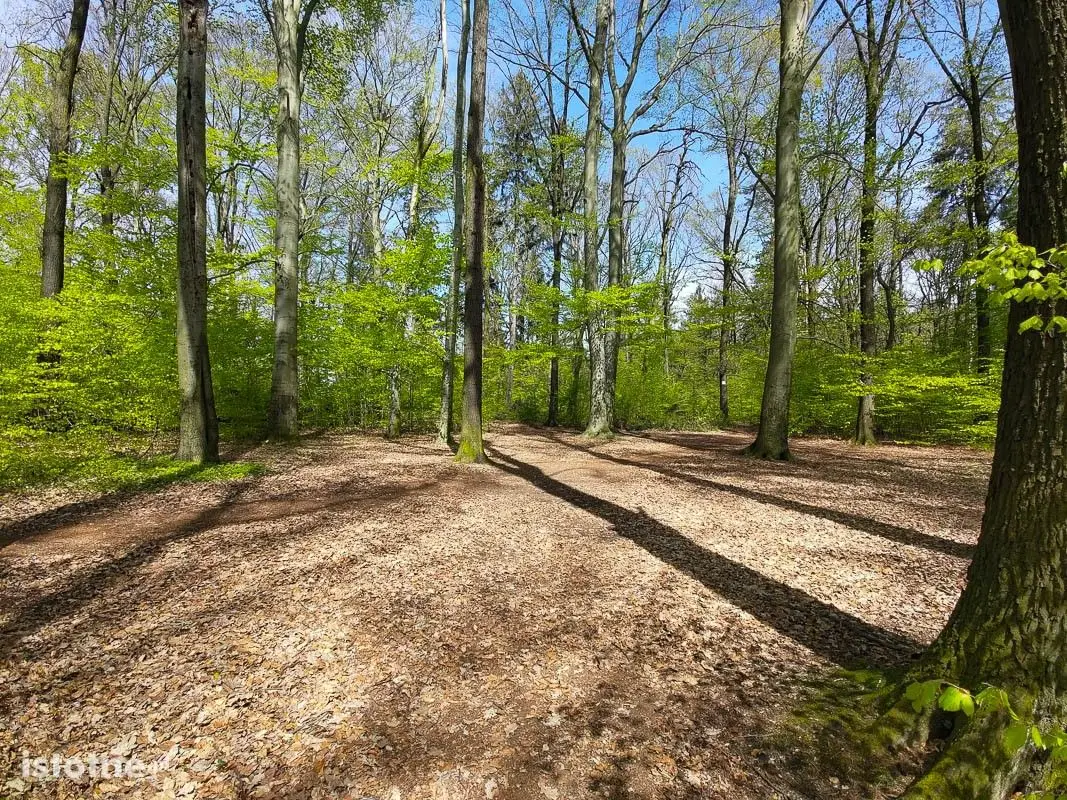
The park on Garncarska Street is said to be a place where things get strange. Stories circulate around the city that workers in 1920s clothing, or talkative women speaking German, have been seen there. An old Protestant cemetery stood on Garncarska Street. From the 16th to the beginning of the 20th century, it was Bolesławiec’s main cemetery. It contained many valuable historic monuments, which were vandalised after the war. Even in the late 1970s, the neglected and overgrown cemetery attracted teenagers hungry for horror. In their recollections, they described the place as macabre. They recalled their visits to the park as follows: "(...) Human remains were scattered everywhere, literally everywhere, and most of the vaulted tombs were open. (...) In one corner of the cemetery, there were more human bones arranged in neat piles. The following week, I saw groups of workers and a large excavator in the cemetery. Beneath a gigantic oak tree, probably the largest in the cemetery, there was a modest grave with a porcelain photograph of a young girl dressed in white. The deceased girl’s name was Helga, and the dates of her life carved on the tombstone indicated that she had died at the age of 17."

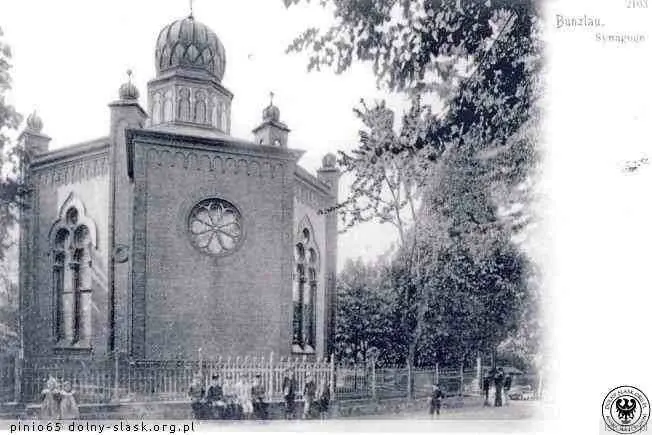
The plot at the junction of Wąska and Bolesława Kubika Streets also has its own paranormal atmosphere. The Jewish cemetery located there was completely destroyed in the 18th century; its location is known only from Wernher’s 1749 plan. Later city plans from 1773 show a “Gleich garten”, a garden or park, in this place. A synagogue stood here—it belonged to the Jewish community located in this part of the city. Unfortunately, during Kristallnacht (9 November 1938), the synagogue was set on fire. The fire brigade did not extinguish it, but merely ensured that the flames did not spread to neighbouring buildings. It was never rebuilt.
The square on Bankowa Street with the monument commemorating the 100th anniversary of the Restoration of Independence could be haunted by the ghost of a little girl who died in the flames. Eight-year-old Bogusia was doused with flammable liquid from a large memorial candle during a ceremony in February 1961. At the time, the candle stood beside the monument of gratitude to the Heroes of the Red Army, which stood in this location. Soldiers stood in orderly rows, and the square was decorated with white-and-red flags and red flags bearing the hammer, sickle and star. The exceptional ceremony attracted numerous onlookers: older and younger residents of Bolesławiec. Bogusia, not yet eight years old, was among them. We do not know how the accident happened. The child, upon whom a vat of burning liquid overturned, fell to the ground. Shockingly, apparently none of the soldiers rushed to the girl’s aid. It is possible that the soldiers did not see the child, who either tipped the memorial candle over herself or was pushed onto it.

If you know of any other haunted places in Bolesławiec, please write about them in the comments.