
Although almost everyone knows the edible chanterelle (the popular chanterelle), the trumpet chanterelle is little known. What a pity. It is worth getting to know this mushroom. Not only is it edible, but it also appears in late autumn and even at the beginning of winter (as long as there are no frosts).
At this time, the availability of other edible mushrooms is limited. And who wouldn’t want to eat fresh mushrooms from the forest, fried in butter or sautéed with scrambled eggs, in winter?
What does the trumpet chanterelle look like?
It resembles the edible chanterelle, as can be seen in the photographs below. The cap is yellow-brown or gray-brown. The hymenophore (the part beneath the cap) consists of yellow or yellow-gray ridges. The stem is yellow.
Characteristically, the entire mushroom resembles a trumpet (hence its name); the stem is hollow when cut crosswise (a tube), and it is very often connected to the cap in such a way that it simply resembles a small trumpet.
The edible chanterelle and the trumpet chanterelle:
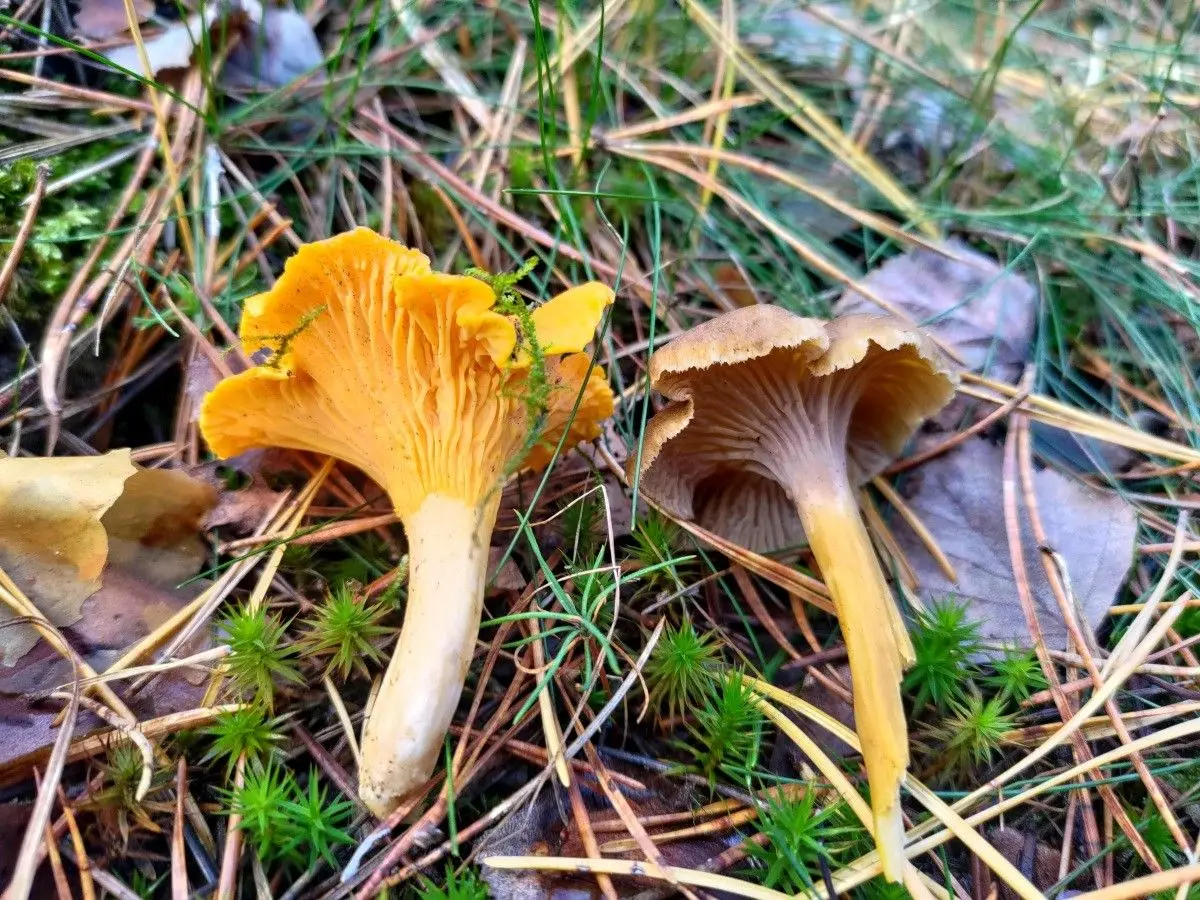
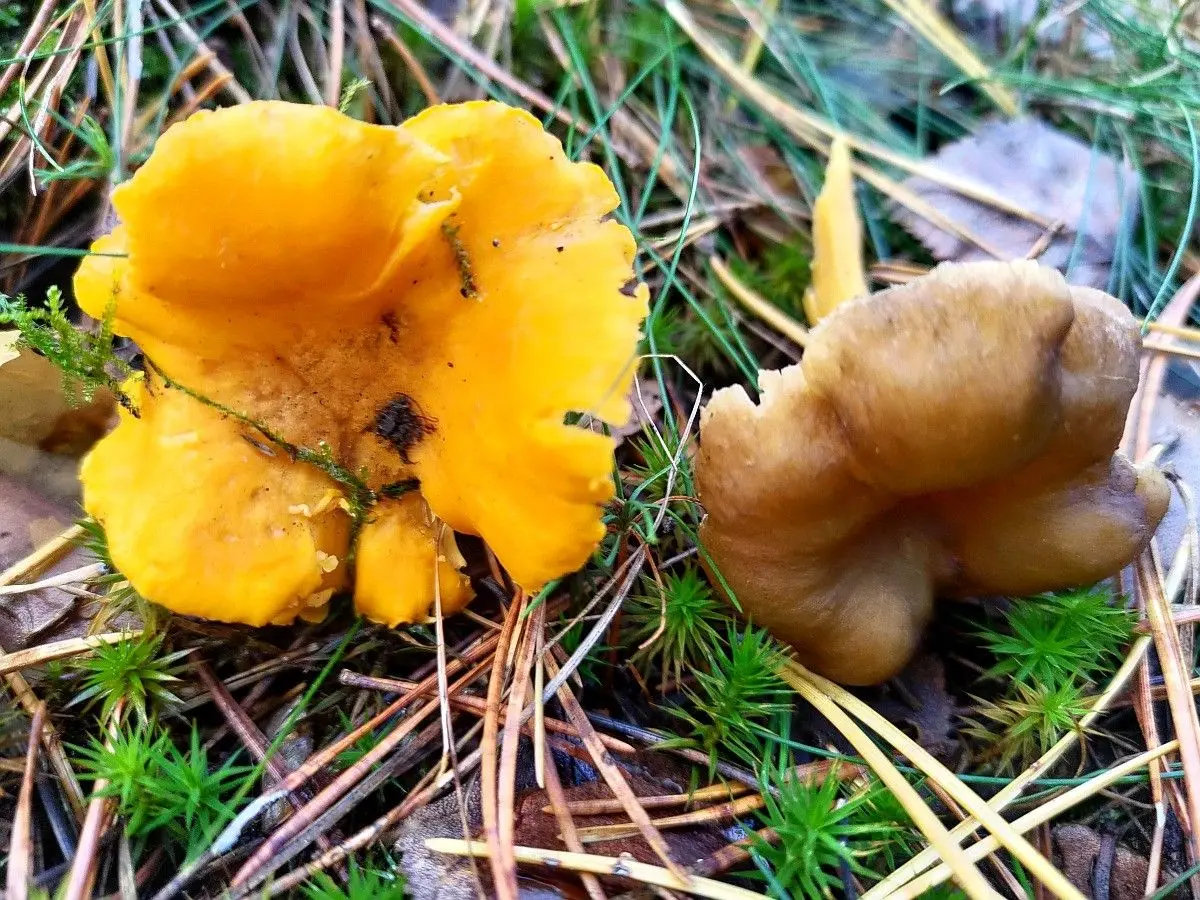
Where can you find the trumpet chanterelle?
The mushroom grows in both coniferous and deciduous forests. However, it is most often found near spruces and firs. Sometimes it occurs in great numbers, with many fruiting bodies growing next to one another. It also grows in the Lower Silesian Forests, around Bolesławiec.
Mushroom expert Łukasz Łuczaj talks about the trumpet chanterelle on his channel: