
Interviewees:
- Magdalena Choma – graduated from the Faculty of Social Sciences, majoring in Sociology, at the WSB University, with a specialization in Human Resources Management. She is a business trainer and coach.
- Anna Kozłowska – graduated from the University of Zielona Góra, majoring in Pedagogy with a specialization in Social Rehabilitation and Prevention for Socially Maladjusted People. She is an intern at the Career Information and Planning Centre.
- Ewa Ołenicz-Bernacka – city councillor, teacher at Lower Secondary School No. 2.
- Wiesława Olczyk – retired teacher, founder and manager of the University of the Third Age in Bolesławiec.
Grażyna Hanaf: Retirees and young university graduates. Both groups have completed a certain stage in life. One group has finished education, the only activity it knew well; the other has finished its professional life. Economically, one group moves to lower, Social Insurance Fund-based benefits, while the other starts with the lowest wages or unpaid internships. Despite all these similarities, both groups are perceived as diametrically different. Why?
Magdalena Choma: It is most likely about age. The difference in age.
Wiesława Olczyk: Although you are right that both groups are commonly perceived as different, I do not think society sees these differences so drastically. The world is arranged in such a way that it is governed by certain values. The level of a society is nevertheless demonstrated by its attitude toward older people. When older people are respected, society is valuable. People in late adulthood are perceived through the prism of stereotypes. For many years they were seen as people on the margins, standing apart. And sometimes that is still the case. Stereotypes will not disappear for many years, perhaps they will never vanish completely. But Poles are increasingly changing their opinions about people ending their professional careers. The kind of young person one is will determine what kind of retiree one becomes.
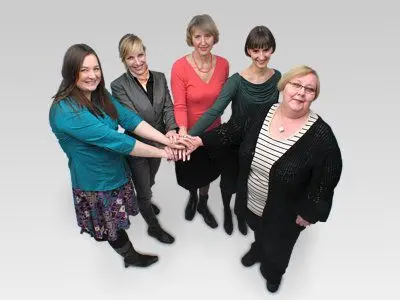
There are cultures that cherish old age. They consider it an exceptional value and a source of wisdom. What is it like in Poland?
Ewa Ołenicz-Bernacka: There are many reasons; generally, people talk about phenomena such as the decline and reduced importance of the family, as well as changes in its structure. Multigenerational households were part of Polish family traditions. Grandparents played a very important role. They were authorities, the people who taught and showed the way. They played a primary role in my life. Without them, I would not be who I am. Now this tradition is being abandoned. Family relationships are strained. Families migrate and live far apart. They do not keep in touch as often.
And what about the economic aspect, such as low retirement benefits? Does this not affect the way older people are perceived?
Ewa Ołenicz-Bernacka: A teacher’s pension is modest, even if they were a headteacher for many years. And yet what is happening at the University of the Third Age, its very creation, shows that income is not the only thing that matters. The economic sphere alone does not determine what people do in their lives. There is a whole host of retired people at the University.
Anna Kozłowska: I am a social probation officer and I believe that the economic aspect is very important. During my studies, I did internships in the Netherlands and Sicily. There, retirees’ financial situation is much better. They can afford caregivers. In addition, older people go out into the streets and participate in city life. Young people do so alongside them. I myself learned card games and local dances from older people. They were my teachers in a foreign country. They told me about ancient history, recent history, Berlusconi and upheavals in Italy. I loved spending time with them. Here, we lack community-minded people and openness toward older people—the willingness to spend time with them and be there for them.
Magdalena Choma: But isn’t it a matter of mentality? Italians have a different mentality. We Poles are more closed-off. People in the south go out into the streets; older people themselves talk to young people. We have only a few people so far who are changing the image of older people. Ms Olczyk is a model for the changes to come. Most older people close themselves off.
Wiesława Olczyk: How a retiree sees their life after their professional career depends basically only on them. But I agree that economic conditions greatly affect the situation of both older and younger people. The most important thing is that a person’s activity does not end with the age they reach.
And what about the Polish belief that, at a certain age, one should not or ought not do certain things? Try buying your grandmother a beautiful, body-hugging red dress as a gift and invite her for a Sunday walk around town. What will you hear? That you have gone crazy, that it is not appropriate at her age… An Italian woman would wear it out.
Magdalena Choma: Yes. It is true; there is something like that in our mentality. But we are the generation of people who can change it. If retired people act like Wiesława Olczyk, society’s thinking about retirees will change.
Wiesława Olczyk: When I retired, I decided to devote myself to people who had ended their professional activity. A person cannot do much alone; you have to reach people and motivate them. Say directly: “You can do it too; you should change. If not for someone else, then for yourself.” When one person changes, people pay attention to them. They notice that this is someone different and exceptional, and they follow that person. After 2000, many people in Poland retired. The reasons were economic. The same thing happened in Bolesławiec. The establishment of the University of the Third Age was an alternative for them. Around 180 people enrolled in 2006. In the first year, for organizational reasons, we admitted 126 people.
If you were the president of Bolesławiec and could make the city friendly to one—and only one—of these groups, which would you choose and why?
Magdalena Choma: If I were a clever president, I would focus on young people to attract them to the city. But a president who looks realistically at the situation should support retirees who live and function here. I would support retirees. I would give more money to the University. I would organize physical activities for them. I would support the day-care centre. My grandmother goes there, and I see how much the visits help her. She is extremely happy. She changed. After her husband’s death, she began living again.
Anna Kozłowska: As president, I would invest in young people, but in such a way that young people would bring older people back into active life. As in the Netherlands. Young people push older people in wheelchairs. In the Netherlands, for example, older people build rafts and use maps to travel along canals. That was shocking to me. Young people looked after them and marked the routes with campfires. It was genuine cooperation between very young people and older people.
What would this look like in practice?
Anna Kozłowska: Some institution managed by someone like Ms Olczyk would be useful. Someone who knows about this. I would mobilize people who are able to think this way. Young people who care about such a relationship would be important.
Ewa Ołenicz-Bernacka: I really like what Anna is proposing. All the time she was talking about it, I was wondering how to put it into practice. It is difficult. I am afraid of institutionalizing such activities. It is a matter of a very carefully considered approach to education. I have the impression that the educational process emphasizes the role of grandparents only in the earliest years—in preschool and the first three grades. Then something happens and a gap appears. Higher levels of education lack this element. What is needed is a platform for educating young people through contact with older people.
And whom would you support as president?
Ewa Ołenicz-Bernacka: Young people are very necessary; they are the city’s economic foundation. But at the same time, older people are the city’s salt of the earth. They created it and built it. They built the substance of this city. We cannot cut ourselves off from them. A wise president will do everything so that this group feels good in the city and does not feel rejected. I have the impression that a young person will manage. By nature, they are active and enterprising. That is the nature of youth. Many older people may feel regret or fatigue. It is impossible to frame the matter as an either-or choice. The most important thing is to bring these two groups together.
Wiesława Olczyk: Today I can say that the students of the University of the Third Age and schoolchildren are integrated communities. We invite children to our exhibitions and vernissages. Young people see our activity. More than that, the entire neighborhood views us positively. It is something new that began developing strongly in Poland after 2000. At the National Conference of Universities of the Third Age, which I attended, there were 200 of us. There are currently 248 universities in Poland. And this is an initiative of people in late adulthood themselves.
Anna Kozłowska: We are talking about older people who have this need. But there are also those who sit by the window, as people commonly say. How do we reach these people? How can we help the inactive ones?
Wiesława Olczyk: When people have the opportunity to choose, they will take advantage of it. But only those who have had enough of stagnation in retirement. Those who dare, to quote the phrase, “cross that threshold.” Life will force them to. I know cases where a grandfather learns to use a computer because his grandson in England says to him: “Grandpa, what do you mean? You don’t know how to send me an email?” And the grandfather learns.
Magdalena Choma: In my opinion, the most important thing is what is inside these people: their energy, desire and enthusiasm, as well as what is inside us, young people. As a future mother, I will want to raise my child to respect older people. Parents have little time for their children, let alone for their grandparents. As a result, children have less contact with their grandparents. This lack of contact may also lead to such an attitude toward older people. It is worth showing grandmother in a different light—as an active woman with her own world.
Wiesława Olczyk: I observe this phenomenon among people attending the University of the Third Age. This year there are 164 women and 28 men. That is quite a large group. Most are from the 1949–50 age cohort—more than 100 people.
Is our city a city of retirees? And why does this term always have negative connotations?
Ewa Ołenicz-Bernacka: We are talking about two different issues. One concerns active retirees who consciously and deliberately lead an admirable lifestyle. And that is a great thing. A separate issue is the attempt to educate society so that it changes its stereotypical attitude toward older people. It is a harmful stereotype—the claim that a city of retirees is a worse city. Quite the opposite: the term “city of retirees” may mean a city full of very active people involved in various retirees’ communities. One could say that Bolesławiec is supported by retirees, in the best possible sense of the word. They are active, willing to get involved and young at heart.
Wiesława Olczyk: I would not agree that Bolesławiec is a city of retirees. Every community has a population of younger and older people. Perhaps we are perceived as a city of retirees because of retirees’ activity and their many initiatives.
Magdalena Choma: Bolesławiec is different. Retirees are very active here, and if Bolesławiec is called a city of retirees, that is great. They are here, they are active, they are doing well and living well. It is actually a nice city to come to and generally live in.
So what do university graduates expect from the city? Does the city offer them something that attracts them and encourages them to stay?
Anna Kozłowska: Young people are naturally looking for something new and want to leave to see the world. That is how they gain experience. They try new things. They need to test themselves abroad. Their value system takes shape so that they can find a point of reference and answer the question of what they would like to do in life. The statement that young people leave here stems precisely from the fact that they want to test themselves somewhere else.
Magdalena Choma: It all depends on young people. I wondered what I expect from the city. In fact, I do not expect anything from the city, because everything is in my hands. I spoke with friends and we concluded that if someone wants to develop in a particular field, they may have to move to another city for that reason. If you want to be a nuclear physicist, even Poland is too small for you.
I agree that ultimately everything depends on the young person. But when choosing where I will pursue my goals, I will look at the available infrastructure. For example, the number of preschools and their accessibility. Whether the city has a cinema or perhaps a theater, good clinics and an efficient maternity ward. Easy access to specialist doctors. Affordable housing. Or an attractive shopping center…
Wiesława Olczyk: It is certainly important for all the mental mechanisms to be activated so that those in power and those managing the city think of such matters—infrastructure—as something natural and essential.
Magdalena Choma: The mentality of us young people must change. We need to know what we should expect and how we can talk about it. Employers in Bolesławiec are the same as in other cities, and the law is the same. I continue to choose Bolesławiec. I have now proposed classes for young people to the administration of I General Secondary School, during which I would like to show them that they are worth just as much as young people from large cities—the places where they will go to study. To build their self-esteem and teach them how to talk to an employer. So that coming from a small town does not mean they are worse. This is about shaping awareness from the very beginning.
Anna Kozłowska: I am starting my career in Bolesławiec after university. I have a three-year-old son. My grandmother helps me. I started an internship and want to begin postgraduate studies at the Academy of Fine Arts. It is not a bad city to live in. If someone wants to, they can develop here. It is not easy, but there is no young mother for whom it is easy. I know young women who come to Bolesławiec for work. I know one woman who came here because there were positions for psychologists here. She stayed and started a family…
Ewa Ołenicz-Biernacka: …Because everyone stays for a different reason. The state’s family policy is important. We are a part of the whole. And much depends on policy… But perhaps we will not discuss this topic.
Why do people not want to notice positive things? We found so many of them.
Magdalena Choma: Because it is easier to do nothing, sit and complain. Changing mentality is hard work and a long process.
I hope our conversation will help change people’s mentality and prompt them to look at retirees and young university graduates in a different, non-stereotypical way. Thank you for the conversation.
The women were guests at the Vinci café in Waryński Park. We thank them for making this intimate interior available to us, arranged with great taste under the auspices of Leonardo da Vinci.