
Grażyna Hanaf: I know that you learned about the project of photographing breast cancer survivors, initiated by two friends—Dorota Kiałka, who had undergone a mastectomy, and photographer Agnieszka Kłos—not long before your illness.
Monika Podwysocka: I read an article about them in October 2007, and found a lump in November. It was a month. Not even a month—it was weeks before it affected me too. After reading the feature in “Twój Styl” about Dorota’s illness—she was the first woman in her thirties with breast cancer that I had heard about—I realized that young women could also develop cancer. Previously, the subject had not concerned me because no one in my family had had cancer.
GH: When did the idea of taking part in the project arise?
MP: At first, when I learned that I was ill, I did not think about taking part in a photo session. I was focused on something else: the operation and further treatment. But after the first or second round of chemotherapy, I emailed Dorota and Agnieszka to say that I wanted to support their campaign. I was not prepared, however, to be asked to take part in creating the calendar.
GH: What was the session like? Did you feel comfortable during it?
MP: The result of the session is largely thanks to my photographer, Dana Puciłowska. When I first came to her, we talked over coffee for a good hour. I told her about my illness, and she explained why she had become interested in the subject of photographing breast cancer survivors. She told me what she did every day. Then we discussed our idea for showing a woman’s body after breast removal. I did not know whether I should show the drama and pain. But our intention was not to portray martyrdom.
GH: In the photograph, you are extraordinarily joyful, smiling beautifully and looking happy.
MP: That is thanks to Dana. She talked with me, made me laugh and told me what to do. The session was also five hours of hard work: thinking about smiling, straightening up and posing at the right moment. In the meantime, I touched up my makeup several times and changed accessories. We had four themes during the session. One photograph was never published; in it, my body is painted with swirls, and I look a little retro. The photograph at the exhibition is different from the one in the calendar. There I am more covered up, with a scarf on my head.

GH: Did you not think about wearing a pink wig, as Dorota did during the session?
MP: Yes, that wig was my dream, but I could not find one anywhere. I thought going to chemotherapy wearing such a wig would have been wonderful.
GH: But in the exhibition photograph, you do not cover your bald head at all and look very natural.
MP: I did not wear a wig, did not buy one and lost the prescription for it. I had chemotherapy in the summer, and it was too hot. I prefer naturalness; wigs look very artificial. I went to a shop and tried them on, but after putting on the fourth one, I decided I felt as if I were getting ready for a funeral. The wig’s hair was very even, styled and unnatural, all one color. I went without one and did not feel bad about it; no one paid any particular attention to me, and I was not pointed at because of it.
GH: Did you get to know the other women from the session? Can you say something about them?
MP: I got to know two of them well. One is Asia; in the photograph, her face is covered by a mask. She is the youngest—she became ill at the age of 23. She is now fighting a recurrence, but she is a very positive person. She works and studies, has started a second course of study, has now bought an apartment and is renovating it. She plans to get married next year. She is a strong, open girl. I also got to know Dorota well—the person with whom it all began, the entire adventure with the calendar. She is also a very optimistic person. Dorota has been a breast cancer survivor for several years. She is the one who wore the pink wig.
GH: How has your view of femininity and your thoughts about your body changed?
MP: I certainly accept myself more. I realized that physical appearance is not as important as what one has inside. During my illness, I focused on getting well, not on what my body would look like. There were difficult moments. Losing my eyebrows and eyelashes affected me more than losing a breast. But then I drew strength from the photographs; they were therapy for me. Before my illness, I wondered why I did not have a larger bust, especially since my sister had larger breasts than I did. When we tried on underwear, she would say: “Get away from me with those freckles...” Now I do not think in those terms.
GH: How do you see yourself now, as a woman?
MP: Positively. I have never been a fan of diets. For me, my body and physical appearance have never been especially important.
GH: Do these thoughts about your body help you survive the illness?
MP: We live in a culture and society where outward appearance is very important. Hair and breasts are stereotypical attributes of femininity. Hair is your adornment, while breasts represent motherhood and breastfeeding. Because of this way of thinking, losing a breast becomes an even greater tragedy.
GH: What are people’s opinions of the project and the naked breast cancer survivors? What are the reactions to your photographs?
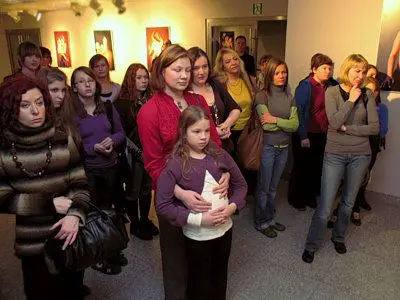
MP: Reactions at the exhibitions are very positive. In Bogatynia, after the exhibition, women came up to us, thanked us and said that it was so necessary.
GH: What about negative opinions? Which ones hurt the most?
MP: Only on internet portals. I have never had anyone say something unpleasant directly to my face. It is most hurtful when women criticize us. What will they do if they themselves become ill? Where will they find support? Unfortunately, illness affects us all.
GH: And why did you, Monika Podwysocka, take part in the campaign?
MP: I wanted to come out of it with something positive, to get something out of the illness. It may sound silly, but I wanted the illness not to have been for nothing. Then I had the thought that I could help someone, show that breast cancer is not the end, and that it is possible to go on living a wonderful life.
GH: Thank you for the interview.