
During play at the playground next to the kindergarten, one of the girls found a pink grasshopper. Very excited, she began shouting joyfully: “I have a pink grasshopper!” This information intrigued the teacher. In the blink of an eye, a group of “young nature researchers” gathered around the beautiful insect and began observing it. The children were very curious about the unusual visitor. To satisfy their thirst for knowledge, the teacher found information about this species. She explained to the children that common grasshoppers are green or brown, while the pink grasshopper’s unusual appearance is caused by a genetic condition called erythrism, or excessive redness.
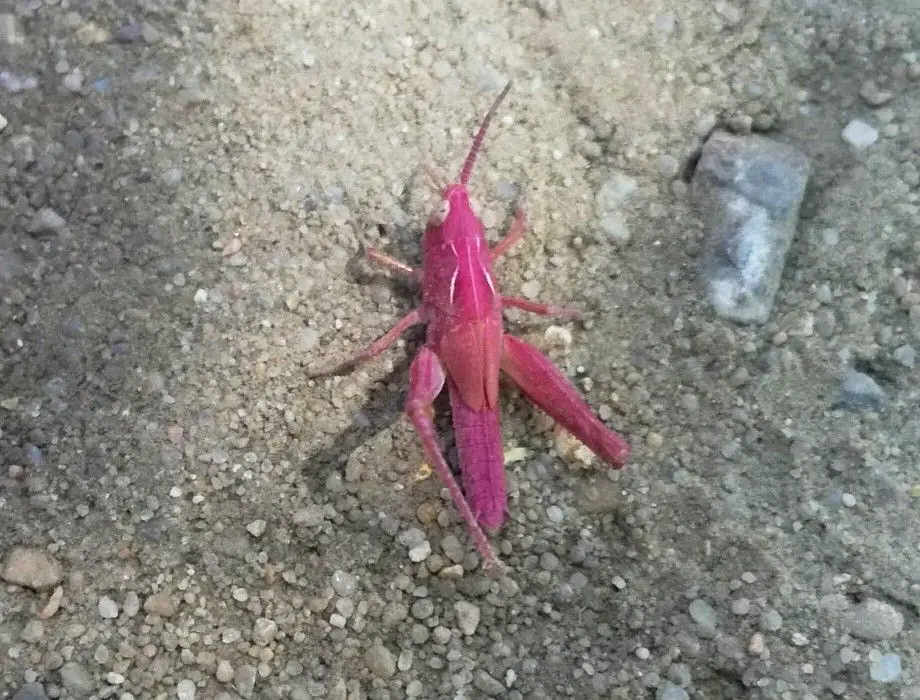
The green color allows insects to hide in their natural environment, while a pink grasshopper has difficulty blending into the background and may therefore be easy prey for predators. It is very difficult for them to survive in the wild. However, a grasshopper that remains free will act instinctively: when threatened, it will remain motionless and pretend to be colorful vegetation, hoping that the predator will not eat it. This was exactly how the observed specimen behaved.
According to researchers, this mutation was first recorded by entomologists in 1887 and has since been observed in various parts of the world. The “Osaka Museum of Natural History” in Japan can boast that this unusual species was found there. Some people claim that we have a better chance of winning the lottery than of seeing such a rare specimen.
Today, our kindergarten children had the opportunity to see something extraordinary and unique, which filled them with great joy and interest. It is wonderful to fulfill the task of introducing children to their natural surroundings, plants and animals, while also awakening joy and a thirst for knowledge and shaping an appropriate attitude toward the nature around them.
“You don’t have to look far to see a miracle. What could be more supernatural than a larva becoming a butterfly, an egg yolk becoming a chicken, or an acorn becoming a mighty oak?” – Jackson Brown.
Prepared by: Aneta Górak