
Ania Siemaszko is in the fifth grade. She has a disability certificate and a certificate confirming the need for special education. Despite this, she studies together with children without disabilities. “She is behind at school,” says Bogumiła Siemaszko, Ania’s mother. – “She works a lot at home. Sometimes she spends a few days learning a single new word.”
The girl suffers from serious hearing impairment. In 1999, she was admitted to hospital. Doctors diagnosed asymptomatic pneumonia. Although Ania had neither a runny nose nor a fever, she was given an antibiotic that can cause hearing loss.
Three years later, hearing loss was diagnosed. Ania remembers that when she watched the first part of “Shrek,” she could hear relatively well. Then things gradually got worse. Her parents went to various specialists. “They all just threw up their hands,” says Mrs. Bogumiła sadly. Her daughter underwent several unnecessary courses of antibiotics. Only recently did a doctor from Centrum Zdrowia Dziecka prescribe new hearing aids for Ania. The problem is that they cost nearly PLN 20,000. The girl’s parents cannot afford to buy them.
Ania has been using the same hearing aids for six years, even though her hearing loss has doubled in severity since then. The devices, once among the better models, no longer serve their purpose. “When a friend talks to me during break, I can hear only noise,” the girl says. In class, she sits in the first desk in the middle row. “Away from the window, so that nothing distracts her,” explains Mrs. Bogumiła.
How does Ania cope at school? “Very well for someone who should be assessed individually,” the girl’s mother admits. – “And she speaks beautifully—for someone with this degree of hearing loss.” “When there is no noise, I understand much more,” says Ania. She has learned to read lips. She gets upset when she fails to hear something or misunderstands it. “We have to constantly review the lesson material with her,” says Mrs. Bogumiła. “There is more and more of it. We would like her to be able to benefit as much as possible during lessons,” she adds.
Unlike the hearing aids Ania currently uses, the devices recommended by the doctor can recognize noise and human speech. “They would improve her life,” explains Mrs. Bogumiła.
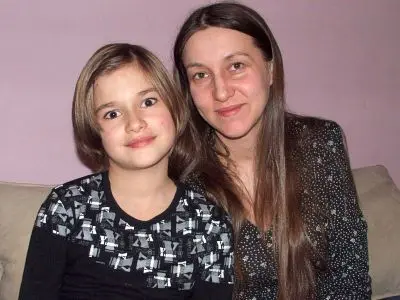
Ania’s parents are to receive support from Państwowy Fundusz Rehabilitacji Osób Niepełnosprawnych and Narodowy Fundusz Zdrowia. However, PLN 11,000 is still missing. The Ziemia Bolesławiecka association has promised to help. Scouts from the Bolesławiec “Szare Szeregi” Hufiec may organize a collection for Ania. Mrs. Bogumiła announces that if more money is raised, it will be donated to other children with hearing loss.
You can help!
Anyone who would like to support Ania financially can pay money into the following account: 82 1240 1473 1111 0010 0175 6262 (Stowarzyszenie Ziemia Bolesławiecka, ul. Kaszubska 4, 59-700 Bolesławiec), with the note “for Ania Siemaszko.”
(GA information)