
“The Philosophical Olympiad requires not only knowledge of the history of philosophy, but also general humanities knowledge and the ability to think logically and mathematically,” says Robert Mróz, a student in class IIa who placed eighth in Poland. As he admits, at the central stage the committee primarily checks whether a candidate for laureate understands the issues in question and can justify their opinion.
At the school stage, the high-school student wrote a paper about the forms evil takes nowadays and how it is perceived by society. “There were more topics, but this one seemed the most accessible and simply the most interesting to me,” says the second-year student. “You did not have to adhere to philosophical doctrines; you could express your position in a very concrete way, which suited me very well,” he adds.
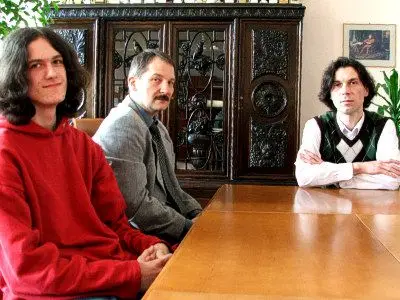
“When you have a talented and interested student, the role of a supervisor is not difficult. It mainly consists of providing inspiration, suggesting a topic, recommending reading and helping obtain it,” notes Zuzanna Mróz, a teacher and, privately, Robert’s mother. The latter, as it turns out, is not always easy. “We had to make use of private connections. We borrowed books from the library of the Theological Seminary in Legnica and from research libraries in Wrocław,” the Polish teacher explains.
Why is a student in a mathematics-and-physics class interested specifically in philosophy? “It is an incredibly fascinating field. It requires versatility and helps deepen that versatility,” says the second-year student. His adventure with the subject began with Jostein Gaarder’s book “Sophie’s World.” And although Robert has already secured admission to several humanities programs, he is leaning more toward technical studies.
A Close Friend of Physics
Maciej Cierniak, also a student in class IIa, won the title of finalist in the Physics Olympiad. “I have been preparing for the Olympiad since my first year. It requires a lot of work, especially reading various supplementary publications,” he says. This is not the high-school student’s first spectacular success. Last year, together with the I LO team, he won sixth place nationally in the Young Physicists’ Tournament. “That is a significant achievement,” says Andrzej Idzik, the teacher and finalist’s supervisor. – “The tournament is held in English and brings together the cream of Polish schools’ physics students.”
At the central stage of this year’s Physics Olympiad, participants had to, for example, calculate the viscosity coefficient of honey. “Seven out of 73 participants came up with the idea of how to perform this task correctly,” says Maciej Cierniak, who admits that he has been interested in physics since childhood: “I once decided that it would be my favorite subject, and—as you can see—it worked out that way.”
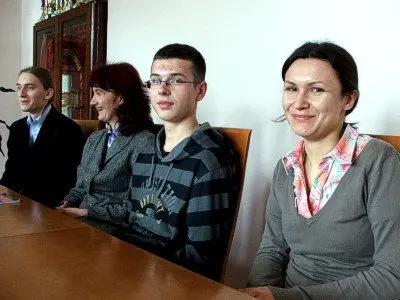
In addition, the talented second-year student qualified for the central stage of the Technical Knowledge Olympiad. “Maciek is the first finalist of this Olympiad in 14 years,” emphasizes Andrzej Idzik. “This Olympiad is similar to the Physics Olympiad and requires similar knowledge. The difference is that it focuses on typically technical and engineering issues,” says Maciej Cierniak. The Olympiad participant intends to pursue such studies in the future as well. He would like to continue developing his interest in railways, which is why he plans to study at a transport faculty.
Knowledge of the EU Olympiad
This weekend, the central competition of the Knowledge of the European Union Olympiad will take place in Szczecin. Two students from I LO qualified for this stage: Anna Olejnik from class IIIa and Kamil Nizioł from Ia. “I find this subject incredibly appealing,” says Anna, who will take part in the Olympiad final for the second time (last year she placed 12th in Poland). “Learning about it is truly a great pleasure, and if you are good at it, the knowledge simply sinks in,” she adds.
The topic of this year’s edition of the competition is EU structural funds. The tasks often have a great deal in common with mathematics. As the Bolesławiec finalists admit, it helped them greatly that both attend a mathematics-and-physics class, even though most Olympiad participants are typical humanities students.
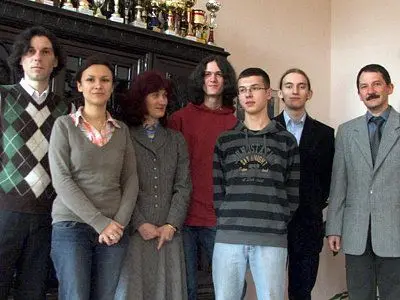
Neither of the two finalists plans to study European studies. Anna dreams of studying at the SGH Warsaw School of Economics, while Kamil intends to study architecture. Edward Florków, the Olympiad participants’ supervisor, when asked about the success of his students, replied: “I am proud that the students surpass the master.”
(GA information)