
“The people who created this exhibition are either the children of those who lived in the Eastern Borderlands or were born there themselves, as I was,” says Ryszard Łoś of the Society of Admirers of Lviv and the South-Eastern Borderlands. “I know the Eastern Borderlands only from my parents’ stories,” admits the Bolesławiec resident. During World War II, Ukrainian nationalists from the UPA murdered his entire family on his father’s side. His pregnant mother was staying with her parents at the time—that saved both of them.

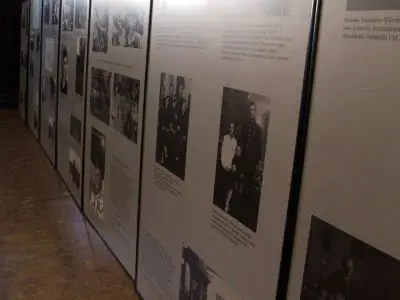
The exhibition presents photographs from towns and villages in the Eastern Borderlands whose inhabitants were massacred. “This exhibition shows the unvarnished historical truth—without inciting hatred in any way,” explains Ryszard Łoś. “The hatred between Poles and Ukrainians did not result from historical grievances, as we were told under the communist system. Ukrainians were incited by the occupiers, Soviet Russia and Germany to eliminate Polish identity in the Eastern Borderlands,” he adds.
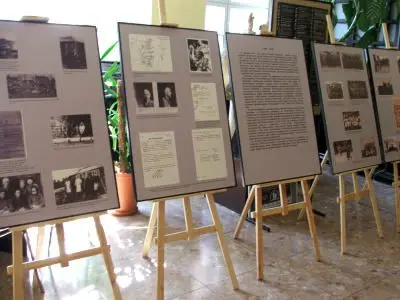
Opening the exhibition “Volhynia in the Time of Extermination 1939–1945,” Alfred Janicki, also a member of the Society of Admirers of Lviv and the South-Eastern Borderlands, said that the former residents of the Eastern Borderlands are not repatriates; they were expatriated. “It pains us that many matters are not discussed publicly,” Janicki emphasized. At the same time, he invited everyone present to the museum in Węgliniec, the only museum in Europe where visitors can see the railway cars used to deport Poles from Podolia, Volhynia and Lithuania. The Bolesławiec resident also added that the exhibition is intended to tell the truth about the genocide and commemorate those events, but is not meant to be “picking at old wounds.”

The exhibits gathered by the Museum of Independence in Warsaw come from the collections of the Mechanical Documentation Archive, the Institute of National Remembrance, the Institute of Art of the Polish Academy of Sciences, the Borderland Patriotic Movement, the Museum of Art in Łódź, the Jewish Historical Institute and private individuals.
(GA information)