
We looked into the matter of the skatepark on Dolne Młyny Street at the request of our reader, Krzysztof Czyżycki. Skaters were concerned about the condition of the facility. Many of its users sent emails to MOSiR director Dariusz Jośko. In his response, the director wrote that he would try to ensure that the place regained its “proper condition as soon as possible” and that work would begin in May. Since half of May had just passed and renovation had not yet begun, we decided to speak to the director in person.
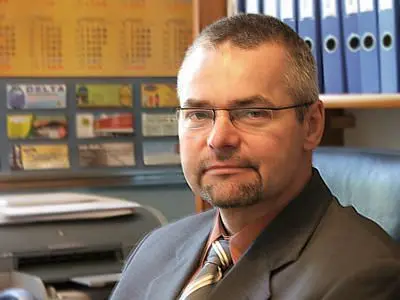
Dariusz Jośko admitted that the work was progressing “poorly”. This was connected with the renovation of the small swimming pool. “This is my priority,” the director admitted. “The holidays are beginning, and the pool must be open.” To renovate the skatepark, MOSiR needs “a full two weeks”. The director also explained that he had to send his best workers there—those who had already worked on building the skatepark, installed its elements and simply knew what they were doing. For the moment, however, these specialists were working on the renovation of the indoor swimming pool. There had not been enough time or money for work to begin in May. As Jośko admitted, however, MOSiR would devote itself to work on the skatepark in June.
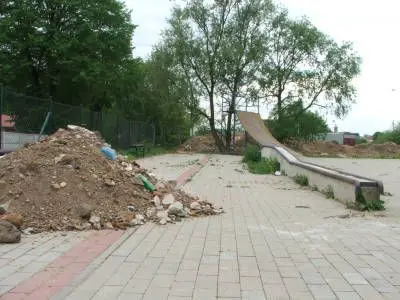
One of the issues that concerned the skater community was the mess. Heaps of earth had been stored on the site. Broken bottles could be found beneath individual elements. Rubbish was scattered here and there, even though there was a bin in the skatepark. “All the heaps of earth will disappear,” the director assured. They had appeared only because work connected with ISPA had been carried out on Dolne Młyny Street the previous year and was due to end soon. The companies that had stored the earth were to clean up the area. This would not, however, solve the problem of rubbish and broken bottles.
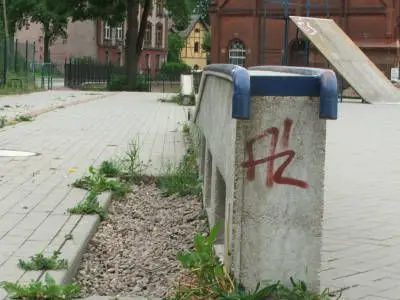
In an email to the skaters, Jośko wrote that the park’s users were largely responsible for the disorder. We also raised this issue in a conversation with the Boleslawiec.org portal. The director admitted that he himself had witnessed young people—skaters, not random passers-by—throwing drink bottles behind them instead of putting them in the bin. “Practically every Monday I send a team there to clean up. And every week it is the same,” said Dariusz Jośko. The director said that he had held several meetings with users of the facility. They had repeatedly promised that the place would be kept tidy, especially the older ones. But they did not spend all their time there, of course, so they could not keep an eye on everything. “I am not going to put a watchman there. The point is not to build a facility and then guard it against its own users,” Jośko explained. On one occasion, a bin disappeared. The ramp was bent out of shape. Perhaps it was a matter of personal culture, or perhaps of the characteristic nonchalance found in most subcultures. For young people, “it is often embarrassing to go to the bin and throw in a bottle”. The director did not rule out, however, that outsiders might also litter the facility: “I am not claiming that the skaters are to blame for everything.” As he noted, however, “there was nothing like that at the beginning”. Nobody was vandalising anything.

It is certain that a dirt track will not be built. The planned track was to be raised above an existing heating pipeline. Excessive pressure on the pipeline could damage it. The director admitted that when he was planning construction of the facility, he did not know about the installation. This was not the only inconvenience associated with locating the park on Dolne Młyny Street. But, as Dariusz Jośko admitted, people had spent two years considering where to place the facility. The selected location turned out to be the only possible one. Nevertheless, this did not mean that a dirt track could not be built at all. The director simply did not know where it could be raised.
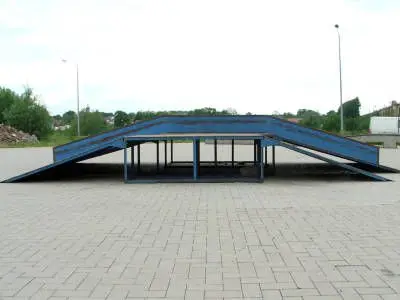
The skatepark is currently missing a very important element—a mini ramp. It had been damaged, so MOSiR renovated it. And then the matter became complicated. Unfortunately, the element has no certification. The certificate that the Municipal Sports and Recreation Centre received from the manufacturer, Powerman, has expired. Powerman is now involved in a completely different business. It no longer manufactures ramps and therefore does not want to certify the one in Bolesławiec. Dariusz Jośko also spoke with other companies involved in ramp production (when the skatepark was built, Powerman was the only manufacturer of them). These companies, understandably, would prefer to certify their own products. “The situation is at an impasse,” the director admitted. MOSiR needs approximately two weeks to assemble and install the ramp. For now, Dariusz Jośko intends to focus on taking inventory of and renovating the facility. As he said: “You do the things that need to be done, and then the things that can be done.”
The work is to be completed in June. “Everything will be up and running for the holidays,” director Jośko promises. He knows that the skater community in Bolesławiec is very large and that this place is badly needed. He himself witnessed a scene in which young people travelling through the city took out their boards and began riding. Renovating the skatepark is also important because—as stated on the MOSiR website—the facility “is intended to draw children and young people away from substance abuse and violence”.
(GA report)