
Krystyna Raszka, a Polish language teacher and methodological adviser for Polish at the Powiatowe Centrum Edukacji i Kształcenia Kadr in Bolesławiec, has been painting for three years. She chose watercolors—a very difficult technique and a very demanding medium. This is especially difficult because the painter has practically no opportunity to retouch the image. As she wrote, “Someone once said that to create a good watercolor, you have to paint a thousand paintings with the same paints on the same type of paper.” Krystyna Raszka admitted that she has already painted more than a thousand pictures using this technique. When she first picked up a brush, her admiration for watercolor turned into fascination, into a true passion. Over these three years, she devoted herself to artistic training—“I set thresholds and successive stages for myself, and with the persistence of a maniac I moved from one to the next.” The exhibition presents 60 selected works. Most of them were inspired by the artist’s imagination.

Why painting, and why watercolors? Krystyna Raszka has always admired Titian, the paintings of Joseph Turner, and Italian and English watercolorists. As she said, watercolor is an attempt at “capturing life in its most beautiful moments; watercolor is sunshine,” and its essence lies in what is left unsaid. Watercolors mean lightness and subtle chiaroscuro. They mean picturesque landscapes. Finally, they mean wonderfully pastel colors. Although there is no shortage here—as this exhibition clearly demonstrates—of other tones as well, including existential ones.
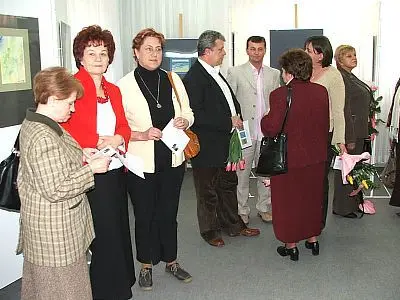
The main motif of the exhibition is water: a symbolic intermediary between life and death, between creation and destruction. After all, waters are, on the one hand, symbols of permanence and contemplation, and on the other, of evolution and Heraclitean flux. As the artist said, “we emerged from water, we are made of water; water is life.” She also added that she hoped one day to paint “the perfect watercolor, one in which water, light, shadow, and color will form a coherent and harmonious whole.”


The artist paints mainly at home. To create, she needs silence and peace. For her, watercolors are a form of self-therapy, of exorcising reality. Paraphrasing a well-known saying by Plutarch, the author of one of the exhibition’s epigraphs, not only “navigare” (sailing), but also—and often even more so—“creare necesse est, vivere non est necesse” (creating is necessary; living is not).
(GA information)