
Raciborowice Górne is a place with a long tradition and interesting historic monuments. Until 1945, it was inhabited by Germans, and after the end of the war, Poles repatriated from the former Eastern Borderlands of the Second Polish Republic settled there.
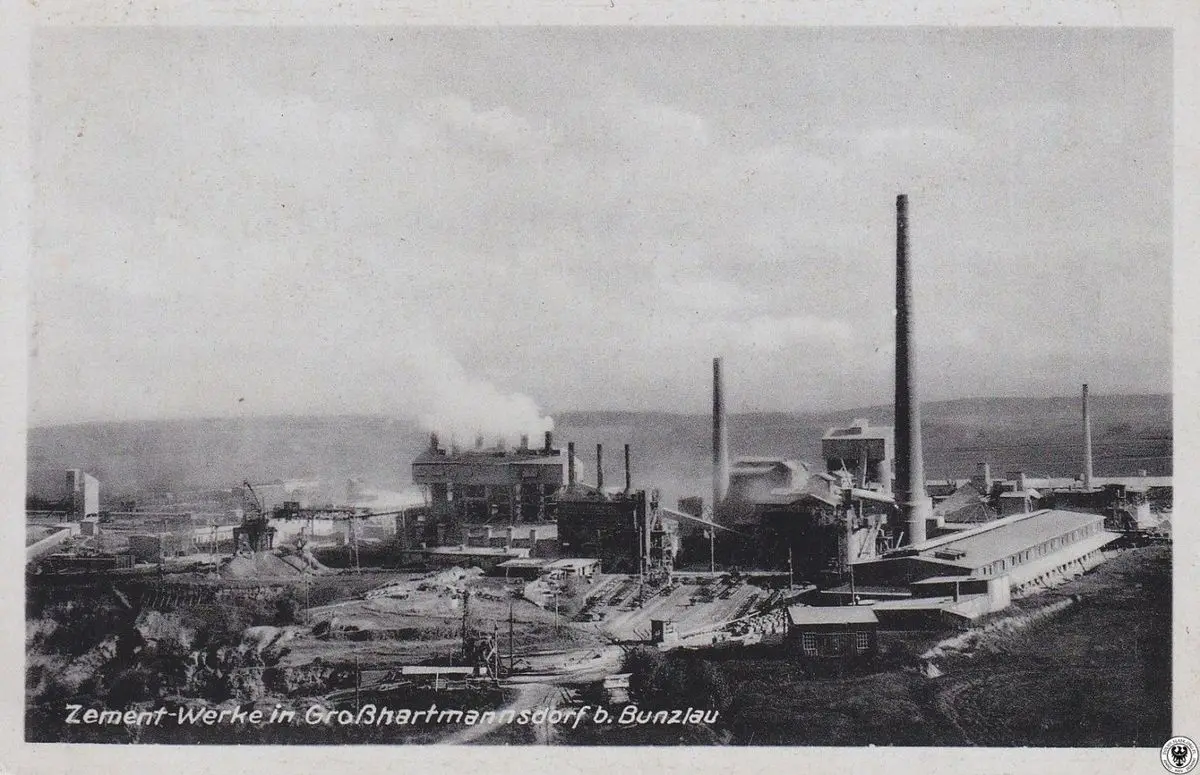
The village was founded under German law at the turn of the 11th and 12th centuries. The settlement’s economic development was connected with limestone deposits, whose exploitation gave rise to a cement plant that operated until the 1990s.
The village is home to a Catholic church dedicated to Saint Michael the Archangel. The church was built at the beginning of the 13th century in the Romanesque style. In subsequent centuries, a ribbed vault was added, and in the second half of the 16th century, a tower was built.
In the first half of the 18th century, the church in Raciborowice received a Baroque interior, in keeping with the widespread fashion for Baroque remodelling of churches. The main altar and side altars, as well as the organ loft façade decorated with paintings depicting the Stations of the Cross, date from this period.
It was also at that time that the church was furnished with Baroque sculptures and paintings. These included wooden figures of Saint John the Baptist, Saint Catherine and Saint Cecilia, as well as stone sculptures of Saint John of Nepomuk and Saint Anthony.
The residents were divided in matters of faith, so after Protestantism had become firmly established in the area, construction of a Protestant church began in 1742 and was completed in 1796. In 1884, a tower was added; its designer and builder was the well-known local architect from Bolesławiec, Peter Gansel, who also designed, among other things, the reconstruction of Grodziec Castle.
After the Second World War, the building fell into ruin, its furnishings were transferred to other churches, and the remaining structures were demolished in the 1970s. The first pharmacy opened in 1869, and a post office began operating in 1872.
In the 20th century, the latest technological advances reached the village. A railway line was built and officially operated until 15 December 1992; a cinema was also established.
Today, we can admire the beauty of the former architecture in postcards that survived the twists and turns of history, as well as the picturesque places that charm residents and visitors alike.


Sebastian Zielonka – historian and graduate of the University of Wrocław. Specialises in archival studies and conservation documentation. He is interested in the history of the region and the social life of Europeans in the 20th century. In his free time, he travels.