
Czerna is a chain village located in Nowogrodziec gmina. For several centuries it functioned under the German name Tschirne, and in 1937 it was renamed by the Nazis—due to the elimination of topographic names of Slavic origin—as Tonhain.
At the end of the 19th century, several interesting archaeological discoveries were made in the settlement, confirming the route of an ancient European trade route through the locality. One of the most fascinating finds was a bronze coin of Emperor Constantine from the 4th century and a Bronze Age axe.
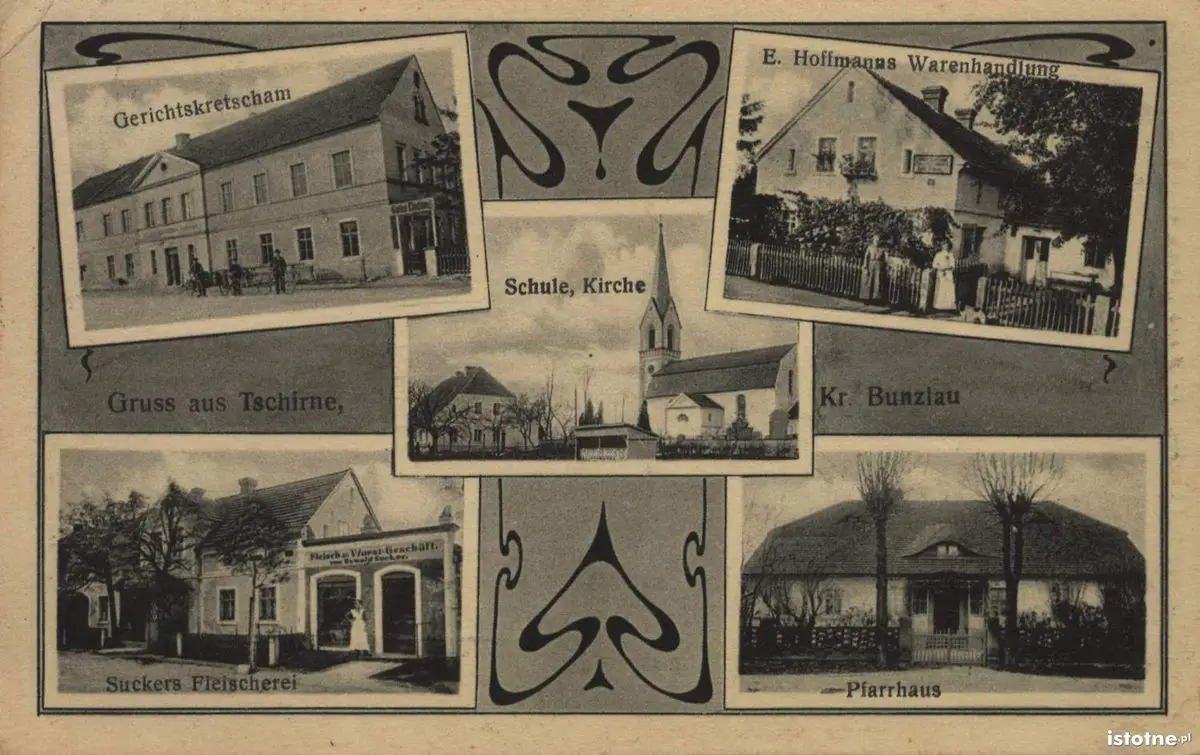
The village is home to the impressive Church of St. Stanislaus, first mentioned in historical sources in the 14th century and thoroughly rebuilt and restored in the first half of the 19th century. Inside the church, we can admire a Renaissance sculpture of Christ Salvator and a wooden crucifix from the beginning of the 19th century.
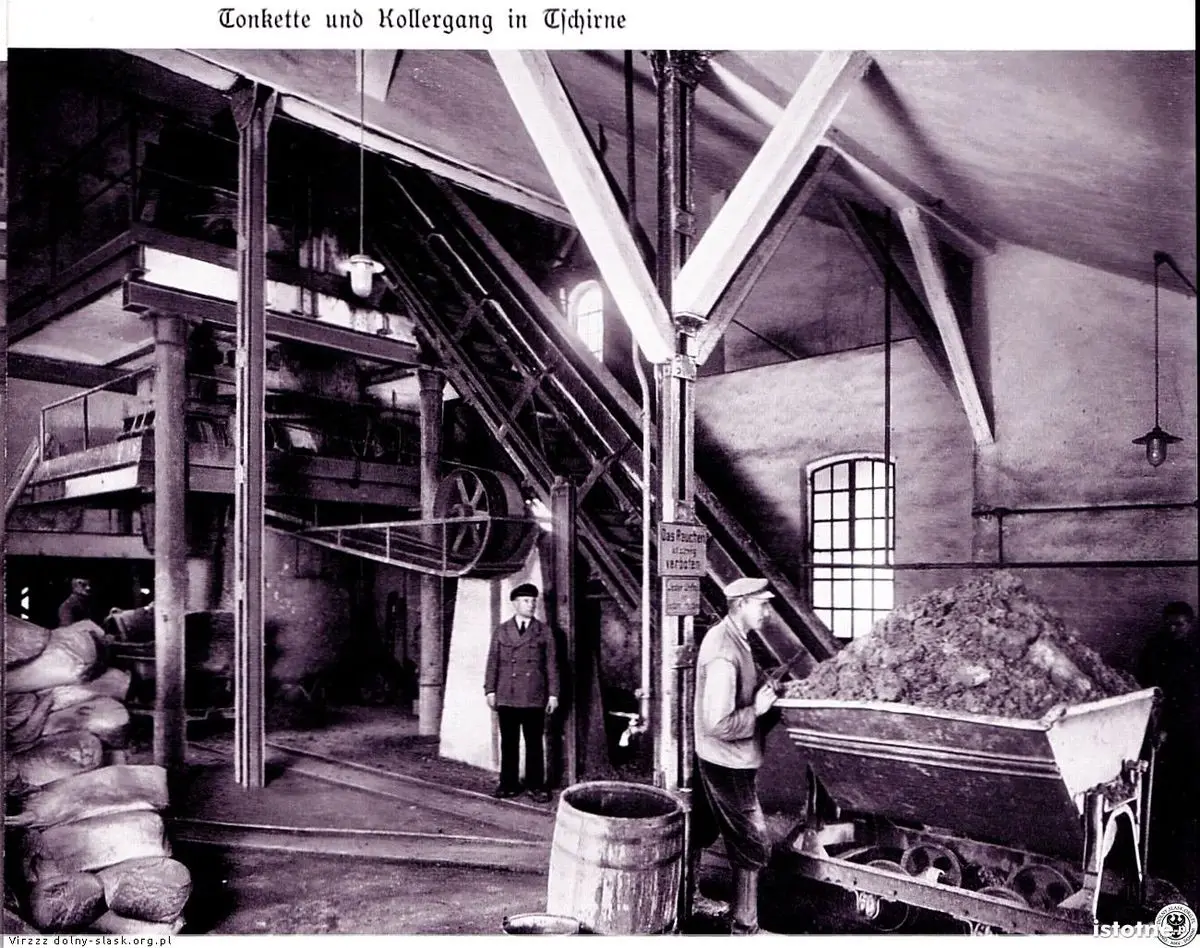
The Sturma tile and brick factory operated in the settlement, providing employment for local residents. After the end of the war in 1945, the German population was replaced by Polish people who arrived from Bosnia (including Kunowo and Dobrawa) and the Eastern Borderlands.
Today, the locality has more than 1,000 residents, and its pre-war architecture can be seen on old postcards.


Sebastian Zielonka – historian and graduate of the University of Wrocław. Specializes in archival studies and conservation documentation. He is interested in the history of the region and the social life of Europeans in the 20th century. In his free time, he travels.