
At the beginning of the 20th century, Bolesławiec was connected to the smaller towns of the county by a railway line. It supplemented the state railway, which had been built in our town in the mid-19th century. In 1906, a connection was established from Bolesławiec Wschód station to Nowa Wieś Grodziska, and in 1913, to Modła.
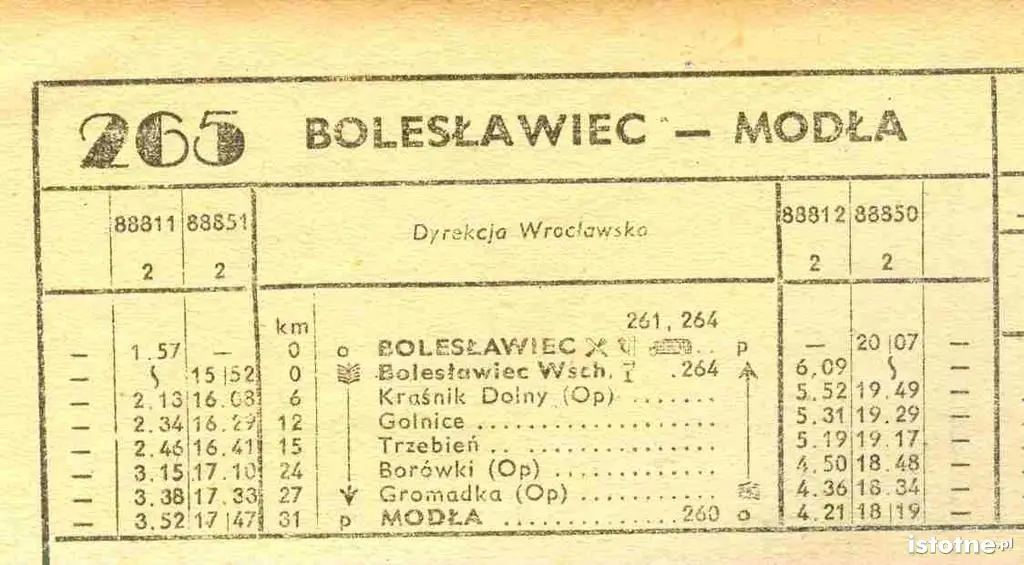
At the beginning of 1912, the idea arose of building a railway connection from Bolesławiec to Modła. The route began at Bolesławiec Wschód station and then ran through Chościszowice, Kraśnik Dolny, Dąbrowa Bolesławiecka, Golnice, Trzebień, Karczmarka, Borówki, Grodzanowice and Gromadka to the terminus at Modła.
The ceremonial opening of the line took place on December 20, 1913. Interestingly, at Trzebień the line turned 90 degrees toward Modła. This was a rather unusual solution, as most railway routes are laid out in a straight line. The choice of route was influenced by local conditions and an unrealized project to build a railway connection from Trzebień to Szprotawa. The line had a total length of 31 kilometers and 200 meters. The main purposes of the undertaking were the transport of goods, timber from the extensive forests, and passengers.
Initially, the undertaking did not generate very large profits, but in the 1920s, as a result of industrial development in Bolesławiec, demand for workers increased, which led to a rise in the number of passengers using the service.
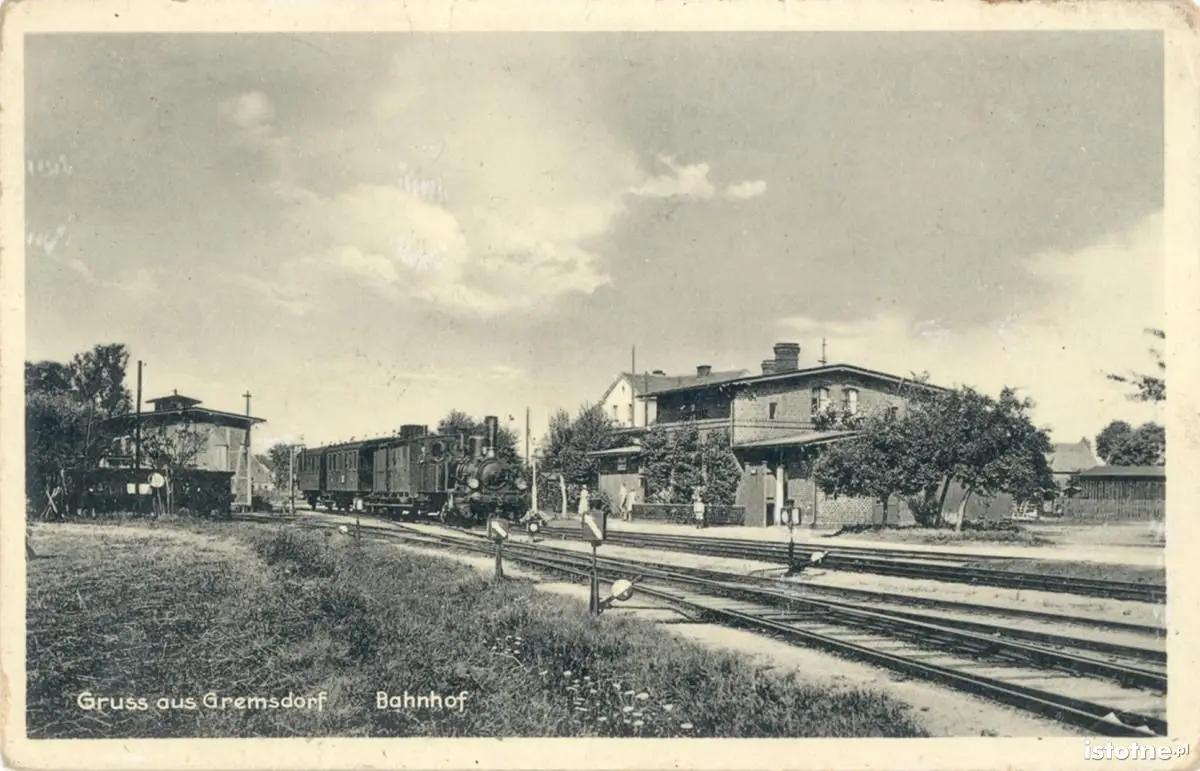
The line did not suffer significant damage during World War II. In 1945, it was taken over by PKP. Regular passenger service operated on the route until 1961, while freight traffic continued until the end of the 20th century. Today, the railway route no longer exists, and we can admire the architecture and former grandeur of the old stations in surviving postcards.


Sebastian Zielonka – historian and graduate of the University of Wrocław. Specialization: archival studies and conservation documentation. He is interested in the history of the region and the social life of Europeans in the 20th century. In his free time, he travels.