
Wleń Castle (German: Burg Lehnhaus) has an extraordinary history, linked by legends to Saint Hedwig. It was built on the site of an earthen-and-timber stronghold and, in 1108, during the reign of Bolesław III the Wrymouth, was elevated to the status of a castellany.
The construction of the first masonry building is attributed to Bolesław I the Tall. The tower of last resort, preserved to this day, dates from that period. Henry the Bearded and his wife Hedwig were frequent guests at the castle. At her initiative, a chapel was built for the local population.
Saint Hedwig was renowned in the area for her piety and fervent faith. She led a life full of humility and was deeply devoted to God. After her death, she was proclaimed a saint and the patron saint of Silesia.
In the mid-13th century, the castle appealed to Bolesław the Rogatka, the grandson of Saint Hedwig and Henry the Bearded. He was known for his adventurous lifestyle and gained “fame” by imprisoning Tomasz I, Bishop of Wrocław, in 1256 in order to obtain benefits.
In the second half of the 14th century, Bolko II the Little, Duke of Świdnica-Jawor, expanded the castle with the so-called middle castle. In 1428, the stronghold was unsuccessfully besieged during the Hussite uprising. In 1465, Hans von Ziedlitz, a local brigand and oppressor of the surrounding population, became the castle’s owner.
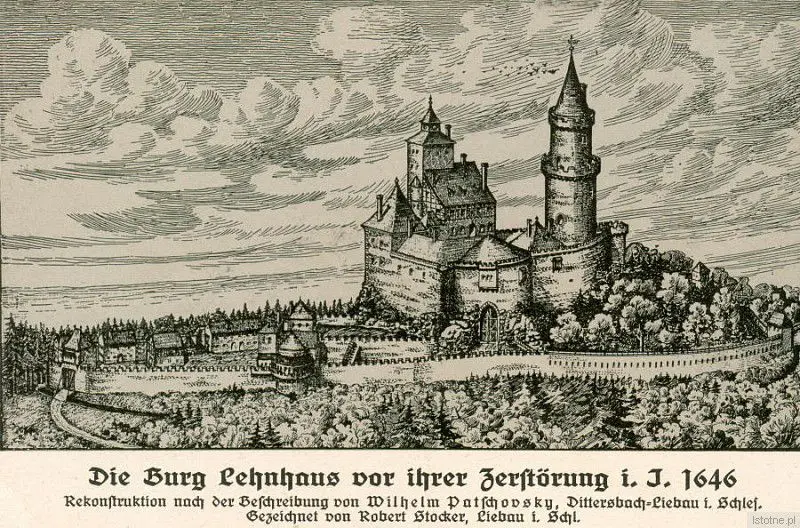
Further construction work was carried out at the castle between 1567 and 1574 under the supervision of architect Jerzy Wahlich. The defensive walls were strengthened and the tower reinforced. During the Thirty Years’ War, the site was captured and besieged several times by Swedish and Imperial troops; in 1646, it was set on fire and fell into ruin.
After the war, it was purchased by Adam von Kohlhaus, a colonel in the service of King Louis XIII of France. Unfortunately, he did not undertake to rebuild the castle, but instead built a palace on the mountain slope, where he lived. In the 18th century, the castle came into the possession of Count Grünfeld, and after his death in 1804, the Haugwitz family became its new owners, retaining possession until the end of World War II.
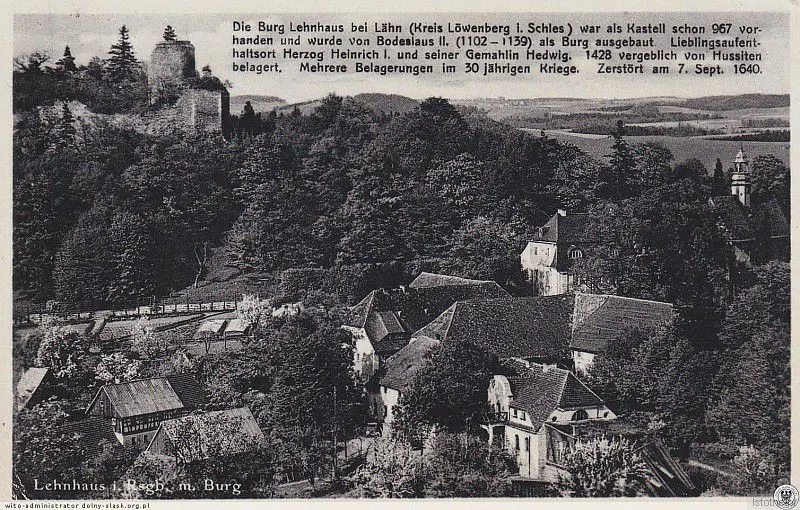
The castle served an important military function in the Middle Ages because of its location on the borderlands of Silesia. Today, in good weather, the beauty of the nearby mountains can be admired from the castle’s tower, while old postcards allow us to imagine the site in its finest days.




Sebastian Zielonka – historian and graduate of the University of Wrocław. Specialization: archival studies and conservation documentation. He is interested in the history of the region and the social life of Europeans in the 20th century. In his free time, he travels.
(information: Sebastian Zielonka)