
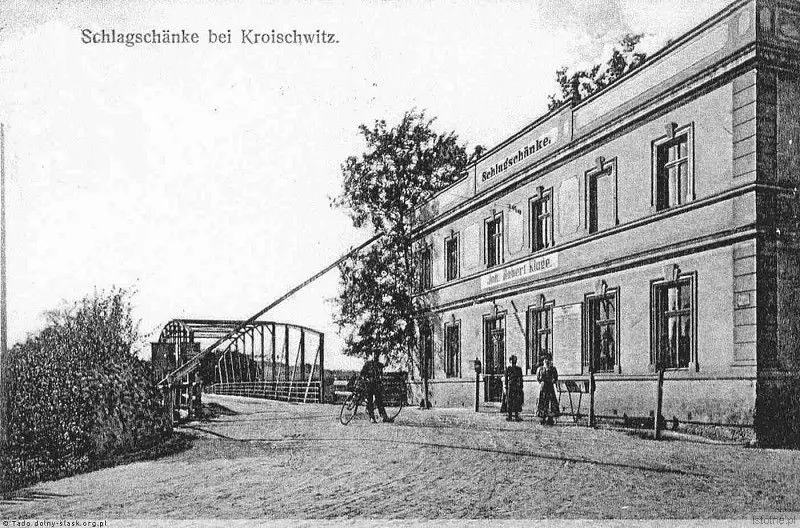
This is a settlement of Slavic origin. The first historically confirmed references have been preserved in the register of the Wrocław bishopric from 1305. The Church of St. Hedwig dates from the medieval period; it was rebuilt in 1817 and restored in 1975. It contains interesting furnishings, including a Baroque high altar, tin candlesticks from the 18th century and a Baroque tabernacle. In 1897, the stone bridge over the Bóbr River in the village was destroyed, and a new crossing over the river was built in its place in 1900; it still serves the residents today.

Between 1914 and 1916, a modern 6.6-kilometre road from Kraszowice to Bolesławiec was opened. Important centres of economic and industrial life in the village included a hydroelectric power plant, put into operation on 12 June 1932 and designed by architect Georg Wolff, as well as a commercial mill, which supplied flour for bread to the residents of Bolesławiec during the first post-war months. In 1885, the village had 438 inhabitants, while in 1939 it had 410. Kraszowice had an estate with a beautiful palace; the history of the palace will be presented in a separate article. Today, the beauty of pre-war Kraszowice can be admired on old postcards.
Sebastian Zielonka – a historian and graduate of the University of Wrocław. Specialization: archival studies and conservation documentation. He is interested in the history of the region and the social life of Europeans in the 20th century. In his free time, he travels.




(information: Sebastian Zielonka)