
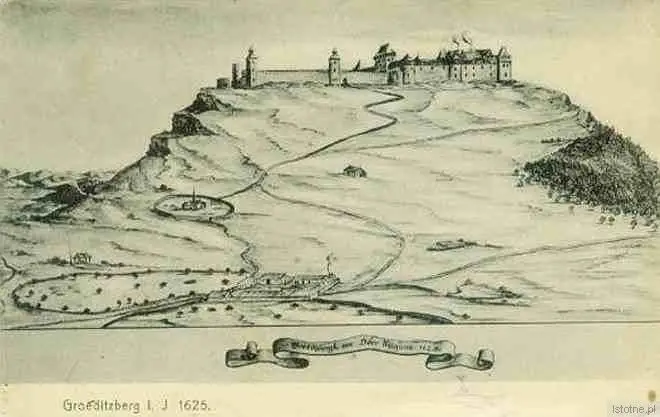
Grodziec Castle is situated on a steep hill 389 meters above sea level. It is a Gothic structure located near the buildings of the village of Grodziec (Złotoryja County). Today, the castle complex consists of the upper castle and outer baileys measuring 270 by 140 meters.
The first mentions of the castle date back to the 12th century. It was a fortified settlement and became the property of Duke Bolesław I the Tall in 1175. In subsequent centuries, it belonged to the dukes of Świdnica-Jawor and Legnica. During the Hussite Wars, the structure was plundered.
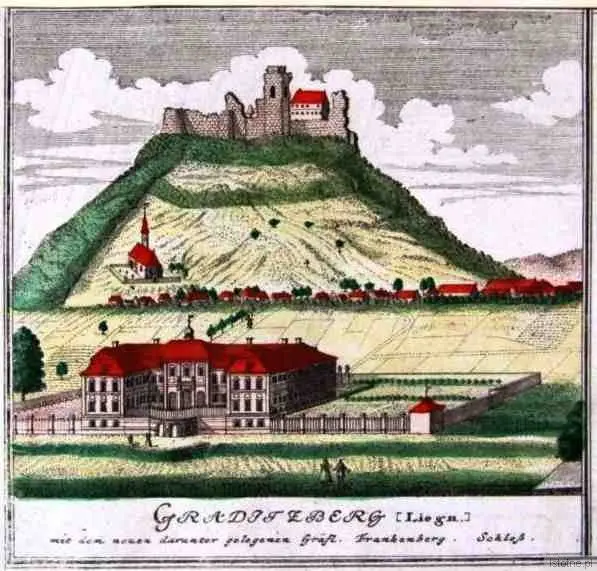
In the first half of the 15th century, the castle was rebuilt in the Renaissance style. In September 1633, during the Thirty Years’ War, most of the structure was destroyed by fire. In the following years, the castle fell into ruin.
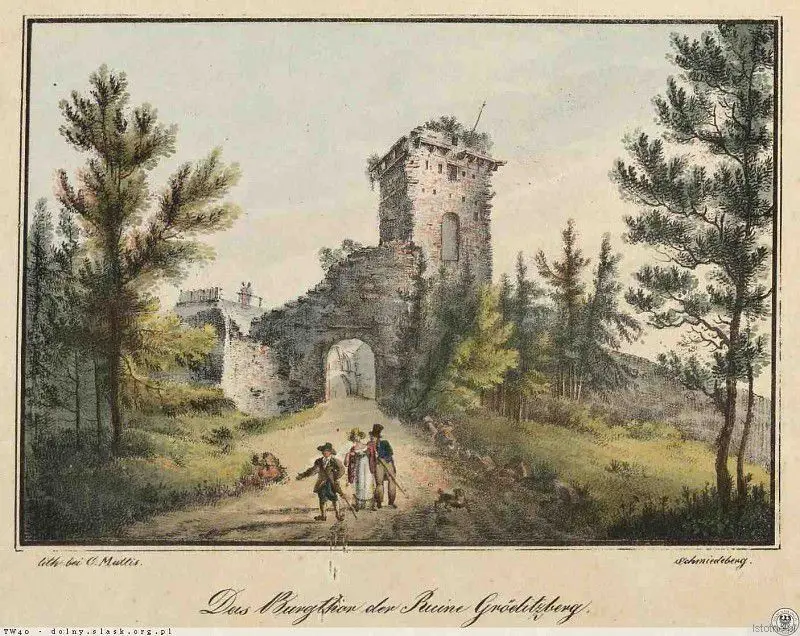
At the beginning of the 19th century, it was partially rebuilt, and the rooms were filled with memorabilia and opened to tourists. It was one of the first sites in Europe adapted for tourism.
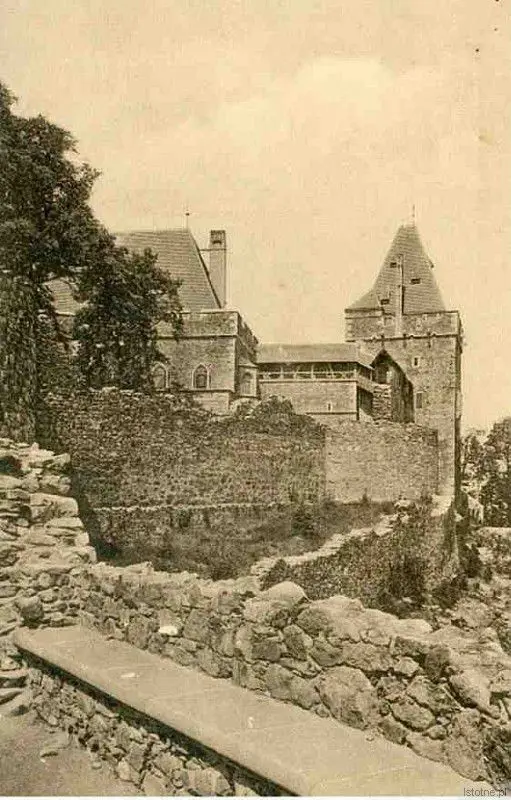
Another renovation of the site took place in 1906–1908, based on a design by Bodo Ebhardt, a renowned German architect and monument conservator. The castle’s last owner was the German politician and Nazi Herbert von Dirksen, one of Adolf Hitler’s most trusted diplomats.
At the beginning of the 21st century, foreign film productions were made on the castle grounds. Today, it is a place for leisure and Sunday excursions for residents of Bolesławiec and the surrounding region. Until the end of the war, visitors could admire a beautiful knights’ hall and a charming chapel at the castle, as well as visit the castle inn, which served regional cuisine. The castle’s present-day custodians are trying to restore it to its former glory, including by organizing numerous events, such as the Castellan’s Silver Ring Archery Tournament and the Blooming Lime Trees Festival.
Below is an interesting description of the castle, published in Tygodnik Ilustrowany in 1881:
Grodziec Castle rises 408 meters above sea level on a basalt bed and lies in Lower Silesia, in the Legnica regency district, between four towns: on one side Bolesławiec and Loewenberg, and on the other Haynau and Goldberg. [...] Of all the buildings, only the palace intended as a residence for knights has survived; today, a considerable part of it is leased as a restaurant during the summer. Two knights’ halls in this palace are worthy of attention. The first, built in the Gothic style, has three windows ending in pointed arches. For defensive purposes, these windows were narrow and in former times had no glass; their frames were filled with parchment soaked in grease or with horn panes. The hall has no decorations or trace of painted ornamentation. The second hall has numerous oil paintings on its walls depicting distinguished figures of the previous century. Connoisseurs and art lovers will be interested in six paintings on glass hung in the windows.




Sebastian Zielonka – a historian and graduate of the University of Wrocław. His specialization is archival science and conservation documentation. He is interested in the history of the region and the social life of Europeans in the 20th century. In his free time, he travels.
(information: Sebastian Zielonka)