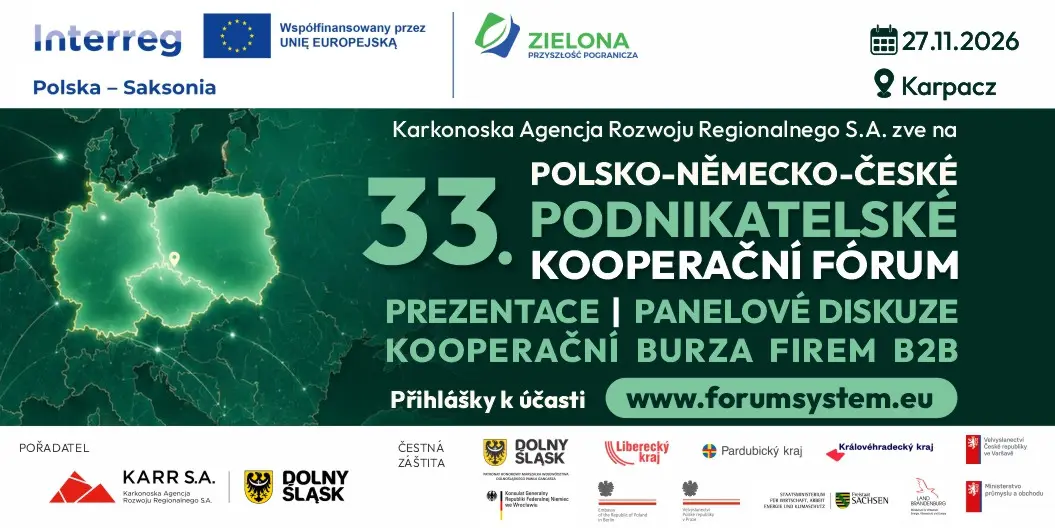
For more than three decades, the event has created a space for establishing new business contacts, exchanging experiences and developing cooperation in the border area of the three countries, while this year’s edition will also provide an opportunity to discuss the future of the economy and the challenges associated with the energy transition.
The Business Cooperation Forum has become one of the most important economic events in the border area of Poland, Germany and the Czech Republic. Successive editions show that consistently built cross-border cooperation can lead to specific ventures, new investments, innovative projects and lasting relationships between entrepreneurs and institutions. The event also strengthens the economic potential of the Jelenia Góra subregion and Lower Silesia as a whole, creating opportunities for cooperation with partners from neighbouring regions.
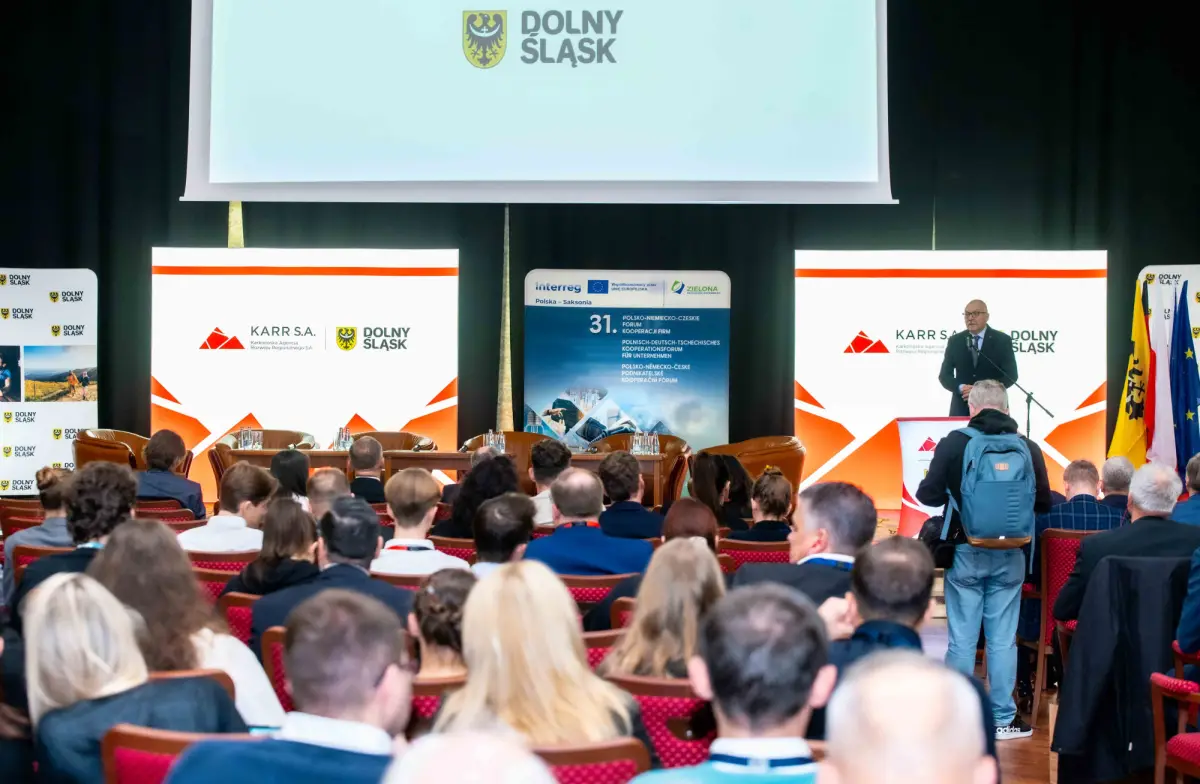
This year’s Forum will provide an opportunity to further develop this cooperation and discuss the region’s development directions. The prospect of cooperation between Poland, the Czech Republic and Germany in the face of ongoing economic and energy changes will be particularly important. The meeting will allow participants to look at these challenges from the perspective of entrepreneurs as well as administration representatives and experts.
The international character of the event is highlighted by its broad group of patrons, including the Marshal of the Lower Silesian Voivodeship, the Embassy of the Republic of Poland in Prague, the Embassy of the Republic of Poland in Berlin, the Embassy of the Czech Republic in Warsaw, the Consulate General of the Federal Republic of Germany in Wrocław, the Hetman of the Liberec Region, the Hetman of the Hradec Králové Region, the Hetman of the Pardubice Region, the Saxon State Ministry for Economic Affairs, Labour, Energy and Climate Protection, the Ministry of Industry and Trade of the Czech Republic, and the Ministry of Economy, Energy, Climate Protection and European Affairs of the State of Brandenburg.
One of the event’s most important elements will be the B2B cooperation exchange, which has attracted the greatest interest among participants for years. Individual meetings allow entrepreneurs to meet potential business partners directly, present their offer and begin discussions on cooperation with companies from Poland, Germany and the Czech Republic. For many participants, such meetings become the beginning of specific ventures—from signing commercial agreements and implementing joint projects to entering new markets.
It is precisely this practical dimension of the event that represents one of its greatest values. The Forum is not limited to exchanging knowledge and discussing directions for economic development; above all, it enables the direct building of relationships that can continue to develop after the event ends. The Forum’s long history confirms that contacts established during meetings in Karpacz can grow into long-term business and inter-institutional cooperation.
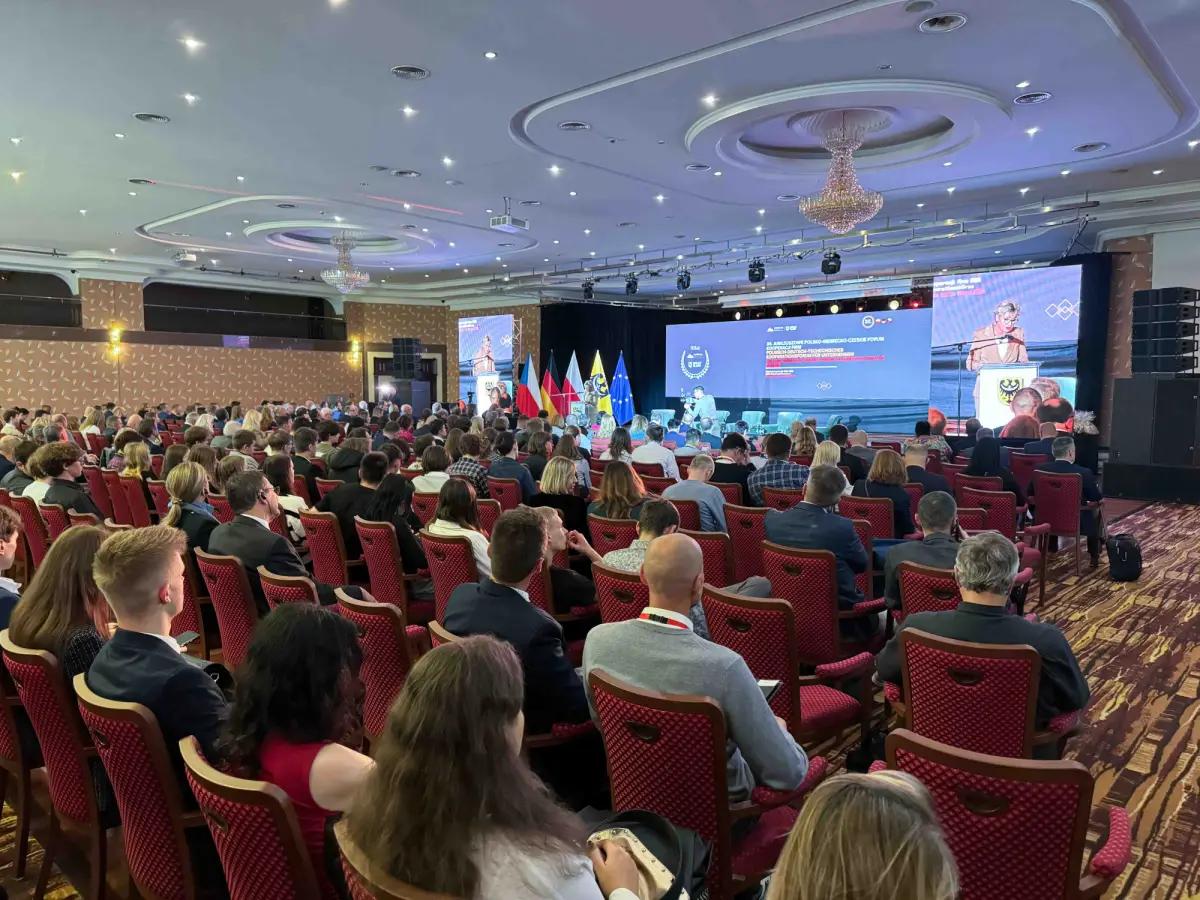
This year’s edition has been prepared with entrepreneurs in mind who are interested in developing their operations in international markets and following the most important economic trends. Following the official opening of the event, the strategic project “Green Future of the Borderland” will be presented. A discussion panel devoted to the future of the Three-Country Region will then take place, during which participants will discuss the region’s economic development, security and energy transition.
The programme will continue with expert presentations on the role of modern energy in the transition process, practical aspects of Polish-German business cooperation, and energy security and local transition. After the conference section, participants will take part in the B2B cooperation exchange, which will provide an opportunity for direct discussions with potential partners.
The organisers encourage entrepreneurs to register as soon as possible. Registration has been open since 7 September via the forumsystem.eu platform.
The Forum is held as part of the strategic project of the INTERREG Poland–Saxony 2021–2027 Cooperation Programme, “Green Future of the Borderland”, which is co-financed by the European Union from the European Regional Development Fund. The project focuses on cross-border cooperation in the Polish-Saxon borderland in the context of adapting to ongoing structural changes related to the energy transition.