
– Look what Google is showing me here in Canada. I was stunned... – journalist Grażyna Hanaf wrote and sent two screenshots from her smartphone.
One advertisement shows Donald Tusk, with Rafał Trzaskowski behind him. It also includes the captions: "Stop Tusk" and "Go vote".
The second banner shows an old photograph of the Civic Coalition candidate with a man standing beside him whose eyes are covered by a black bar. The caption reads: "Is Trzaskowski going to the palace to PARDON THE F****** FROM TARGÓWEK?".
Both advertisements bear a statement that they are election material from Karol Nawrocki's committee. Clicking the advertisement takes users to Nawrocki's election spot on YouTube. The advertisements are distributed through Google's network and target the Polish diaspora living in North America. After midnight, they also began running in Poland.
What advertisements are being shown to istotne.pl readers?
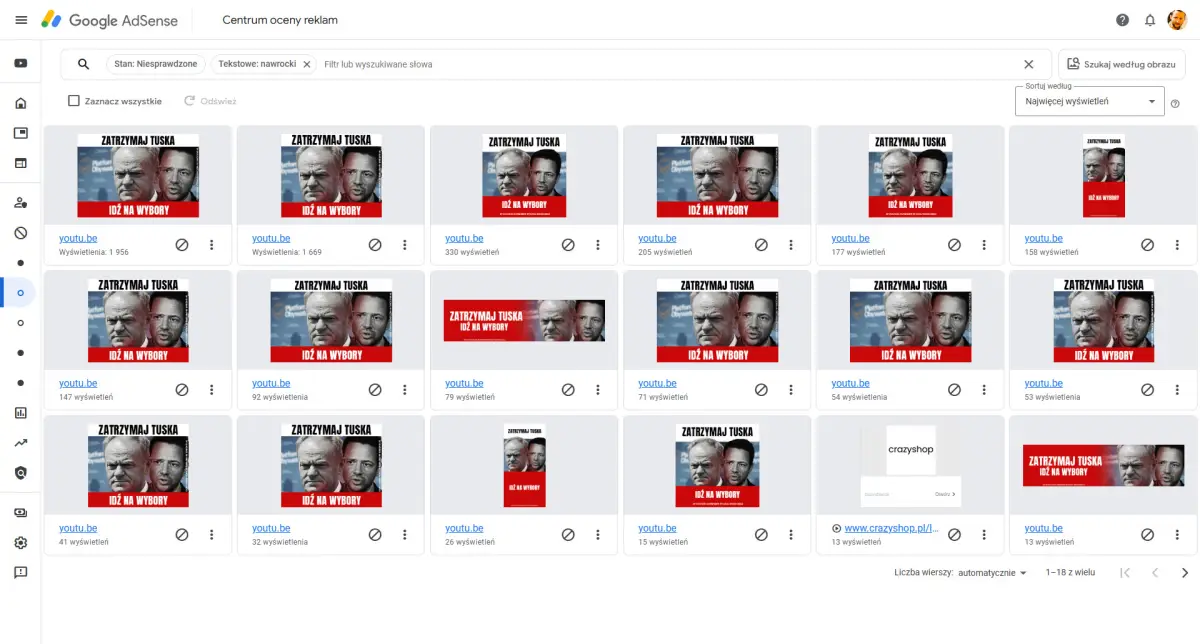
We checked the advertising system to see which banners are being shown to readers of our portal for the keywords "Nawrocki" and "Trzaskowski." For Nawrocki, there are only banners attacking the Civic Coalition candidate. By contrast, searching for Trzaskowski produces a positive message, with banners advertising the candidate. It appears that supporters of PiS and Karol Nawrocki decided to launch a mass attack on Trzaskowski on the final day of the campaign.

How can such an election advertisement be assessed?
🔴 1. Ethical aspect:
- Negative campaigning: The use of such harsh messages as “Stop Tusk” or “Pardon the f**** from Targówek?” (uncensored in the original) indicates an attempt to provoke negative emotions: fear, contempt and disgust.
- Personal attacks: These are not merely critical opinions about a rival's platform or decisions, but personal, insinuating attacks that may cross the boundaries of dignity and good reputation.
⚖️ 2. Legal aspect:
- Electoral Code: Polish law prohibits publishing false information and campaigning that violates the personal rights or dignity of other candidates.
- Google's policy: Content containing profanity, hate speech or insulting suggestions is generally inconsistent with the advertising platform's policies.
🌍 3. Political and communications aspect:
- Foreign targeting: Directing the campaign at the Polish diaspora may be a mobilization tactic, but it may also be an attempt to bypass domestic public opinion during the initial phase of the campaign.
- Side effects: This type of messaging may backfire – many voters find it too brutal and unacceptable, and it may alienate the centrist electorate.
- Media and public backlash: Such materials produce a rapid media impact, but often lead to a negative perception of the message's author.