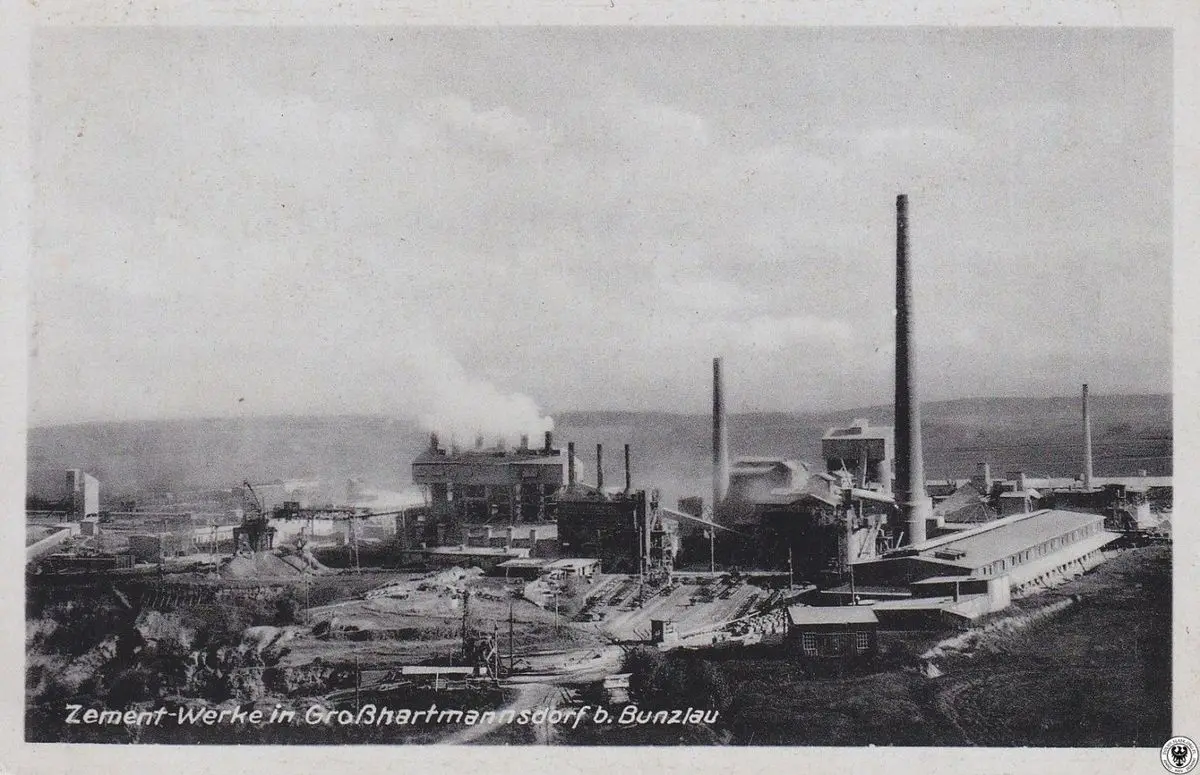
The village of Raciborowice Górne was established under German law at the turn of the 11th and 12th centuries. Until 1945, it was inhabited by Germans. The village’s main source of income was a cement plant, which was established thanks to rich limestone deposits. related to the extraction of limestone deposits. The cement plant operated in Raciborowice until the 1990s.
At the beginning of the 13th century, a Catholic church dedicated to St. Michael the Archangel was built in the village. Its original Romanesque structure gained Gothic rib vaulting in the following centuries, and in the first half of the 18th century the church received a Baroque interior.
At that time, the inhabitants of Raciborowice were already divided by faith, so after Protestantism had become established in the area, construction of a Protestant church began in 1742 and was completed in 1796. In 1884, a tower was added; its designer and builder was the well-known local architect from Bolesławiec, Peter Gansel, who also designed, among other things, the reconstruction of Grodziec Castle.
After the hostilities ended, the Germans were expelled from Raciborowice. Poles repatriated from the former Eastern Borderlands of the Second Polish Republic settled in the village. At that time, the Protestant church fell into ruin because there were no longer any German worshippers to care for it. Its furnishings were transferred to other churches, and the remains were dismantled in the 1970s.
Today, we can admire the beauty of the former architecture in surviving postcards, as well as picturesque places that delight residents and visitors.