
Marianna had dreamed of becoming a teacher since childhood, which is why, at the age of 14, she left her family village in central Poland to learn the profession at the Teacher Training Secondary School in Świdnica, Lower Silesia. She got her first job in Bolesławiec County just after reaching adulthood: at the primary school in Nowa Kuźnia.
She settled in Bolesławiec with her husband in 1962. Stanisław Naglik, the first headmaster of the Special School—which at that time was located at 38 Komuny Paryskiej Street—welcomed the new teacher with open arms. These were pioneering times for the school’s entire teaching staff.
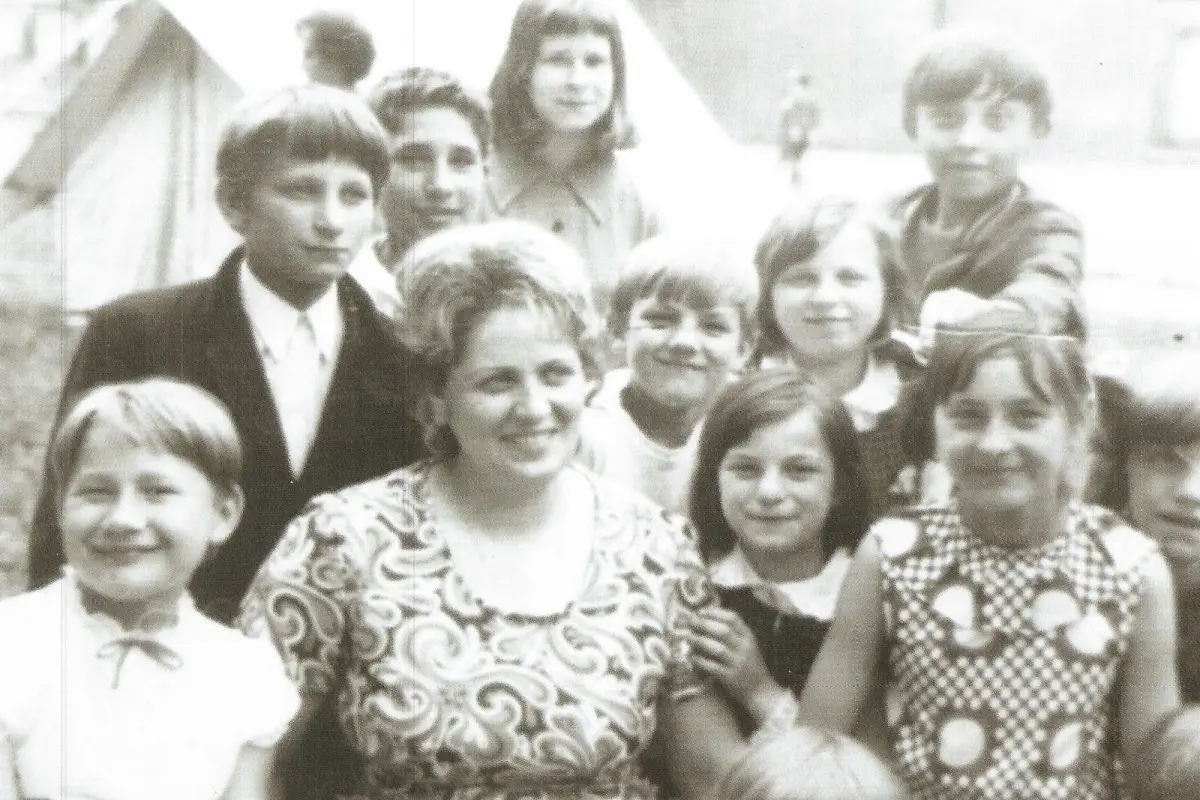
Marianna and her husband lived at Królowej Jadwigi Street, where the teacher’s first son, Henryk, was born. The child died shortly after birth. In 1964, Marianna gave birth to her second son, Arkadiusz, who years later wrote this about his mother:
She was universally respected and valued because she approached every lesson, every student and every parent with care, commitment and empathy. More than once, she was able to visit her students’ homes, meeting their parents and guardians to talk about what could prepare the children entrusted to her for independent life. A world that was closed to them because of their disabilities.
She did not seek applause or honors. Fully aware of the circumstances, she gave up promotions and a career because at that time they were too closely tied to party membership. She chose the path of arduous and quiet daily work. The work of a teacher who treated every day as a day of teaching—not only on special occasions.
Marianna divided her time between the school, her students, her home and little Arek. In 1971, she completed a speech-therapy course. In 1973, she became an appointed teacher and later a certified teacher. The 1970s became difficult after the brutal suppression of workers’ protests in Radom; food rationing returned for the first time since the postwar period. The Urban family visited friendly farmers, including the Zamar family, to survive that time.
The period of martial law found Marianna in hospital; her father also died, and her son was arrested. The woman did not give up. Although she retired, she continued working part-time at the Special School for another 10 years.
She finally retired in 1991 to enjoy her grandchildren and family life. In one of her farewell speeches at the end of the school year, she said: I think you will make proper use of the knowledge you have gained here, and in the future you will know how to live so that you can get along well with people, and people with you.
That is how Marianna Urban lived—a teacher who never wavered.