
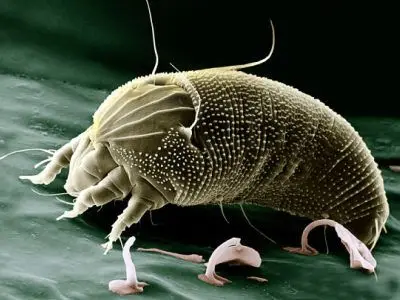
In Poland, the heating season can last half a year, and sometimes even up to eight months. Around the end of October, it gets colder, so we turn on the radiators. For dust mites—tiny arachnids invisible to the naked eye whose droppings are a powerful allergen—this is a favourable period. Working radiators emit heat, which causes them to spread throughout the home and reproduce at a surprisingly rapid rate. Anyone allergic to dust mites may feel the start of the heating season acutely. A runny nose, sneezing and watery eyes are just some of the symptoms.
It All Starts with the Radiator
A considerable amount of dust accumulates on radiators, containing, among other things, dust mites, skin flakes and animal hair, insect remains, dust from building materials and other allergenic substances. Radiators are often forgotten when cleaning—especially in summer. Wiping dust from a radiator takes a lot of time and ingenuity, because it is difficult to reach its nooks and crannies with a cloth. Some people deal with the problem by tying a damp cloth around a knife and inserting it between the radiator fins. However, even this technique does not guarantee that the heater will be cleaned thoroughly. There will always be dust left somewhere, and it will start rising when the heating season begins—that is when allergy sufferers’ nightmare starts.
Turn Down the Radiator
Unfortunately, most people follow the principle that the warmer it is at home, the better it is for their health. However, high indoor temperatures will certainly cause dust mites and other allergens of household dust to float freely around the home. Thanks to the heat, dust mites will significantly expand their army within a few days. For allergy sufferers, this means one thing—sneezing attacks, watery eyes, a runny nose, shortness of breath, sleep problems and a feeling of fatigue. Therefore, the amount of dust circulating in the home should be limited. Turn down the radiator. It is best to maintain an average indoor temperature of around 20–21 degrees Celsius, at which dust mites do not develop at an alarming rate.
Air in the Home
Unfortunately, a switched-on radiator contributes to poorer air quality in the home. Therefore, during the heating season, allergy sufferers should ensure that the home is aired regularly. The pollination season is over, so windows can be opened safely. Fresh, cold air will certainly harm dust mites.
Devices with air-purifying functions are also available—they attract and trap dust particles; some of the most professional models remove around 99% of all allergens, including dust mites. There is a wide range of air purifiers with different filtration systems, such as a water filter. An ioniser is also recommended: it negatively ionises the air and makes it easier for allergy sufferers to breathe.
What Else Can Be Done?
Before the heating season, it is worth considering insulating the exterior walls of the house, which will help it “retain” the right temperature and reduce the need to use the radiator. However, once the radiators are running at full power, remember the basic rules of keeping things tidy—this will certainly help reduce the amount of allergens.
It is best to remove:
- dried flowers, especially if they are on a windowsill, where dust collects and cannot be removed in any way
- curtains—they can be replaced with vertical blinds, which do not retain dust
- excess ornaments.
Follow a cleaning schedule:
- every day—vacuum floors, rugs and carpets; wipe dust from furniture with a damp, not wet, cloth; you can wear a mask when making beds, cleaning or dusting
- every week—wash bedding at a temperature above 60 degrees; wipe dust-mite-proof covers with a damp cloth; vacuum under the bed; wipe dust from furniture; vacuum or wipe floor mouldings and picture frames; switch off and clean the radiator
- every 3–6 months—all pillows, duvets and blankets should be washed.
If there is a pet in the home, such as a dog, cleanliness in all rooms must be maintained with even greater care. A four-legged friend brings quite a lot of dirt and dust into the home. It is therefore important to introduce rules that help maintain cleanliness—for example, the dog should not be allowed to enter the room of a child who is crawling or playing on the floor without supervision. In a film “How to Live with a Dog at Home Despite a Child’s Allergy?”, animal behaviourist Andrzej Kłosiński from Kraków explains how to organise life with a dog despite allergies among household members.
You can take advantage of the low outdoor temperature and air bedding on the balcony on frosty days—it will certainly harm dust mites.
“Do not overheat your home”—this is the basic rule to follow during the heating season. It is also a good idea to keep the home tidy in order to reduce the amount of allergens. It is worth using modern devices that improve indoor air quality, such as an ioniser or air purifier.
information Anna Włoszek
The series “Everything You Want to Know About Allergies” is published in cooperation with the video portal www.JaAlergik.pl.