
In his exceptionally fascinating lecture, delivered on Monday at the “Format” gallery, Dr Romuald M. Łuczyński spoke about aristocratic residences in Lower Silesia. They were architectural gems, often designed by the most distinguished European architects. Today, the scholar is a collector of bones and stones, an archivist of the devastation inflicted by Poles on their national heritage.
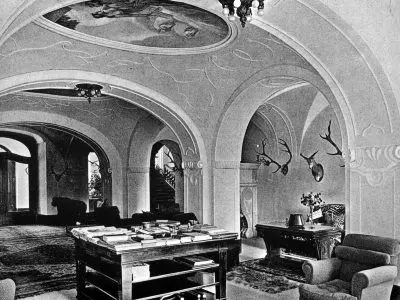

Travelling through the neighboring areas of the Czech Republic, we marvel at the wealth of manor houses, palaces and farmsteads. Their potential translates into economic benefits. Whenever Poland’s historic monuments are discussed, wartime actions are cited as the reason for their poor condition or disappearance. The prevailing view holds that the Czechs surrendered, while we fought bravely in September 1939, and that, as a consequence, the evil enemy destroyed our country. The truth is far more brutal. There was no military activity in the Sudetes. Not a single bomb fell on the palaces. It was postwar looting and the Poles’ devastation that contributed to the destruction of their own cultural heritage.

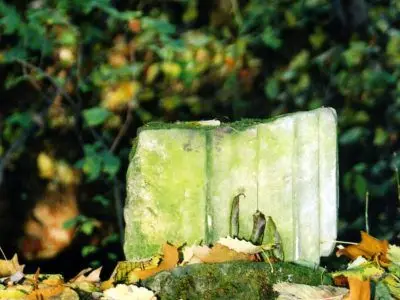
For his work, Łuczyński unearthed some telling information about how the residences were treated during the Polish People’s Republic. During the era of People’s Poland, they were mainly converted into scrap-metal and timber depots, transformed into sheepfolds (Darków), and even used as rubbish dumps (Ścinawka Górna). Most often, however, they served as fuel and building-material storage facilities.
The author of the study on Lower Silesian residences during the era of People’s Poland also knows of one palace that survived in the form of a shed.


After 1945, the authorities of People’s Poland undertook the reconstruction only of Piast, that is, purely Polish, buildings. The aristocrats’ residences in Lower Silesia were symbols of class oppression and, in addition, represented German property. When they were destroyed, propaganda presented this as the removal of the remnants of the Nazi bourgeoisie. The palace in Legnica narrowly escaped demolition because its remodeling had been carried out by the German architect Schinkel (Karl Friedrich Schinkel was one of the outstanding creators of the Neoclassical period in Prussia. Schinkel’s best-known buildings are in Berlin, including the theater building at Gendarmenmarkt and the Altes Museum on Museum Island. In Bolesławiec, there is an obelisk commemorating Mikhail Kutuzov designed by him).


In the 1970s and 1980s, unjustified demolitions of residences were carried out on the grounds of threats to public safety. This formalization of the matter tied the hands of both heritage conservators and the Minister of Culture. In the 1970s, many properties belonged to state agricultural farms (PGRs). Everything then depended on whether the PGR director was an enlightened person or a local party strongman. The buildings were most often stripped of their architectural details and converted into apartment blocks, irreversibly destroying their original interiors.
The owners of the palaces included the police, the army, PKP, the health ministry, and even the education sector, but none of these custodians guaranteed that the historic monument would survive in good condition.

When Dr Łuczyński talks to local residents about a destroyed palace or manor house, they most often speak with great passion:
“Sir, there was a beautiful palace here, but they destroyed it.”
“Who destroyed it?” the researcher then asks.
“The Communists, sir, the Communists,” the person addressed most often replies.
“The Communists?!” fumes the man who still carries these ruins in his heart. “Did Gomułka come here and dismantle the bricks? Did Gierek smash the stucco for you? Your father and grandfather did it,” he adds imprudently, silently thanking fate that he took up sprinting in his youth, because this truth is extremely inconvenient and cuts to the quick.
(information: Grażyna Hanaf)