
On Thursday, 5 March, a seminar organized by the Powiatowe Centrum Edukacji i Kształcenia Kadr and the Wrocław branch of the Institute of National Remembrance was held in the assembly hall of I LO. A lecture on the September Campaign was delivered by Dr. Jerzy Kirszak. Final-year students also had the opportunity to hear a lecture by Wojciech Trębacz, who presented the story of Lieutenant Mieczysław Bujak, sentenced to death in 1951.
“Bujak is not an encyclopedic figure,”Wojciech Trębacz from the Institute of National Remembrance told the IstotneInformacje.pl portal. “He was not a role model, nor was he a typical figure for those times. He was an ordinary man entangled in two criminal systems: the Nazi and communist systems,” he added.

In 1951, the lieutenant was murdered by the communists. He was 25 years old. “I often ask young people: what exactly was he sentenced for?” Trębacz notes. “In my opinion, he died because he was Polish in a Poland like that. He was a potential threat to the system. Such people had to be eliminated.
During Thursday’s seminar, a highly evocative film, “The Accusation,” directed by Grzegorz Braun, was screened. The film tells the story of Mieczysław Bujak’s tragic death. The creators of “The Accusation” reached, among others, the prosecutor who handled the lieutenant’s case. “The film was made for television, but it was never broadcast,” Trębacz emphasizes.
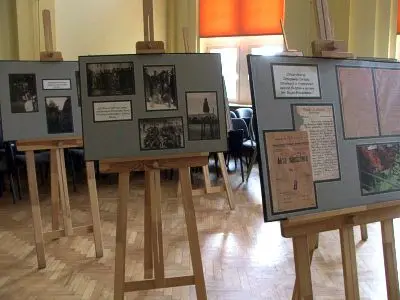
An exhibition entitled “We fought for a new Poland; Poland for everyone...” is also dedicated to Lieutenant Bujak. It presents memorabilia and documents connected with the soldier. From 6 March, the exhibition can be visited at the Pedagogical Library (Tyrankiewiczów Street).

“We decided that, in view of the 20th anniversary of the fall of communism and the 70th anniversary of the outbreak of World War II, both commemorated this year, it would be worthwhile to organize a patriotic meeting,” says Urszula Jasik, a methodological adviser at PCEiKK. “This seminar was a wonderful lesson in patriotism,” she adds.

The IstotneInformacje.pl portal was the event’s media patron.
IPN researcher at BOK
On 5 March, a lecture by Dr. Tomasz Gałwiaczek from the Institute of National Remembrance preceded a screening of the film “Popiełuszko: Freedom Is Within Us” at Forum cinema. We asked the researcher what he feels when confronted with questions such as: who exactly was Father Popiełuszko? “It is a peculiar sign of the times,” says Gałwiaczek. “It is sad, because Father Jerzy was one of those great people to whom we should be grateful for what they did for Poland.
When presenting the story of Father Popiełuszko, Dr. Gałwiaczek spoke, among other things, about how the environment from which the priest came shaped him. In the future priest’s family home, patriotic and religious traditions were deeply respected. “I also wanted to show his inner conflict: the discrepancy between the truth he heard at home and the official statements presented in the media,” he adds.
(GA information)