
The Curzon Line frequently appears in discussions about Poland’s eastern border. I have already written about the loss of the Eastern Borderlands. It is one of the most important events in Polish history connected with the Second World War.
Someone might disagree. After all, border issues were settled after the war, or possibly during its final phase. Nothing could be further from the truth. There are many more such myths. Another manipulation is the Curzon Line (pronounced: Kerzon). In reality, Lord Curzon was not its author, and he had a very poor understanding of Central European affairs. When it comes to the Allies, Roosevelt is often whitewashed, while Churchill is assigned greater blame for betraying Poland and handing it over to the Soviets. This, too, is not so clear-cut.
Today I will try to discuss the Curzon Line in considerable detail. It is a very important element that shaped Poland’s present eastern border. Its course also has considerable significance for Lower Silesia. It was thanks to the line that the western border was shifted so far west. Originally, it was supposed to reach the Oder Line. Ultimately, however, it was based on the Lusatian Neisse.
In reality, the Curzon Line was merely an armistice line between Polish and Bolshevik forces. It was established at the conference in Spa, Belgium. It was intended to provide the foundation for drawing a new, post-partition border of Poland. This border was based on the so-called ethnic principle. It was along this line that the dominance of the Polish population in the territory it occupied ended.
Lord Curzon’s line was merely theoretical. The conference in Spa in July 1920 was a disaster for our country. Prime Minister Władysław Grabski had to agree to numerous territorial concessions in exchange for sending a military mission to Warsaw. These arrangements, however, collapsed. The Polish victory in the Battle of Warsaw meant that the Curzon Line could be thrown into the wastebasket. Thanks to the Polish offensive, the new eastern border shifted 200 kilometres to the east.
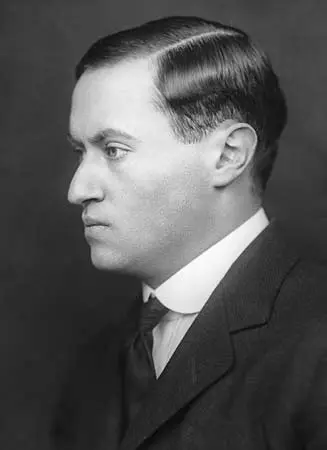
Lord Curzon was never the author of the famous line. It was sketched by a Polish Jew born in Galicia—Lewis Namier (Ludwik Bernstein-Namierowski). Niemirowski falsified the line established at Spa. Namier’s line cut Lviv and the Drohobych district off from Poland. The forgery was entirely deliberate. Niemirowski, an employee of the British Foreign Office, was probably a Soviet agent. He had an excellent understanding of Galicia’s ethnic relations. He knew how important Lviv was.
But what does the unrealized eastern border of Poland have to do with post-war realities? Quite a lot.
The Curzon Line became an excuse and a “weighty argument” against the British. Stalin decided to dust off the old “border” because he could not invoke the line from the Molotov–Ribbentrop Pact. It was almost identical, but inconvenient because of the former alliance with the Third Reich. Secondly, occupying Poland’s Eastern Borderlands was an overriding objective. What had not been achieved near Warsaw in 1920 was accomplished then.
When did discussions about Poland’s borders really begin? Quite early. As early as 1941, in Moscow, Stalin wanted to raise border issues during a conversation with General Sikorski. It was a very important moment, because something could still have been gained then. Stalin was willing to make concessions. Lviv might have been saved, and perhaps Vilnius as well. Sikorski, however, refused to discuss the matter. He believed it was still too early. In reality, it was the only opportunity. All later attempts to keep even Lviv within Poland were already pointless. The Treaty of Riga border was definitively lost.
At this point, special attention should be paid to our allies. Franklin Delano Roosevelt was fascinated by Stalin. He believed that only two empires should matter: the American and the Soviet. He sought to weaken the British Empire. Consequently, on many issues concerning Poland’s eastern border, Winston Churchill could not count on the support of the American president. Opinions on this matter vary. Both Norman Davies and Professor Oskar Halecki believe that the Allies wanted to help us and advocated for the Polish cause. Davies points to the British, who repeatedly expressed in official memoranda the view that Lviv should remain Polish. Halecki, on the other hand, points to Roosevelt’s defense of Poland.
I have just finished reading a very interesting book, which I recommend here to all history enthusiasts. It is a publication by Tadeusz Kisielewski, entitled “Churchill: Poland’s Best Ally?”. To a large extent, it concerns the territorial decisions affecting post-war Poland. In it, the author paints a grim picture of the American president. He also tries to offer some justification for the British prime minister. According to Kisielewski, Churchill lacked influence and was terribly dependent on the Soviet Union. He cared about good relations with Stalin. There is a saying that the English readily and selflessly shed blood for a just cause, especially when it is the blood of their allies. This saying fits Churchill perfectly. Personally, I do not justify him in the slightest. I believe he is just as guilty as Roosevelt. I think Churchill’s dignified image on the new five-pound note is another mythical picture of the British gentleman. One of the few Britons who truly understood Poland’s situation was Foreign Secretary Anthony Eden. It was he who pointed out to Churchill that the Curzon Line had never been drawn in its southern section. There was therefore a tremendous opportunity to secure Lviv for Poland. Sir Winston Churchill then uttered the telling words that he “would not go to war over Lviv” and that “the loss of that city would not break our hearts.”
Things turned out completely differently. Both Curzon and Churchill have gone down negatively in Polish history forever. Since I am judging the Allies so harshly, I must point out that both Roosevelt and Churchill knew the truth about Katyn perfectly well. Churchill had an advantage over the American president. He disliked Stalin. He was distrustful of him. Once, an incident occurred. Stalin hosted a dinner to which the leaders of the Big Three were invited. Molotov, Eden and Elliott Roosevelt—the son of the U.S. president—were also present. Stalin proposed executing 50,000 German officers. It was supposed to be a deterrent against the outbreak of another war. Churchill was outraged by the bloody proposal. Roosevelt joked that perhaps 49,000 executions, rather than 50,000, would be enough. Winston Churchill stormed out of the room. Stalin caught up with him and began reassuring him that he had only been joking. Was it merely a joke? Definitely not. Stalin was testing the waters, and Churchill realized this.
Finally, it is also worth mentioning the British geopolitical concept according to which no state should exist between the German state and Russia. This is why Great Britain was not favorably disposed toward us when Poland regained independence. At that time, it wanted a Poland with a small territory that would threaten neither Russia nor good British–Russian relations. The whole idea collapsed. The United States and the Soviet Union formed a perfect tandem. The British Empire lost importance and ceased to count in great global politics.
The Curzon Line perfectly illustrates how lightly Western European states treat Polish history and tradition. Knowing nothing about us Poles, they issue misguided judgments, while we bear the geopolitical consequences ourselves. Hundreds of thousands of soldiers shed their blood fighting Bolshevik Russia. A success was achieved but squandered during the negotiations in Riga. It is quite possible that if Poland had returned to its borders from before the First Partition, we would not have lost the entire Eastern Borderlands.
Nevertheless, the British demarcation line was never British. It was created by a junior employee who had an excellent understanding of Galicia’s ethnic relations. He knew the value of this territory and deliberately added the southern section of the line, leaving Lviv on the Soviet side. Was this merely hostility toward the Polish state? Probably both hostility and deliberate action on behalf of the Russians.
Paweł Skiersinis

The author is a blogger and a history enthusiast, particularly of the history of Lower Silesia and Poland. Why Lower Silesia? As he himself says: “Why not? The most interesting history is the history around us, concerning us and our ancestors.”
He adds: “I try to present history from a different perspective, in an interesting way—not in the typical textbook style, full of dry dates and facts. The articles I present concern facts that we will not find in textbooks and well-known publications. The history of Lower Silesia is undoubtedly interesting and fascinating, so it is worth devoting at least a brief moment to it from time to time.”