
On Thursday, a meeting devoted to culture was held at Bolesławiec Town Hall. It was led by Mariusz Wróbel, a PR and marketing communications adviser. The meeting was attended by the city’s deputy mayor, female directors and employees of Bolesławiec cultural institutions. Councillors from Platforma Obywatelska and one councillor from Lewica i Demokraci were also present. However, not a single councillor from the governing coalition—that is, from Prawo i Sprawiedliwość and Ziemia Bolesławiecka—attended.

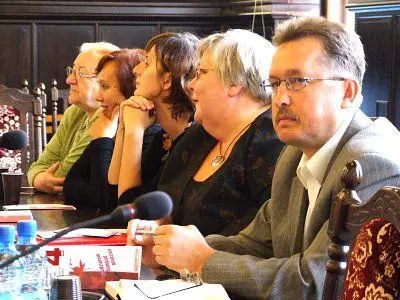
Mariusz Wróbel argued that culture is an important element of economic development. The lecturer referred to research commissioned by the European Union. It shows that the development of culture has a positive impact on the economic development of cities. In the European Union—before its most recent enlargement—almost 6 million people worked in the cultural sector. The cultural sector includes such branches of the economy as tourism, fashion, the recording industry and computer games. According to Mariusz Wróbel, modern, developing cities must have a modern and efficiently managed cultural sector. An example of a large city that profits from culture is Wrocław. Thanks to numerous festivals, concerts and other cultural events, the city has become more attractive economically. A smaller town known for its cultural events is Kazimierz Dolny.
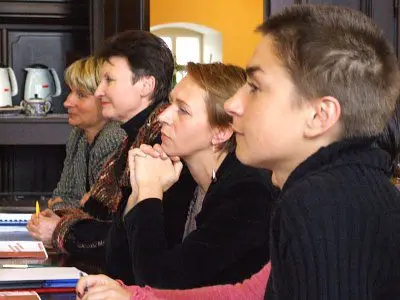
The second part of the meeting was a discussion about cultural centres and their role in the life of the local community. The moderator also referred to the recent discussion on our portal after the announcement of the meeting was published. Among those who spoke were BOK director Ewa Zbroja; Bogusław Nowak, a PO councillor; and Krzysztof Gwizdała, the portal’s editor-in-chief. Below we present his comment on Thursday’s discussions in the Councillors’ Chamber.
Comment by Krzysztof Gwizdała
The meeting should have looked completely different, after all, it was entitled “Let’s Talk About Culture...”. Instead of considering together with us how culture in the city should be financed and organised, the moderator unnecessarily spent an hour and a half trying to convince us that it is important for the economy. Unnecessarily, because the cultural professionals who attended the meeting do not need to be told that. Such things need to be explained to the mayor and the councillors from the governing coalition, who were absent from the meeting.
The meeting also lacked any serious discussion about recent events. As is known, Ewa Zbroja, the director of the Bolesławiec Cultural Centre, came under fire from Internet users. When an innocuous announcement of Thursday’s meeting appeared on the portal, a flood of comments began. Negative opinions about BOK and its director poured in. Her family and some employees came to her defence. The discussion on the portal was full of emotion, which showed that a serious issue—the “Culture in the City” question—had really been touched upon. The online comments were probably also the result of the fact that nobody had discussed culture for many years. However, the meeting’s moderator completely dismissed these opinions, calling everything a lynching, although nobody had actually killed the director. In my opinion, the entire online incident was and remains a good reason to begin a substantive discussion.
I therefore encourage everyone to speak about culture in the city and to share ideas on how it should be organised and financed. Let us move away from judging what has already happened. I also strongly encourage employees of cultural institutions to describe the everyday problems they face—problems of which others may have no idea. Only through reliable and complete information will we be able to build some kind of compromise model according to which culture should operate in Bolesławiec in the 21st century.
Krzysztof Gwizdała
(information: MZ)