
This is a huge investment, worth approximately PLN 21.3 million. To carry it out, the city secured more than PLN 18 million—approximately 85 percent of the total value—in EU funding from the Centre for EU Transport Projects in Warsaw. It is worth recalling that the Legnica project was recognized by the Transport Innovation Forum in Kraków, which awarded it the “2012 Transport Innovation Award”.
At the invitation of Mayor Tadeusz Krzakowski, representatives of the consortium of three companies (Integrated Solutions, Orange and Koma Nord), which won the design-and-build tender, presented elements of the system already being developed in Legnica at the Town Hall. “We are a city at the forefront. Intelligent management of its structures, innovation and the latest technologies serving residents are among our priorities,” the mayor stressed. “According to specialists, the integrated traffic and public transport management system is intended to improve traffic flow and road capacity, efficiently clear congestion, respond to all road incidents and provide passengers with up-to-date information about the time buses operated by MPK will take to reach a particular stop. The system means modernity, convenience and safety,” Tadeusz Krzakowski added.


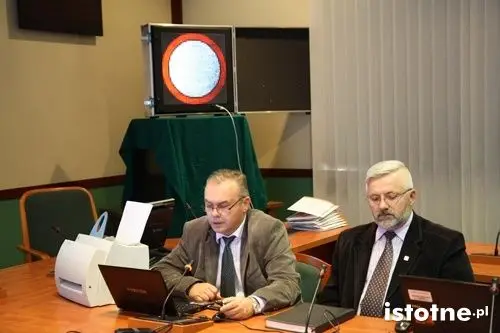
This thoroughly modern investment began in 2013 and should continue until 2015. The system will enable the automatic analysis and regulation of vehicle traffic in the city. Traffic detectors, together with monitoring at 43 modernized strategic signal-controlled intersections, will use fiber-optic networks, 18 kilometers in length, and radio networks to inform the center about all road incidents. The center will immediately determine the optimal solutions to apply, adapting them to changing road conditions.
Gantry structures over the intersections will be equipped with visual electronic signs displaying information for drivers. They resemble television screens and will also indicate possible alternative routes. Subsystems giving priority to public transport and emergency vehicles will also be created. Electronic variable-message signs will appear at central bus stops, dynamically providing information to waiting passengers; the information will also be available on the website. Sixty-two city buses will be equipped with onboard computers that receive, process and transmit information.
These are just some of the elements and functions that the system will perform, significantly improving safety and traffic flow in our city. Smoother driving, with fewer braking and acceleration events, also means lower fuel consumption and lower expenses for drivers purchasing it, bringing both environmental and economic benefits.
UM Legnica/ii