
The first transport of new residents of Żeliszów arrived in November 1945 in Raciborowice, where the wagons were unloaded and the people set off for the settlement. The second transport arrived in Bolesławiec on December 23, and the third—in late February and early March 1946—in Sława (Lubusz Voivodeship). The Poles came from the former Eastern Borderlands of the Second Polish Republic. Under agreements concluded by the great powers, they had to leave their ancestral lands and go into the unknown.
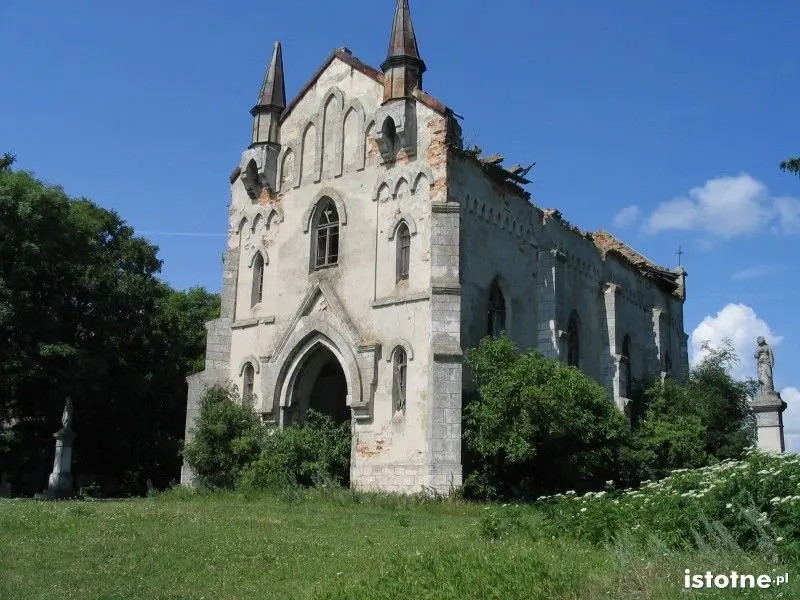
Most of the residents came from Maksymówka in Zbarazh County (in Tarnopol Voivodeship), where they experienced the cruelty of the war in the form of organized raids by Ukrainian gangs. Maksymówka was a rural municipality established in 1934. In the center of the settlement were a railway station, a shop, a farm run by Bernardine friars, and a monumental church dedicated to St. Michael.
The settlement mostly consisted of single-story buildings; the houses were covered with sheet metal, and the inhabitants made their living from agriculture. Teacher Stępkowski worked at the school, as did Zofia Pasternak, a graduate of the teacher-training seminary in Tarnopol, who began working at the newly established Polish school in Żeliszów.
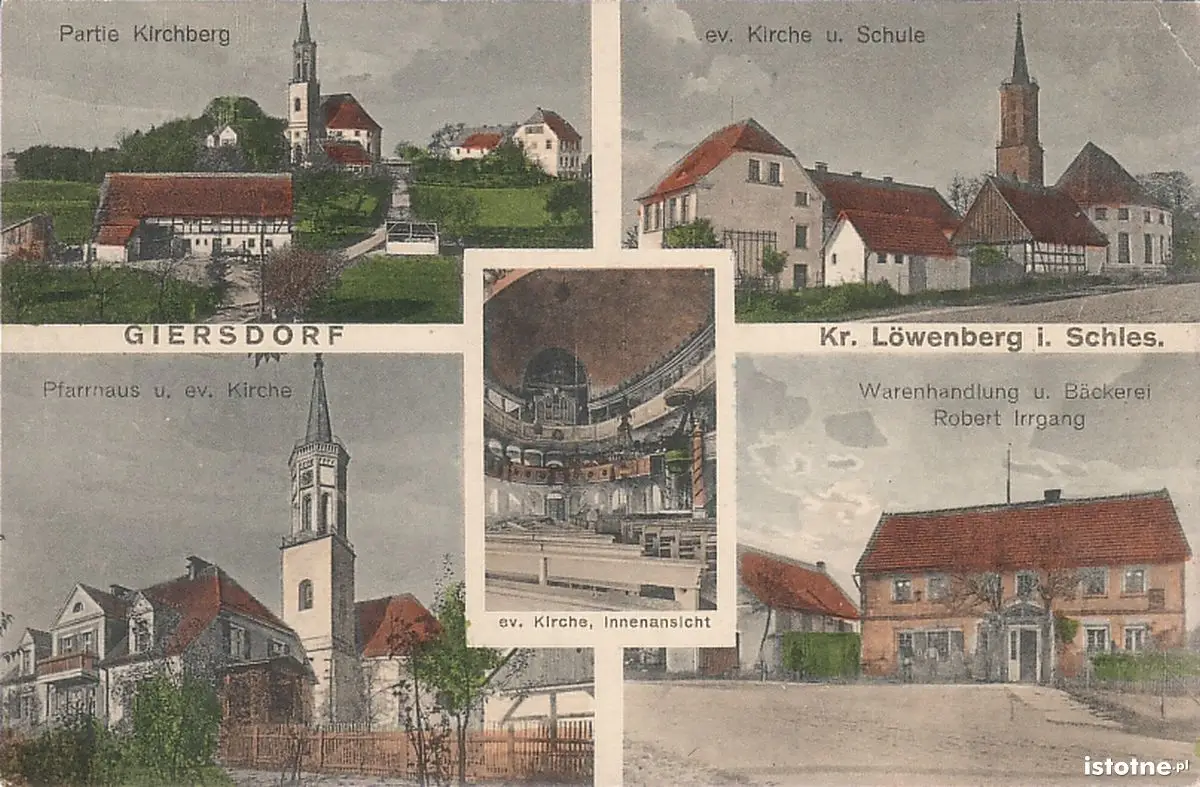
In the first postwar years, the school had five grades and two rooms, with classes combined. In residents’ recollections from that period, Żeliszów was a splendid village, with large half-timbered buildings and beautiful churches, as well as a confectionery shop and a bakery. Unfortunately, the businesses collapsed because of a lack of skilled workers.
The exchange of the Polish population for the German population took place peacefully, and Germans worked together with Poles in agricultural labor. After World War II, the residents initially belonged to the parish in Raciborowice, and pastoral ministry was provided by Rev. Młynarski.
The former residents took liturgical furnishings from the church to their new place of residence, as well as a bell from the belfry, funded by the émigré Królikowski family. The bell from the church tower was buried near the church.
At the beginning of the 20th century, a considerable part of Maksymówka’s residents emigrated to Canada in search of a livelihood, and in 1912 the Canadian Polish community funded a monument, which was erected beside the church in their hometown.
Today, residents nostalgically recall the old days, and in mid-September they organize a festival celebrating the Eastern Borderlands, bringing the traditions of their ancestral homeland closer.


Sebastian Zielonka – historian and graduate of the University of Wrocław. Specialization: archival studies and conservation documentation. He is interested in the history of the region and the social life of Europeans in the 20th century. In his free time, he travels.
Sources: reminiscences of R. Kaprawy, original material.