
Gryf Castle (German: Schloss Greiffenstein) is located in the village of Proszówka, between Gryfów and Mirsk. Today, only its ruins remain on a basalt hill. Probably already during the reign of Bolesław the Brave, the first king of Poland, a wooden defensive stronghold stood here, while Bolesław the Tall is mentioned as the presumed creator of the castle-fortress.
At the end of the Middle Ages, a system of military fortifications existed along the Kwisa, including Gryf Castle, Czocha and Rajsko. They served as highly significant defensive structures because of their location on the Silesian–Lusatian border.
In the 13th century, only the upper castle existed, without the irregularly shaped tower. In the following centuries, the site was expanded. In 1419, the Schaffgotsch family took possession of the town of Gryfów and the stronghold; the building was fortified and rebuilt, with most of the work paid for by the local population.
The castle was famous for its highly exclusive receptions, hunts and fashionable knightly tournaments. During the Thirty Years’ War, the stronghold was besieged twice. Its defense was commanded by Leopold Schaffgotsch, who capitulated after four days during the second siege. This brought the commander great fame in the area and resulted in an invitation to the coronation celebrations of Jan III Sobieski. At that time, certain customs and obligations prevailed among people of noble birth; honor and family traditions mattered, regardless of the side one was on or the ruler one served.
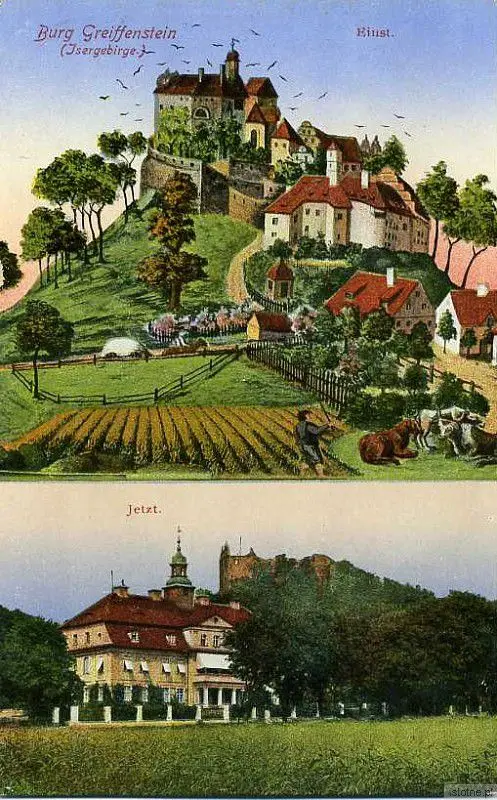
During the Second Silesian War, the castle walls were reinforced, and additional fortifications were made in 1778, strengthening the castle’s military capabilities. In 1798, a decision was made to build a palace together with a manor farm and utility rooms. As a result, stone from the castle buildings was used by builders as construction material, and the site began to fall into ruin.
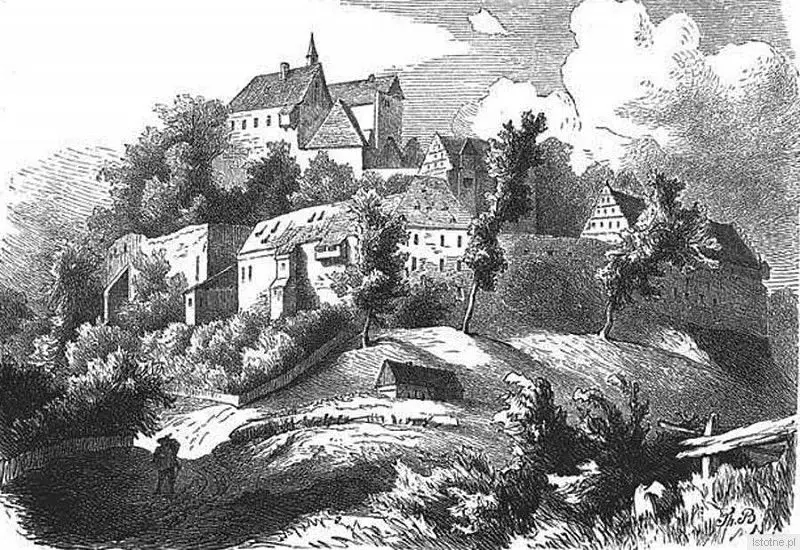
Today, we can admire its former splendor on old postcards.




Sebastian Zielonka – historian and graduate of the University of Wrocław. Specialization: archival studies and conservation documentation. He is interested in the history of the region and the social life of Europeans in the 20th century. In his free time, he travels.
(information: Sebastian Zielonka)