
A new “NFZ scam” method. What does it involve?
Scammers are sending professional-looking emails supposedly from the National Health Fund. In messages featuring the Fund’s logo, they inform recipients about a “refund for the cost of medicines.” (Screenshot below.)
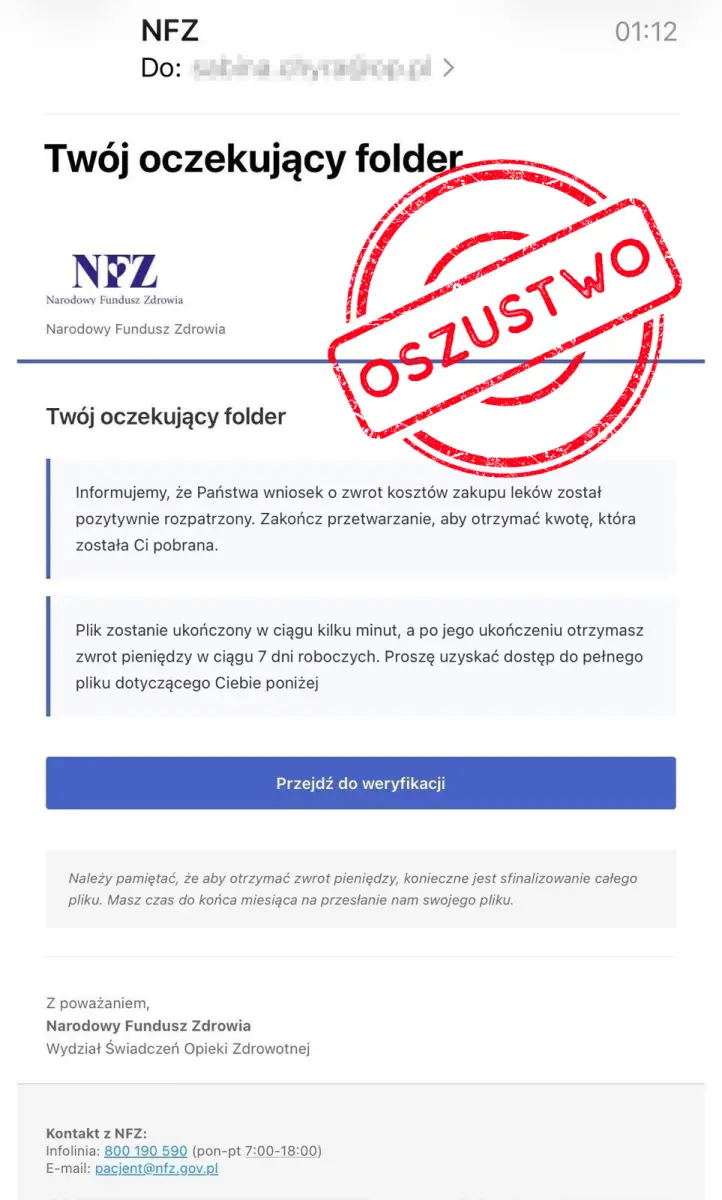
The message contains a link under the visible “Proceed to verification” button. It’s a trap! This is how cybercriminals seek to obtain data from users unaware of the danger.
It is worth remembering that the National Health Fund settles reimbursements for medicines EXCLUSIVELY with pharmacies.
More and more attempts to obtain data by impersonating the NFZ
This is yet another attempt to impersonate the NFZ. Previously, scammers tried to extort data and money by offering first-aid kits, insurance cards and pharmacy vouchers, and even proposing loan agreements to finance treatment.
Cybercriminals use increasingly advanced techniques and psychological methods to influence their victims.
In this way, they attempt to obtain personal data, bank account information and electronic banking login details. They may also use the acquired data to take out loans and credits.
How can you avoid being scammed?
- Don’t click suspicious links or open unexpected attachments.
- Verify website addresses. Pay attention to typos, unusual characters and domain names.
- If you receive a message from the NFZ and have doubts, contact us via the free helpline 800 190 590.
- Report the incident to the Police or at incydent.cert.pl (fill in the form).
The NFZ never does any of the following:
- It does not ask for personal data via internet messengers, email messages or SMS.
- It does not send login or data-verification links by email or SMS.
- It does not sell anything online.
- It does not encourage people to enter into loan agreements to finance healthcare services.